Nicotinamide — vitamin B3, also sold as niacinamide — helps skin cells repair UV-induced DNA damage, and in the randomised ONTRAC trial 500 mg twice daily cut new non-melanoma skin cancers by 23% in high-risk patients. A large 2025 cohort found the benefit was greatest when it was started soon after a first skin cancer. Use nicotinamide, never niacin, and keep taking it — the protection only lasts while you do. It is an added layer on top of sun protection and skin checks, and it did not help organ transplant recipients overall.
- The randomised ONTRAC trial (NEJM 2015) showed a 23% reduction in new non-melanoma skin cancers at 500 mg nicotinamide twice daily.
- A large 2025 cohort study (JAMA Dermatology, 33,822 patients) found the benefit was greatest when started after the FIRST skin cancer — about a 54% reduction — and smaller when started later.
- The dose is 500 mg twice daily; many supplement labels suggest only one tablet a day, which is less than the studied regimen.
- Brand does not matter (no brand is endorsed, no commission received) — Blackmores Insolar, Swisse Ultiboost Vitamin B3 and Nature's Own Vitamin B3 500 mg are the commonly stocked 500 mg nicotinamide tablets in Australian pharmacies.
- Use nicotinamide / niacinamide — NOT niacin (nicotinic acid), which causes flushing.
All 10 key points
- In organ transplant recipients neither the randomised ONTRANS trial nor the 2025 cohort showed an overall benefit.
- It is an added layer of protection, not a substitute for sun protection and skin checks.
- Recent Australian "vitamin B toxicity" warnings relate to vitamin B6, not vitamin B3.
- Nicotinamide is a precursor of NAD+ that supports DNA repair and reduces UV-induced immune suppression — it does not block UV.
- A topical niacinamide serum at around 10% is a well-tolerated extra layer that can reduce actinic keratoses over time, but is not a sunscreen.
Quick summary
Nicotinamide (vitamin B3) helps skin cells repair UV-induced DNA damage and reduces UV-driven immune suppression. In the randomised ONTRAC trial, 500 mg twice daily cut new non-melanoma skin cancers by 23% over 12 months in high-risk patients. (1) A large 2025 cohort study of nearly 34,000 patients then found the benefit was greatest when started after the first skin cancer — about a 54% reduction in the next one. (2) It is cheap, over-the-counter and well tolerated — but it is an added layer, not a sunscreen substitute, the benefit only lasts while you take it, and it did not help organ transplant recipients overall. (3) Use nicotinamide / niacinamide, never niacin (nicotinic acid).
For people with a history of skin cancer, nicotinamide — the amide form of vitamin B3, also called niacinamide — is a foundational, low-cost part of a medical prevention plan. It is one of the few supplements with a genuine randomised evidence base for reducing new non-melanoma skin cancers, and the case for it has only strengthened with newer real-world data. (1,2)
The evidence: ONTRAC, and a major 2025 update
The landmark evidence is the ONTRAC randomised controlled trial, published in the New England Journal of Medicine in 2015. In 386 patients who had had at least two non-melanoma skin cancers in the previous five years, 500 mg of nicotinamide twice daily for 12 months reduced new non-melanoma skin cancers by 23% compared with placebo (95% CI 4–38%; P = 0.02), with similar reductions in new basal cell and squamous cell carcinomas and fewer actinic keratoses. (1)
The 2025 cohort: bigger effect when you start early
In September 2025, JAMA Dermatology published a much larger real-world study that has made me even more confident recommending vitamin B3. Using national health-record data, researchers compared 33,822 patients — about 12,000 taking nicotinamide 500 mg twice daily against roughly 21,000 matched patients who were not. (2)
- Overall, nicotinamide was associated with a 14% reduction in subsequent skin cancer.
- Crucially, when nicotinamide was started after a person’s first skin cancer, the risk reduction rose to about 54% — a large effect — and the benefit was progressively smaller when started only after several skin cancers had already occurred.
- The greatest reduction was seen for squamous cell carcinoma. (2)
The practical message is start early: the evidence now suggests the biggest payoff comes from beginning nicotinamide soon after a first non-melanoma skin cancer, rather than waiting until several have accumulated. (This 2025 study was a large observational cohort rather than a randomised trial, so it complements — not replaces — the randomised ONTRAC result; together they point the same way.) (1,2)
How nicotinamide protects the skin
It helps to picture skin cells as having a limited energy budget for repairs. UV radiation both damages DNA and depletes the cellular energy (ATP) needed to fix it. Nicotinamide is a precursor of NAD⁺, a molecule central to cellular energy metabolism, and by replenishing it nicotinamide is thought to:
- support DNA repair — helping cells correct UV-induced errors before they replicate
- reduce UV-induced immune suppression — helping the skin’s immune surveillance keep clearing abnormal cells (1)
The protocol: dose and form
- Dose: 500 mg of nicotinamide, taken orally twice daily (morning and night) — the regimen used in ONTRAC and in the 2025 cohort. (1,2)
- Form: ensure the product is nicotinamide or niacinamide. Do not use niacin (nicotinic acid), which causes flushing, headache and blood-pressure changes and was not the form studied.
- Consistency: the protective effect only lasts while you take it — in ONTRAC the benefit was not maintained after stopping, so it is a long-term measure. (1)
Which brand of nicotinamide should I buy?
I do not personally recommend or advocate for any particular brand, and I receive no commission or payment from any of them. The brand genuinely does not matter — what matters is that the tablet is 500 mg of nicotinamide (niacinamide). But almost every patient asks, so here is a practical answer. In Australia the most commonly stocked 500 mg nicotinamide tablets are:
- Blackmores Insolar® — 500 mg nicotinamide
- Swisse Ultiboost Vitamin B3 — 500 mg nicotinamide
- Nature’s Own Vitamin B3 500 mg — 500 mg nicotinamide
You should be able to buy one of these from any pharmacy in Australia (and most supermarkets), and any other equivalent 500 mg nicotinamide product works just as well — ask your pharmacist.
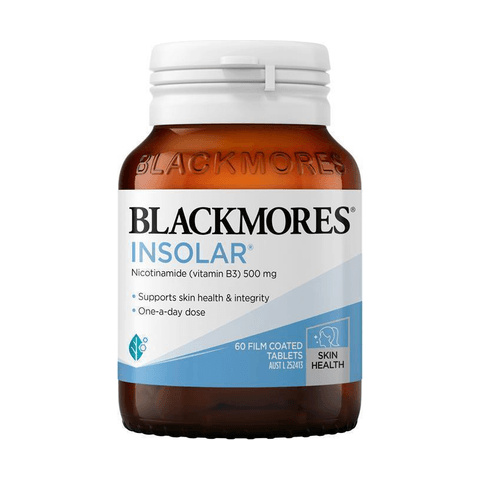
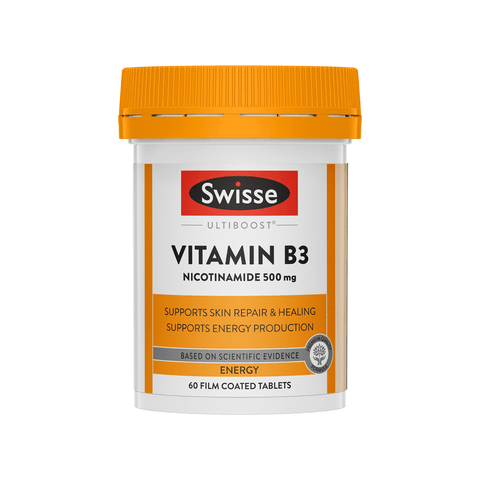
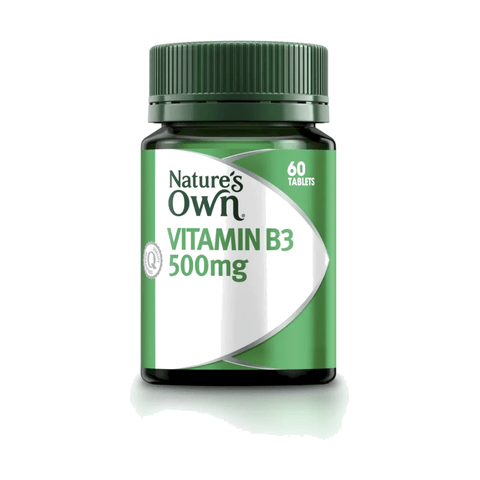
Product images are shown for identification only. No brand is endorsed and no commission is received.
One practical point that trips a lot of people up: the packaging on all of these supplements recommends only one tablet a day. The research, however, supports 500 mg twice daily — that is one 500 mg tablet in the morning and one at night — for skin cancer prevention. (1,2) If you are taking it for this reason, follow the twice-daily dose rather than the once-daily suggestion on the label.
Safety and statin considerations
Most people taking the correct form have no side effects. Because vitamin B3 is processed by the liver, a few precautions apply:
- Statins: for patients on cholesterol-lowering statins, we may monitor liver function and CK (creatine kinase) so the combination is tolerated.
- Liver disease: patients with significant liver disease should check with their doctor first.
- Tolerance: mild nausea or stomach discomfort is uncommon at this dose. Always confirm you are taking nicotinamide/niacinamide, not niacin.
The recent Australian “vitamin B toxicity” warnings relate to vitamin B6 (pyridoxine), a different vitamin — not the nicotinamide discussed here.
Topical vitamin B3 serums
Beyond the oral tablet, there is reasonable evidence that vitamin B3 applied to the skin helps too. Topical nicotinamide has photoprotective effects — it supports repair of UV-induced DNA damage and helps prevent UV-induced immune suppression in the skin — and trials have found it can reduce the number of actinic keratoses over time. (4) It is not a sunscreen and should never replace one, but it is a well-tolerated extra layer.
In practice I suggest a niacinamide (vitamin B3) serum at around 10% for daily use. As with the tablet, the brand is not too important — there are many good options. My personal preference, based on the general strength of their products, is La Roche-Posay.
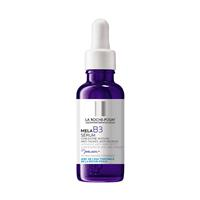
Apply a few drops to the face and other sun-exposed areas such as the backs of the hands, once or twice daily after cleansing and before moisturiser or sunscreen. It is lightweight and rarely irritating, and over months of regular use it helps repair the skin barrier and support sun-exposed skin. (4)
Dietary vitamin B3
Vitamin B3 also occurs naturally in many foods — lean meats and poultry, fish such as tuna and salmon, nuts, seeds and legumes, and wholegrain or fortified cereals and breads. (5) A balanced diet supports your skin’s general repair capacity, but diet alone cannot reach the ~1,000 mg per day used for prevention (the 500 mg twice-daily dose) — that level requires a supplement. Think of dietary B3 as background nutrition, not as the prevention strategy itself. (5)
Where it fits
Nicotinamide is one layer in a broader prevention plan. It works best alongside:
- daily UV protection and behaviour change — see how to reduce your skin cancer risk →
- field therapy for established sun damage
- regular skin checks
Book a skin check
Frequently asked questions
-
Am I at risk of overdose taking 500 mg vitamin B3 twice a day?
Any supplement should be taken under medical guidance, but the risk from 500 mg nicotinamide twice daily is very small — this is the dose used in the randomised ONTRAC trial. Note that the "vitamin B toxicity" reported in Australian news typically involves vitamin B6 (pyridoxine), not vitamin B3 (nicotinamide). -
Is nicotinamide a tablet version of sunscreen?
No. It does not block UV rays. It helps the skin repair UV-induced DNA damage after exposure. You must continue high-quality sunscreen, protective clothing and shade — nicotinamide is an added layer, not a replacement. -
Which brand of nicotinamide should I buy in Australia?
Dr Chris does not recommend or advocate for any particular brand and receives no commission — the brand does not matter, only that each tablet is 500 mg of nicotinamide (niacinamide). Because most patients ask, the most commonly stocked 500 mg nicotinamide tablets in Australia are Blackmores Insolar, Swisse Ultiboost Vitamin B3 and Nature's Own Vitamin B3 500 mg; any pharmacy should have at least one, and any equivalent 500 mg nicotinamide product is just as good. One catch — the packaging on these supplements recommends only one tablet a day, whereas the trial evidence supports 500 mg twice daily (one tablet morning and night) for skin cancer prevention. -
Should I take it if I have never had a skin cancer?
The strongest evidence is in people who have already had skin cancers. In a large 2025 cohort study the benefit was greatest when nicotinamide was started after the very first skin cancer (about a 54% reduction in the next skin cancer), and smaller when started later. For people with heavy sun damage but no cancer history, it can still be discussed at a skin check as a lower-certainty protective measure. -
Does it work for organ transplant patients?
Not reliably. The ONTRANS randomised trial in organ transplant recipients found no significant reduction in keratinocyte cancers, and the 2025 cohort study likewise found no overall benefit in transplant recipients (though early use was linked to less squamous cell carcinoma). For transplant patients, higher-value steps include reviewing immunosuppression with the transplant team and considering acitretin — see our high-risk guide. -
Is "niacin" the same thing?
No — and the difference matters. Use nicotinamide (also called niacinamide). Do not use niacin (nicotinic acid), which causes flushing, headache and blood-pressure changes and was not the form studied for skin-cancer prevention.
References
- Chen AC, Martin AJ, Choy B, et al. A phase 3 randomized trial of nicotinamide for skin-cancer chemoprevention (ONTRAC). N Engl J Med. 2015;373(17):1618-1626.
- Breglio KF, Knox KM, Hwang J, et al. Nicotinamide for skin cancer chemoprevention. JAMA Dermatol. 2025;161(11):1140-1147.
- Allen NC, Martin AJ, Snaidr VA, et al. Nicotinamide for skin-cancer chemoprevention in transplant recipients (ONTRANS). N Engl J Med. 2023;388(9):804-812.
- Damian DL. Photoprotective effects of nicotinamide. Photochem Photobiol Sci. 2010;9(4):578-585.
- National Institutes of Health, Office of Dietary Supplements. Niacin (Vitamin B3) — Fact Sheet for Health Professionals.
Related
Related reading
- How to reduce your skin cancer risk
- Treating sun damage to prevent future skin cancers (field therapy)
- Advanced protection for high-risk groups — transplant, genetics and occupational risk
- Optimising vitamin D and nutrition for sun-avoidant and high-risk patients
- Gardasil 9 (HPV vaccine) for actinic keratoses — the off-label evidence
Related treatments

By Dr Christopher Irwin, MBChB, FRACGP, MMed (Skin Cancer), FACAM, MSCCA
Published 2026-06-06 · Updated 2026-08-18 · Editorial policy