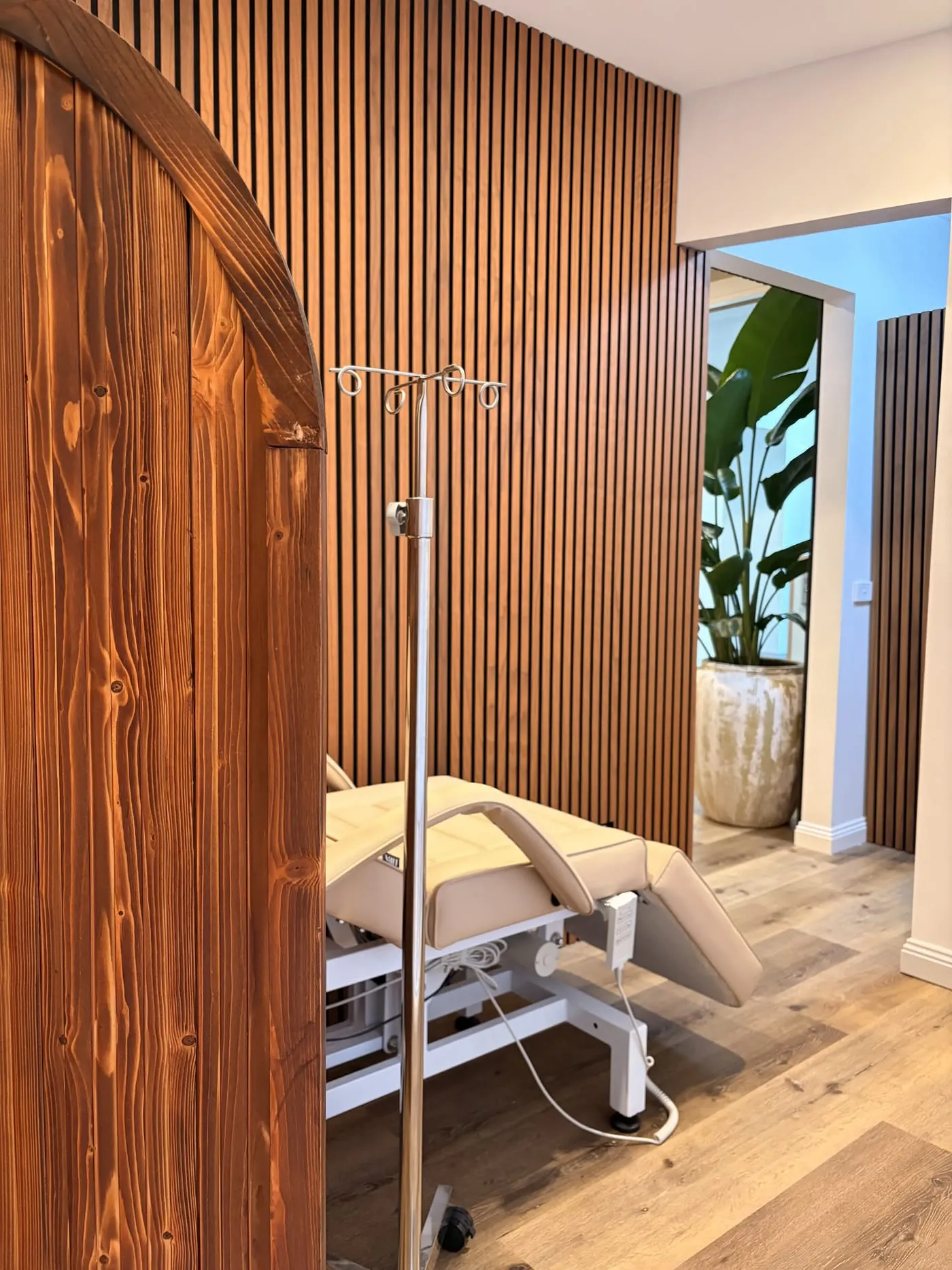

- Pathology required — we do not infuse iron without confirmed deficiency (recent ferritin, transferrin saturation, full blood count).
- Same-day pathway available where ferritin is clearly deficient and tests are within the last 3 months.
- Consultation-first pathway for borderline ferritin, old tests, pregnancy, severe symptoms or prior infusion reactions.
- Modern iron preparations infused over 30–60 minutes; plan ~90 minutes in clinic in total.
- Specialised cannulation technique to minimise extravasation and skin-staining risk.
- Mild flu-like symptoms (headache, joint aches) can occur for 24–48 hours; serious reactions rare but monitored for.
- Follow-up pathology at 6–8 weeks confirms restoration of iron stores.
- Can be appropriate in selected pregnancy cases under shared care with your obstetric provider.
- Doctor-led approach also addresses the underlying cause of deficiency — menstrual loss, GI absorption, dietary, endurance training.
- Performed at The Skin Doctor's Ivanhoe clinic.
Quick definition
Iron infusions at The Skin Doctor are doctor-led, pathology-first IV iron for confirmed iron deficiency. We require recent blood tests (ferritin, transferrin saturation, full blood count) and a medical review before any infusion. Modern iron preparations are delivered slowly in our monitored IV lounge over 30–60 minutes. A same-day pathway is available when ferritin is clearly deficient and tests are current; otherwise we route to a consultation first. Follow-up pathology at 6–8 weeks confirms result. We don’t infuse “low normal” iron — that is unsafe and can cause iron overload.
Iron is the engine room of cellular energy. It is a critical component of haemoglobin, which carries oxygen to your tissues, and is essential for mitochondrial function — the energy-producing machinery of your cells. When iron stores are depleted, the impact is felt systemically: profound fatigue, brain fog, reduced exercise tolerance, hair shedding, and a visible loss of skin and hair vitality.
At The Skin Doctor, we provide doctor-led iron infusions as part of our medical longevity and wellness service. Our model is built around pathology-first safety and identifying the underlying cause of deficiency — not just treating the symptom.
Why IV iron?
Oral iron tablets are the traditional first step, but they are often poorly absorbed or cause significant gastrointestinal side effects like nausea and constipation. An iron infusion bypasses the digestive system entirely, delivering iron directly into the bloodstream for immediate availability. (1–3)
IV iron may be recommended if:
- oral iron has failed to raise your ferritin levels
- you experience significant side effects from tablets
- you have underlying absorption issues (coeliac disease, IBD, post-bariatric surgery)
- you require rapid symptomatic relief due to high clinical burden of fatigue
- you have an ongoing iron loss (heavy menstrual bleeding, endurance training, blood donation) that oral iron cannot keep up with
Same-day pathway vs consultation-first pathway
We offer two booking pathways. The right one for you depends on what tests and clinical context you arrive with.
Same-day pathway — requirements
To be eligible for a same-day infusion, you must arrive with:
- recent blood tests (within the last 3 months) including full blood count (FBC) and iron studies (ferritin and transferrin saturation)
- ferritin clearly in the deficient range (typically below 30 µg/L; below 50 µg/L with symptoms in selected cases)
- no concerning medical history (no prior infusion reactions, no active infection, no pregnancy without prior obstetric coordination)
Consultation-first pathway — when to choose this
Choose a consultation first if:
- your ferritin is borderline or above 30 µg/L and you are unsure whether an infusion is appropriate
- your tests are older than 3 months or incomplete
- you are pregnant and have not yet coordinated with your obstetric provider
- you have a history of infusion reactions or significant drug allergies
- you have severe symptoms and want a full medical workup before treatment
Referrals are welcome but not mandatory. We can perform the necessary assessment on-site. A referral from your GP or other treating clinician helps with collegial communication and continuity of care, but is not a barrier to accessing the service.
Your infusion appointment — what to expect
Step 1 — medical assessment. Every infusion begins with a consultation with the doctor. This is an essential safety step: we review your blood results and medical history, confirm that an infusion is the safest and most appropriate option, discuss the clinical rationale and obtain informed consent. We prioritise identifying the cause of your iron deficiency (such as dietary factors or gut health), not just treating the symptom.
Step 2 — precision administration. If cleared to proceed, our clinical team will administer the IV iron in our dedicated IV lounge. We use specialised cannulation techniques to minimise the risk of extravasation (iron leaking into the surrounding skin). While persistent skin staining is a known rare risk of IV iron, our clinician-led approach prioritises high-precision delivery to reduce this risk. (3)
The experience. You are observed in a comfortable, private clinical setting while the infusion runs. Most patients drive themselves home and return to normal activities the same day.
How to prepare
- Hydrate — drink plenty of water in the 24 hours before your appointment. Well-hydrated veins are easier to cannulate.
- Eat normally — have a normal meal before you arrive. There is no need to fast.
- Wear a top with sleeves that can be easily rolled up above the elbow.
- Bring your recent pathology if available, plus a list of your current medications and any allergies.
- Tell us in advance if you are pregnant, breastfeeding, have had infusion reactions before, are on anticoagulants, or have an active infection.
Risks and considerations
Possible side effects include:
- mild flu-like symptoms (headache, joint aches, low-grade fevers, brief tiredness) for 24–48 hours
- bruising or tenderness at the cannula site
- persistent skin staining at the cannula site — uncommon but possible, and sometimes long-lasting
- serious allergic reactions (anaphylaxis) — rare with modern preparations but possible, which is why infusions are given in a monitored clinical setting
- iron overload if iron is given when not deficient — which is why pathology is mandatory before treatment
Book an iron infusion or a consultation
If you have recent blood tests confirming iron deficiency and want to discuss a same-day infusion, the booking panel in the sidebar takes you to the iron infusion appointment. If your iron status is unclear or you would prefer a consultation first, book the 20-minute iron assessment with Dr Chris from the same panel.
You may also find these helpful:
- Premium IV vitamin therapy → — for combined micronutrient support beyond iron alone
- Wellness hub →
- About The Skin Doctor →
What to expect
-
Pathology and assessment
Recent pathology — ferritin, transferrin saturation, full blood count — and a medical review are required to confirm iron deficiency before any infusion. We do not infuse iron without this. Treating "low normal" iron with infusions is unsafe and can cause iron overload.
-
Pathway selection — same-day or consultation-first
If you have blood tests from the last 3 months with ferritin clearly in the deficient range and no concerning medical history, you may be suitable for the same-day pathway. If your iron status is unclear, your tests are old, your ferritin is borderline, or specific medical context applies (pregnancy, severe symptoms, prior infusion reactions), we route you to a consultation first.
-
Pre-infusion consultation
We review your history, medications, allergies, pregnancy status, prior infusion reactions and the likely cause of your deficiency. The right iron product and dose are chosen for you, and informed consent is obtained. Identifying the underlying cause matters — infusion treats the deficiency, not the reason it developed.
-
Monitored infusion in the IV lounge
Iron is administered slowly through an IV cannula in our monitored IV lounge over 30–60 minutes, with specialised cannulation technique to minimise extravasation risk. You are observed during and after the infusion by our clinical team.
-
Post-infusion review and follow-up pathology
You rest briefly after the infusion finishes. We provide written aftercare covering expected mild flu-like symptoms in the 24–48 hours after, and arrange follow-up pathology at 6–8 weeks to confirm iron stores have been replenished and to plan any further treatment.
Results timeline
- Day of infusion Infusion typically runs 30–60 minutes with a short observation period. Plan for around 90 minutes in the clinic in total. Most patients drive themselves home and return to normal activities the same day.
- 24–48 hours Mild flu-like symptoms (headache, joint aches, low-grade fevers, brief tiredness) can occur in some patients and settle within 1–2 days. Cannula-site bruising is common; persistent darkening at the site is uncommon but possible.
- 1–2 weeks Some patients notice early improvement in energy, concentration and exercise tolerance as iron becomes available for haemoglobin and mitochondrial use.
- 6–8 weeks Follow-up pathology confirms restoration of iron stores. Peak symptomatic improvement typically reached. Decision point for any further infusion if stores have not fully replenished.
- 6–12 months Hair regrowth (where iron deficiency was a contributor) becomes visible. Ongoing monitoring identifies whether deficiency is recurring — particularly relevant for ongoing menstrual loss, GI absorption issues or athletic training.
Ideal candidate
- Adults with iron deficiency confirmed on recent pathology — ferritin, transferrin saturation and full blood count.
- Patients with iron deficiency anaemia who cannot tolerate or absorb oral iron (nausea, constipation, no ferritin rise on repeat tests).
- Women with heavy menstrual bleeding contributing to chronic iron depletion.
- Patients with persistent fatigue, brain fog or hair shedding linked to confirmed low iron.
- Patients with absorption issues — coeliac disease, gastric surgery, IBD, post-bariatric surgery.
- Endurance athletes with documented iron loss who have plateaued on oral supplementation.
- Patients on plant-based diets with confirmed deficiency unresponsive to dietary or oral iron.
- Patients in selected stages of pregnancy with confirmed iron deficiency, under shared care with their obstetric provider.
Frequently asked questions
-
Do I need blood tests before an iron infusion?
Yes — always. We will not administer IV iron without recent pathology (within the last 3 months) confirming iron deficiency — ferritin, transferrin saturation and full blood count. Treating 'low normal' iron with infusions is unsafe and can cause iron overload, with risk to the liver, joints and heart over time. This is a doctor-led, safety-first service, and pathology-first is the foundation of it. -
What ferritin level qualifies for an iron infusion?
There is no single universal cutoff — interpretation depends on your symptoms, transferrin saturation, full blood count, pregnancy status and underlying cause. In general, ferritin below 30 µg/L is widely accepted as iron deficiency, and ferritin below 50 µg/L with symptoms and other supportive markers may justify an infusion in selected cases. If your ferritin is above 30 µg/L, same-day infusion is less likely to be appropriate unless specific medical context applies (pregnancy, severe symptoms, planned surgery). We recommend a consultation first to discuss your specific results. -
How long does the infusion take?
Most modern iron preparations are given over 30–60 minutes, with a short observation period afterwards. Plan for around 90 minutes in the clinic in total — including cannulation, the infusion itself, and post-infusion monitoring. Most patients drive themselves home and return to normal activities the same day. -
Are there side effects?
Most patients tolerate IV iron well. Mild flu-like symptoms (headache, joint aches, low-grade fevers, brief tiredness) can occur for 24–48 hours after infusion and usually settle without specific treatment. Skin staining at the cannula site is uncommon but possible — we use careful technique to minimise risk. Serious reactions (anaphylaxis) are rare with modern preparations but possible, which is why infusions are given in a monitored clinical setting with trained staff and resuscitation equipment available. -
How do I avoid skin staining at the infusion site?
Iron skin staining occurs if iron solution leaks from the vein into the surrounding skin (extravasation) during infusion. Modern technique reduces this risk substantially — we use a freshly-sited cannula in a well-flowing vein, careful flow rates, and active monitoring throughout the infusion. We do not infuse through a cannula we are not confident about. If you notice any pain, swelling, leakage or stinging at the site during or after the infusion, tell us immediately. Persistent staining is uncommon but is recognised as a real, sometimes long-lasting risk of IV iron. -
Can I have an iron infusion during pregnancy?
IV iron can be appropriate in selected pregnancy cases, usually from the second or third trimester, under shared care with your obstetric provider. We coordinate carefully with your obstetric team and only proceed when clinically indicated. The decision considers ferritin, transferrin saturation, gestation, anaemia severity and obstetric context. We do not provide ad-hoc pregnancy infusions outside of this shared-care framework. -
How many infusions will I need?
Most patients need one infusion of a modern high-dose preparation to fully replenish iron stores, with follow-up pathology at 6–8 weeks to confirm. Some patients with severe deficiency, larger total iron deficits, or ongoing iron loss (heavy menstrual bleeding, GI causes, dietary contribution, endurance training) may need a second infusion at the follow-up review. The plan is individualised at consultation based on baseline pathology and the calculated iron deficit. -
Why also treat the cause of iron deficiency?
Iron infusion treats the deficiency — not the reason it developed. If the underlying cause is not addressed, deficiency commonly recurs. Common causes include heavy menstrual bleeding (often the leading cause in pre-menopausal women), GI absorption issues (coeliac disease, IBD, post-bariatric surgery, certain medications), dietary contribution (plant-based diets, restrictive eating), GI bleeding (which sometimes warrants endoscopic investigation), and endurance training with iron loss through sweat and footstrike haemolysis. Identifying and managing the cause is part of doctor-led iron care.
References
Related
Related treatments
Medically reviewed by Dr Christopher Irwin, MBChB, FRACGP, MMed (Skin Cancer), FACAM, MSCCA · Last reviewed 2026-06-06 · Editorial policy