Expect a predictable arc rather than a fixed date. The first few days are quiet — mild redness and stinging — then the reaction builds from about day 5 to 14 and peaks with deep redness, crusting and sometimes weeping through weeks 2–6, depending on the course your doctor set. It does not keep worsening once you stop: from the last application the skin settles over a further two to four weeks, which is when most people treating their face feel comfortable in public again. Faint pinkness can linger longer, and the area is reviewed about 6–8 weeks after finishing.
- The Efudix reaction follows a predictable arc: quiet start (days 1-5), building redness (days 5-14), peak crusting (weeks 2-6), then settling over a further 2-4 weeks after stopping.
- The dramatic peak reaction is the medicine working on sun-damaged cells — it is expected, not a complication.
- Healing starts from the day of the last application; most face-treatment patients take 2-4 weeks to feel comfortable in public.
- A stronger local reaction has been associated with better clearance in published analyses, but severity is not a target to push for.
- Support healing with a bland moisturiser, strict sun protection, and no picking; pause active skincare until fully settled.
All 7 key points
- Red flags at any stage: spreading redness, pus, fever, worsening pain after stopping, or a raw area that is not steadily improving.
- Stop on the date your doctor set — not when the reaction looks worst — and attend the 6-8 week review to confirm clearance.
Quick summary
An Efudix (Efudex / 5-fluorouracil) course follows a predictable arc: a quiet start (days 1–5), a building reaction (days 5–14), a dramatic peak of redness and crusting (weeks 2–6, depending on your prescribed course), then settling over a further 2–4 weeks once you stop. The peak looks alarming — many patients describe it as a severe sunburn that keeps building — but it is the expected effect of the medicine on sun-damaged cells, not a complication. This page maps what is normal at each stage and the warning signs that should prompt a call. Your doctor’s individual plan always overrides the general timings here.
The most common questions we hear about Efudix (5-fluorouracil) are not about whether to use it — they are about the ride: what will my skin look like in week two? How long until I look normal? Is this reaction too much?
This guide walks the whole arc, stage by stage — with photographs showing what a full-face field treatment looks like as the reaction develops. It is a companion to our full Efudix patient guide, which covers how the cream works, how to apply it and its side effects in detail. Timings below are typical patterns, not promises — the site treated, the course your doctor prescribed and the amount of underlying sun damage all shift the curve.
Why the reaction happens at all
Efudix is a topical chemotherapy: it blocks an enzyme that dividing cells need to make DNA, so it preferentially damages the rapidly dividing abnormal cells in actinic keratosis and SCC in situ. (1) The visible inflammation is the skin clearing those damaged cells — which is why the areas with the most sun damage often light up the most, including spots you could not see before treatment.
Days 1–5 — the quiet start
What is normal: not much. Mild redness, dryness and a little stinging at the treated site. Many patients wonder whether the cream is doing anything.
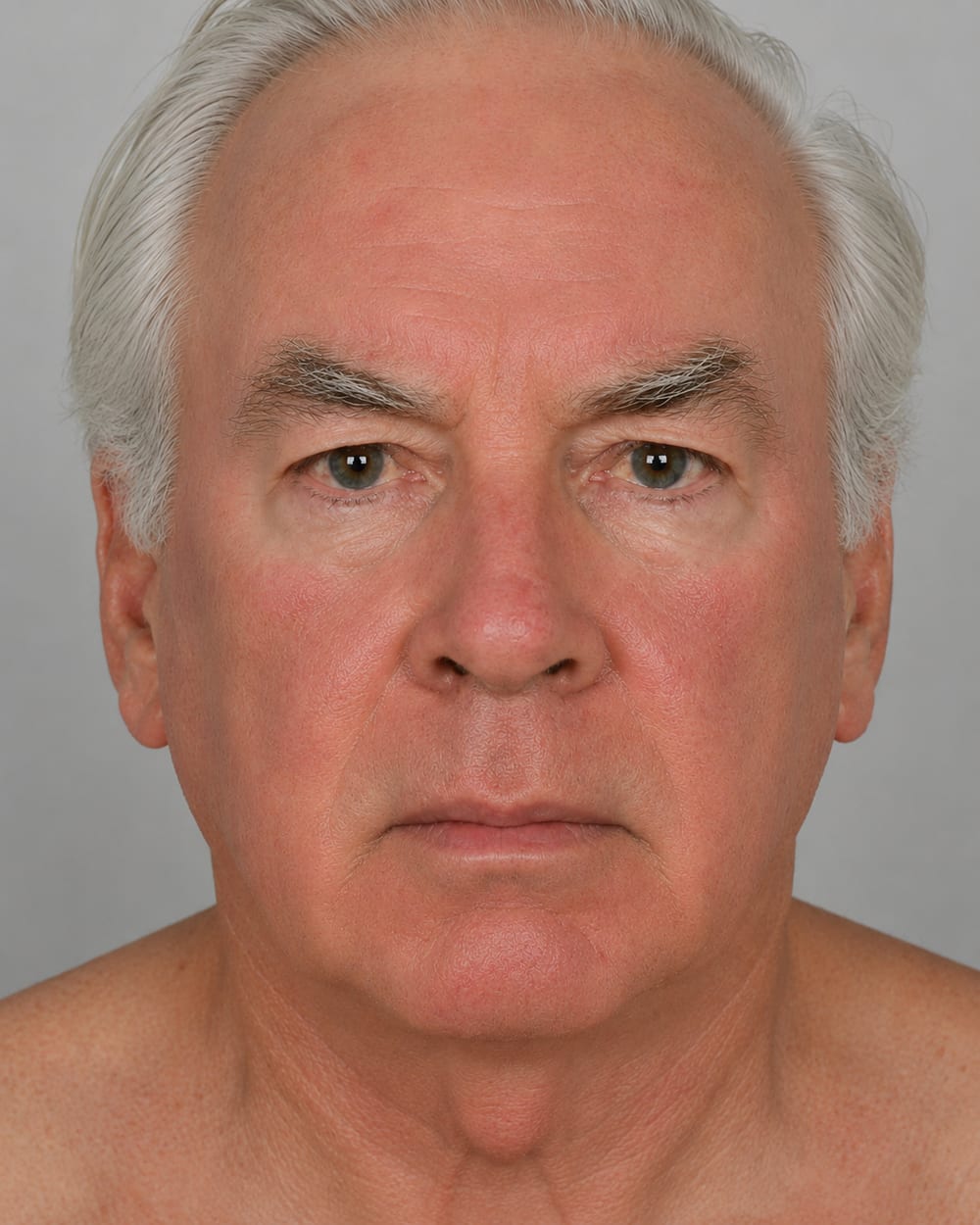
What helps: settle into the routine — consistent application as prescribed, hands washed after every dose, and moisturiser, sunscreen or make-up once the cream has absorbed (often around 20 minutes).
Call if: you develop immediate severe burning, swelling or blistering out of proportion to a mild sting — uncommon this early and worth checking.
Days 5–14 — the build
What is normal: the reaction announces itself. Increasing redness, burning and tenderness, some swelling. Sun-damaged patches begin to “light up” — often unevenly, so the area can look blotchy. Discomfort builds steadily.
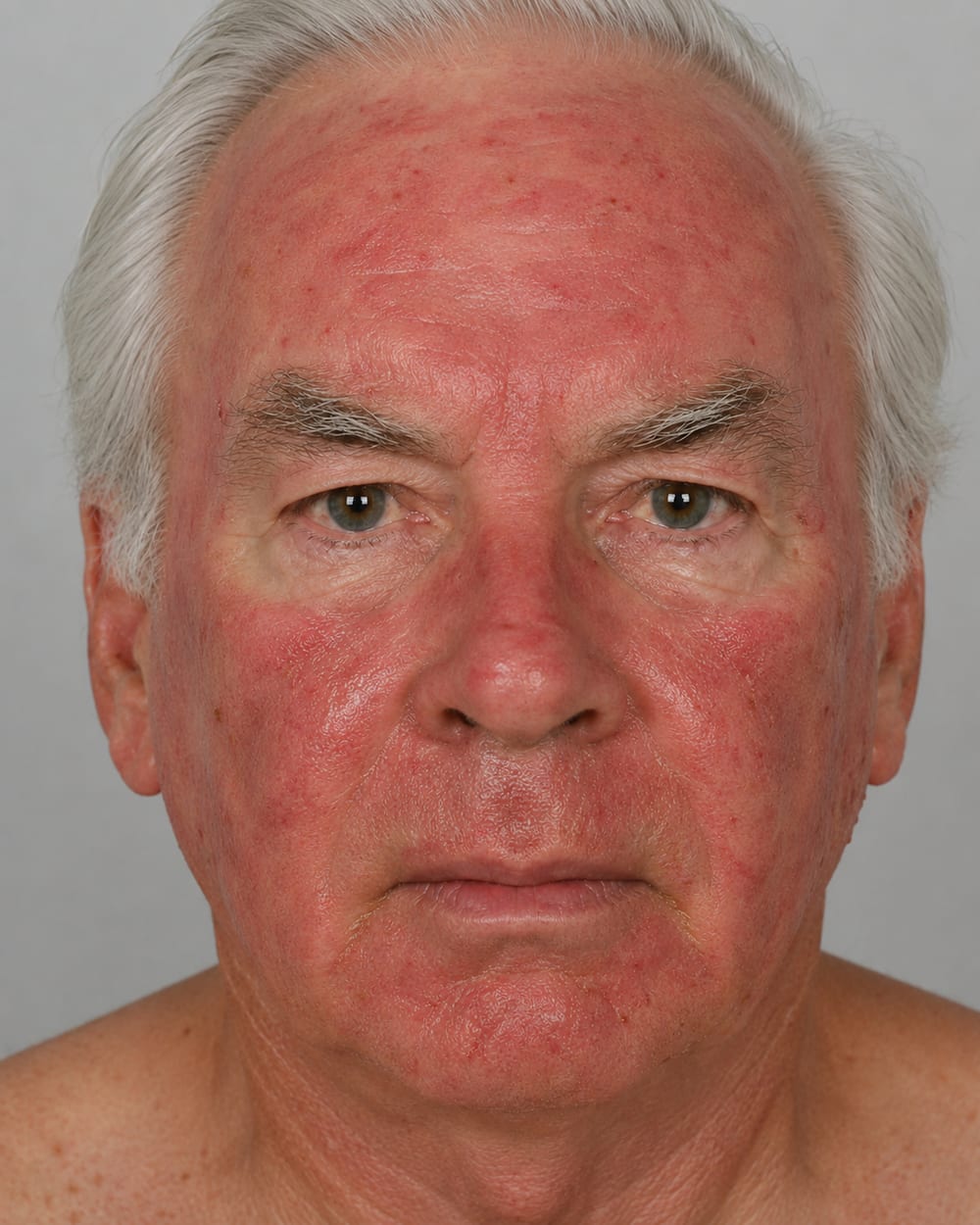
What helps: keep going unless advised otherwise — this build is expected. Bland moisturiser for comfort, loose clothing over treated body sites, and start planning around the peak if you are treating your face (many patients arrange 2–4 weeks of reduced social or work commitments).
Call if: the reaction is spreading well beyond the area you were asked to treat, or you are already struggling to continue — plans can often be adjusted early rather than abandoned late.
Weeks 2–6 — the peak
What is normal: this is the stage that shocks people who were not warned. Peak inflammation — deep redness, cracking, crusting and sometimes weeping. Facial movement (talking, eating, laughing) can be uncomfortable. Many patients describe it as the worst sunburn of their life, except it keeps building instead of fading. However dramatic it looks, this is the medicine doing its job — and published analyses have found that a stronger local reaction is associated with better clearance of actinic keratosis. (3,4)
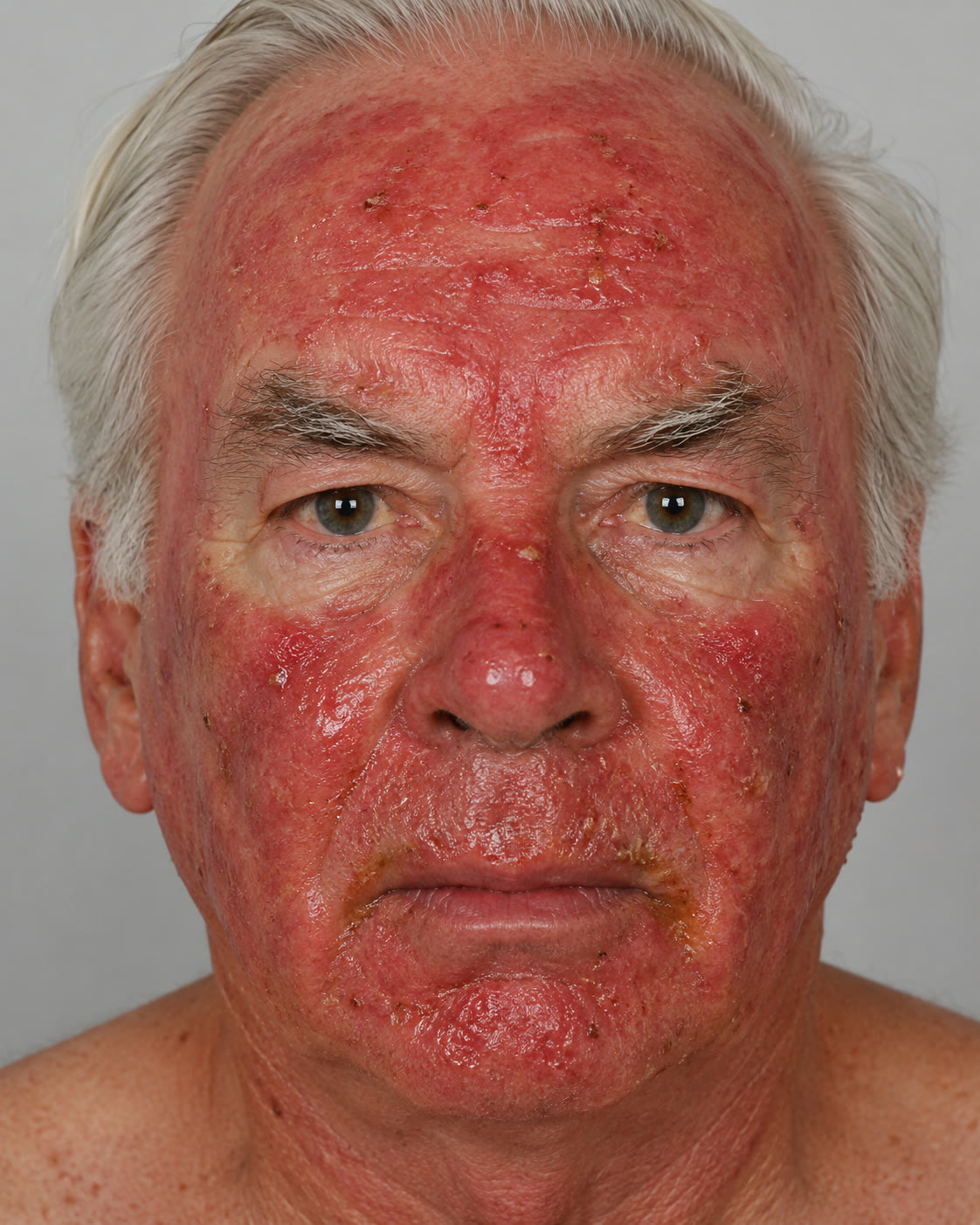
What helps: bland moisturiser as often as needed, gentle warm-water washing, and resisting the urge to pick crusts. Severity is not a target — you do not need to chase a worse reaction for a better result.
Call if: you genuinely cannot tolerate the pain despite simple measures; you see possible infection signs (spreading redness, increasing pain, pus, fever) — noting a normal peak can mimic infection, so when in doubt, get it checked; or you develop any whole-body symptoms (severe abdominal pain, vomiting, bloody diarrhoea, mouth or tongue soreness, fevers and chills) — these are rare but need urgent review.
One rule matters more than any other at this stage: stop on the date your doctor set — not when the reaction looks its worst, and not because the skin briefly looks better. Stopping early can leave abnormal cells under-treated; if you are struggling, contact the clinic to adjust the plan rather than quietly stopping. Course length is individual — commonly around 4 weeks for actinic keratosis and about 6 weeks for SCC in situ — and it is set by your doctor, not by the calendar on this page.
The day you stop — what the end looks like
By the planned stop date the treated area is typically red, crusted and tender — sometimes cracked or weeping. That is the expected end-state, not a sign something has gone wrong. The key reassurance: it does not keep getting worse once you stop. From the last application, the skin begins to settle.
Weeks 1–2 after stopping — settling
What is normal: the angry redness starts to calm, weeping dries, crusts begin lifting on their own, and comfort improves noticeably week on week. The area still looks obviously “treated”.
What helps: this is where aftercare earns its keep —
- moisturise frequently with a plain, bland emollient — the single most helpful thing for comfort and recovery;
- strict sun avoidance, adding daily SPF 50+ as soon as the skin tolerates it — freshly treated skin is very UV-sensitive;
- no picking or scrubbing — let crusts lift on their own;
- keep active skincare paused (acids, retinoids, scrubs) until fully settled.
Call if: pain is increasing rather than decreasing after stopping, or anything looks infected.
Weeks 2–4 after stopping — presentable again
What is normal: crusting resolves and new skin covers the area — often pink, smooth and a little shiny at first. Most patients treating their face feel comfortable in public somewhere in this window, which is why many plan 2–4 weeks of downtime from the peak onward. Make-up is usually fine again once the surface has healed over.
What helps: keep the moisturiser and daily SPF habit — it protects the result as well as the recovery.
Call if: any raw area is not steadily improving, or a patch breaks down after seeming to heal — especially on the lower legs, where healing is slower.
One to three months — the follow-up that matters
Residual pinkness fades over weeks; occasionally pigment change (darker or lighter patches) persists longer. Around 6–8 weeks after finishing, the treated area is reviewed to confirm clearance, deal with anything left behind, and set up ongoing surveillance — field treatment reduces future risk, it does not remove the need for regular skin checks. (2,5)
Any lesion that persists, regrows or ulcerates after treatment needs review rather than another round of cream on your own initiative.
Before you start — or if you’re mid-course and unsure
A 20-minute review is enough to check the reaction, adjust the plan if needed, or talk through whether Efudix or an alternative field treatment suits you better.
Related reading
Frequently asked questions
-
What do the stages of an Efudix (Efudex) reaction look like?
A typical arc is mild redness and stinging in the first few days, building redness, tenderness and swelling from about day 5–7, then peak inflammation — crusting, cracking and sometimes weeping — through weeks 2–6 depending on course length. After the last application the skin begins to settle, usually taking a further two to four weeks to look calm again. Timing varies with the site, the course prescribed and the amount of sun damage present. -
How long does it take to heal after finishing Efudix (Efudex)?
Most people take a further few weeks after the last application. Small spot treatments settle fastest; full-face field treatments commonly take two to four weeks before patients feel comfortable in public, and faint pinkness can persist for weeks beyond that. Healing that seems stalled, or skin that breaks down rather than steadily improving, should be reviewed. -
Does a strong Efudix reaction mean it is working?
A vigorous local reaction is expected and, in published analyses, a stronger local skin reaction has been associated with better clearance of actinic keratosis. The reverse is not a rule though — some patients clear well with milder reactions, and a severe reaction is not something to push through without advice. If the reaction feels unmanageable, contact your doctor rather than stopping on your own. -
How can I speed up healing after Efudex?
Keep the area clean and frequently moisturised with a plain, bland emollient, avoid the sun and wear SPF 50+ once the skin tolerates it, do not pick or scrub crusts, and pause active skincare — acids, retinoids, scrubs — until the skin has fully settled. There is no cream that shortcuts re-epithelialisation, but these steps stop it being slowed down. -
When should I worry during or after Efudix treatment?
Contact your doctor about spreading redness beyond the treated area, increasing pain after the course has finished, pus or an offensive smell, fevers or feeling systemically unwell, a raw area that is not gradually improving weeks after stopping, or any whole-body symptoms such as severe abdominal pain, mouth soreness or bloody diarrhoea — the last group is rare but needs urgent care. -
Will my skin look normal again after Efudix?
Usually, yes — once healed, treated skin generally looks like it did before, often with less scale and roughness where sun-damage was cleared. Some patients notice temporary pinkness for several weeks, and occasionally longer-lasting pigment change. Persistent or non-healing changes should be reviewed at your follow-up.
References
- Longley DB, Harkin DP, Johnston PG. 5-fluorouracil — mechanisms of action and clinical strategies. Nat Rev Cancer. 2003;3(5):330-338.
- Jansen MHE, Kessels JPHM, Nelemans PJ, et al. Randomized trial of four treatment approaches for actinic keratosis. N Engl J Med. 2019;380(10):935-946.
- Jury CS, Ramraka-Jones VS, Gudi V, Herd RM. A randomized trial of topical 5% 5-fluorouracil (Efudix cream) in the treatment of actinic keratoses comparing daily with weekly treatment. Br J Dermatol. 2005;153(4):808-810.
- Heppt MV, Trin K, Mille AC, Groc M, Delarue A, Bégeault N. Association between local skin reactions and efficacy with 5-fluorouracil 4% cream in actinic keratosis: a post-hoc analysis of two randomised clinical trials. Dermatol Ther (Heidelb). 2025;15(2):307-321.
- Pomerantz H, Hogan D, Eilers D, et al. Long-term efficacy of topical fluorouracil cream, 5%, for treating actinic keratosis: a randomized clinical trial. JAMA Dermatol. 2015;151(9):952-960.
Related
Related reading

By Dr Christopher Irwin, MBChB, FRACGP, MMed (Skin Cancer), FACAM, MSCCA
Last reviewed 2026-07-10 · Editorial policy