
- Field therapy — treats visible AKs and surrounding sub-clinical sun damage in one session.
- Over 92% of treated lesions clear in randomised trials (92.2% at three months) — among the most effective field treatments.
- Low recurrence — about 7.5% at twelve months, versus roughly 22% after conventional PDT.
- A calcipotriol-assisted option sustains 90.7% lesion clearance at twelve months for the most durable results.
- Most patients heal within 5–7 days — much shorter than weeks of cream therapy.
- Single in-clinic session — an alternative to 4+ weeks of daily Efudix or Aldara cream.
- Excellent cosmetic results with minimal scarring or pigment change.
- Doctor-led pathway including dermoscopic workup and biopsy of any suspicious lesions before treatment.
- Particularly useful for patients with multiple AKs or "chemo-cream fatigue" from prior topical courses.
- No referral required — book directly via the booking panel in the sidebar.
Why patients choose LA-PDT for AK
LA-PDT combines laser precision with PDT’s cellular targeting — delivering controlled treatment depth, superior aesthetic outcomes, and minimal downtime compared with cream-based field therapies. 7,9
What is actinic keratosis (AK) and why should you treat it?
Actinic keratosis (AK) is a precancerous skin condition caused by long-term sun exposure. These rough, scaly patches appear on sun-exposed areas like the face, ears, scalp, arms and hands. Though AKs are not cancer, they can turn into non-melanoma skin cancer (NMSC) — usually squamous cell carcinoma (SCC) — if left untreated. Treating them early helps prevent progression to skin cancer. 1,11
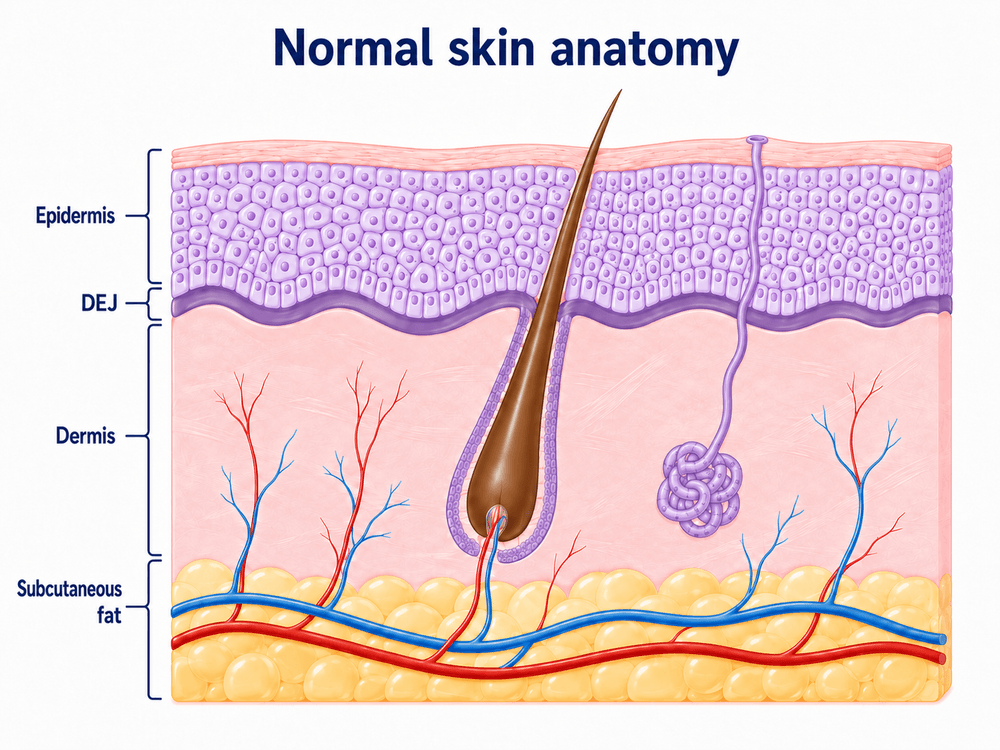
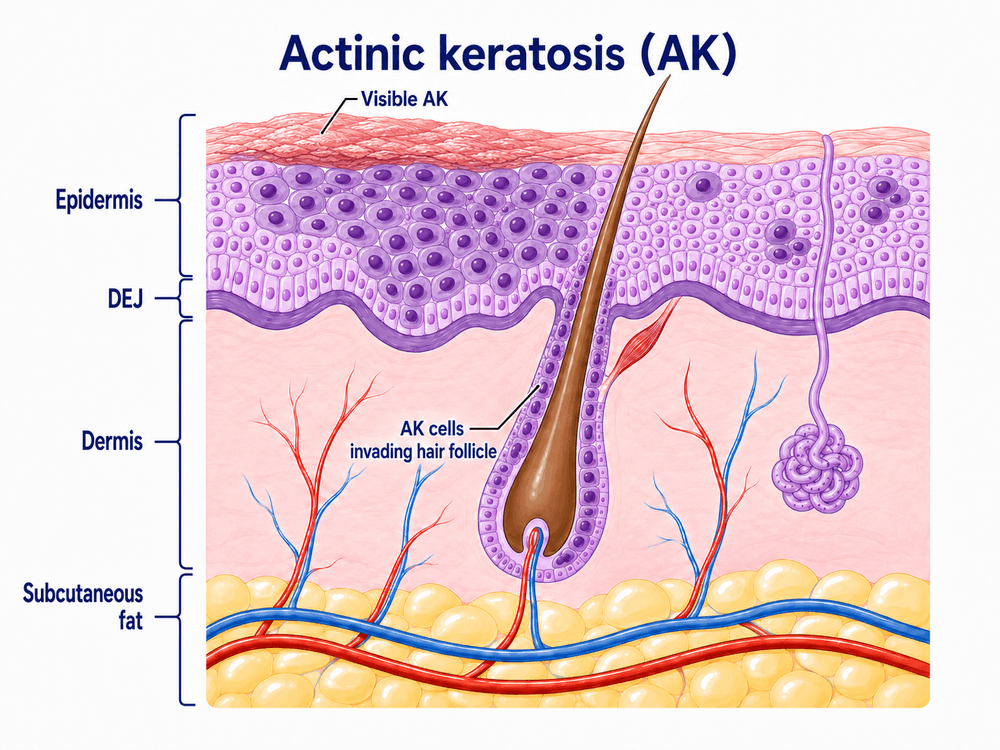
Treating the field, not just the visible spots
Actinic keratosis (AK) is best understood not just as a collection of isolated rough spots, but as a sign of wider sun damage affecting the entire “field” of skin. 2
Imagine your sun-damaged skin like a garden bed full of weeds. Some weeds are large and obvious (the thicker AK spots), while tens to hundreds of others are just starting to grow — only visible to the eye if you are kneeling directly in the dirt.
One treatment approach is to pluck out the biggest weeds — removing only the visible lesions. While this can provide short-term relief, it’s often a game of constant catch-up, as new weeds keep popping up from the same damaged soil.
The other approach is to treat the entire field — conceptually analogous to using weed spray on the whole field instead of just pulling the largest weeds out — to clear both visible and invisible precancerous cells. While this broader treatment can cause more short-term skin irritation, it offers better long-term control by addressing the entire area of damaged skin, not just what you can see with the naked eye. 2,10
We can treat either the most visible AKs or the entire field with laser-assisted photodynamic therapy.
How laser-activated photodynamic therapy (LA-PDT) works
Laser-activated photodynamic therapy is an advanced skin treatment using a light-sensitive drug (a photosensitiser — usually aminolevulinic acid, ALA, or methyl aminolevulinate, MAL/Metvix) activated by red LED light to destroy abnormal cells. Laser pre-treatment drives the drug deeper into the skin, and across randomised trials this makes lesion clearance about a third more likely than PDT alone. 7,9
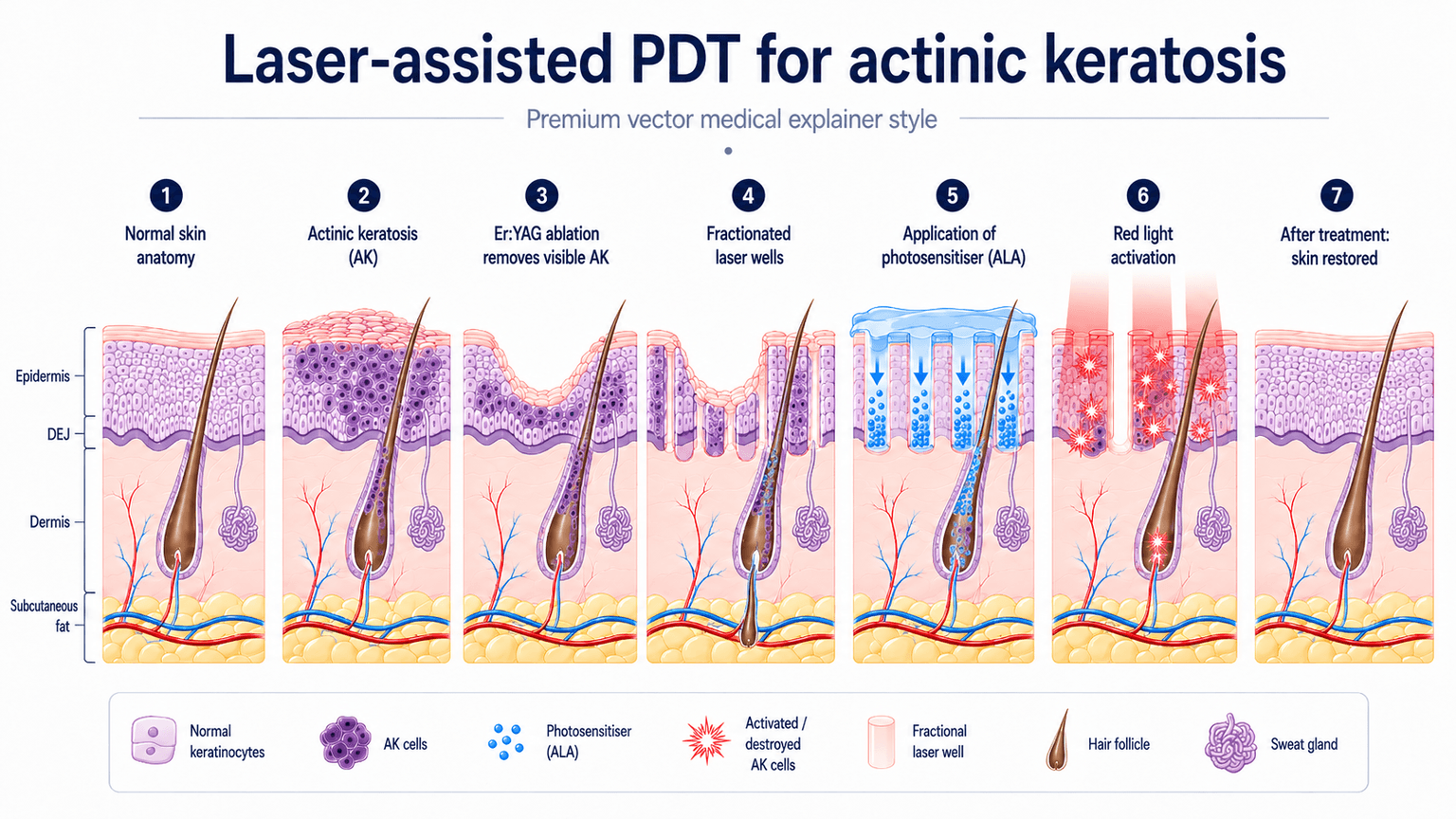
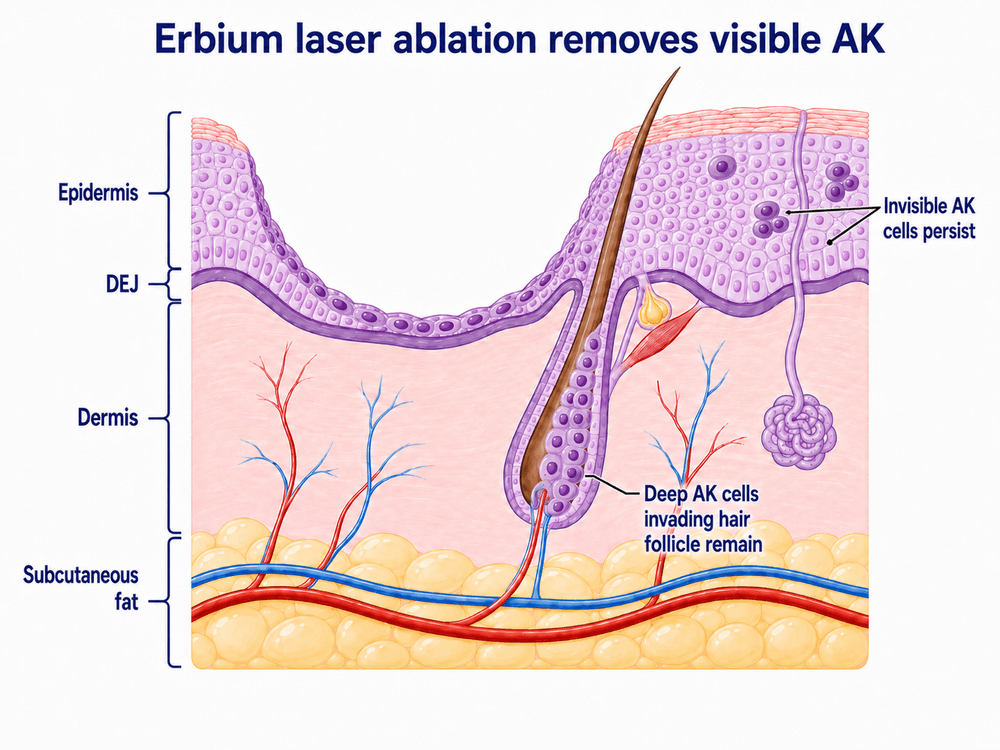
Step 1 — Erbium laser ablation of visible AKs
Complete destruction of any precancerous lesions with extremely precise laser ablation.
Pre-cancer (AK) by definition exists in the uppermost layer of the skin (the epidermis). This allows us to completely destroy any individual visible lesions by fully ablating the epidermis in this area — with no chance of scarring. In theory, this alone could destroy all precancerous cells. In practice, although precancer never invades beyond the dermo-epidermal junction (the tight membrane between the epidermis and the rest of the skin), precancerous cells do extend deeper via adnexal structures (e.g. hair follicles). This means treating only the surface with full ablative laser (or any simpler technique) is less effective than the more advanced combination treatments that follow.
Step 2 — Fractional ablative laser pre-treatment
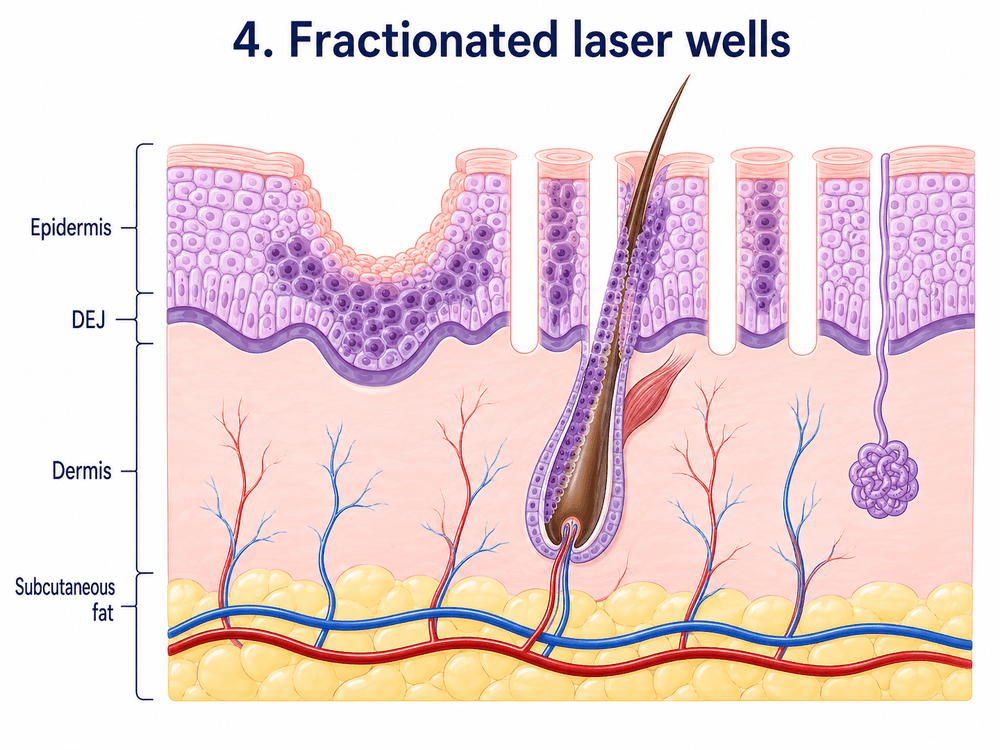
A fractional ablative laser is then used across the treatment field to create microscopic channels into the skin. These “wells”: 9
- Enhance penetration of the photosensitising cream into deeper skin and adnexal structures.
- Destroy some abnormal cells directly.
Step 3 — Photosensitising cream (ALA or MAL / Metvix)
A photosensitising drug — aminolevulinic acid (ALA) or methyl aminolevulinate (MAL, Metvix) — is applied as a cream to the skin and absorbed by abnormal cells over 1–3 hours.
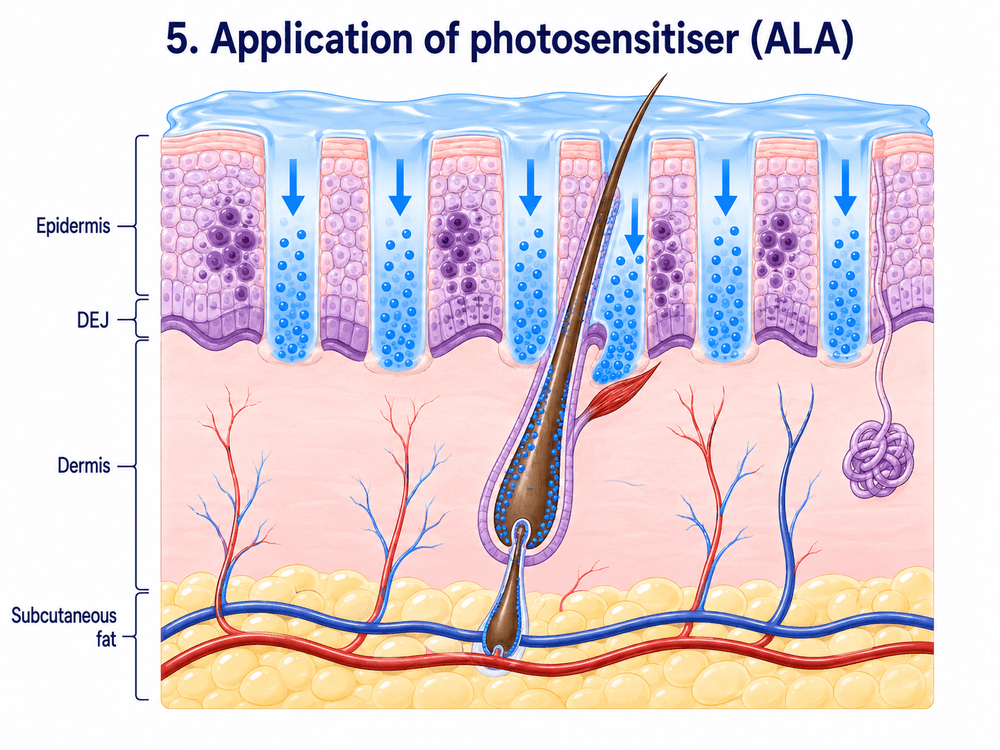
Both ALA and MAL are pro-drugs. After application, they enter skin cells and are converted through the body’s normal haem (red-blood-pigment) pathway into a natural light-sensitive molecule, protoporphyrin IX (PpIX).
Sun-damaged, precancerous and cancer cells have a more active and “imbalanced” haem pathway than healthy skin. They:
- Take up more drug (ALA / MAL).
- Make more of the upstream haem-pathway enzymes — converting more of the drug into PpIX.
- Have less of the final enzyme (ferrochelatase) that converts PpIX into safe molecules the light won’t activate.
As a result, PpIX builds up to much higher levels in actinic keratoses and non-melanoma skin cancers than in surrounding normal skin.
Step 4 — Red LED light activation
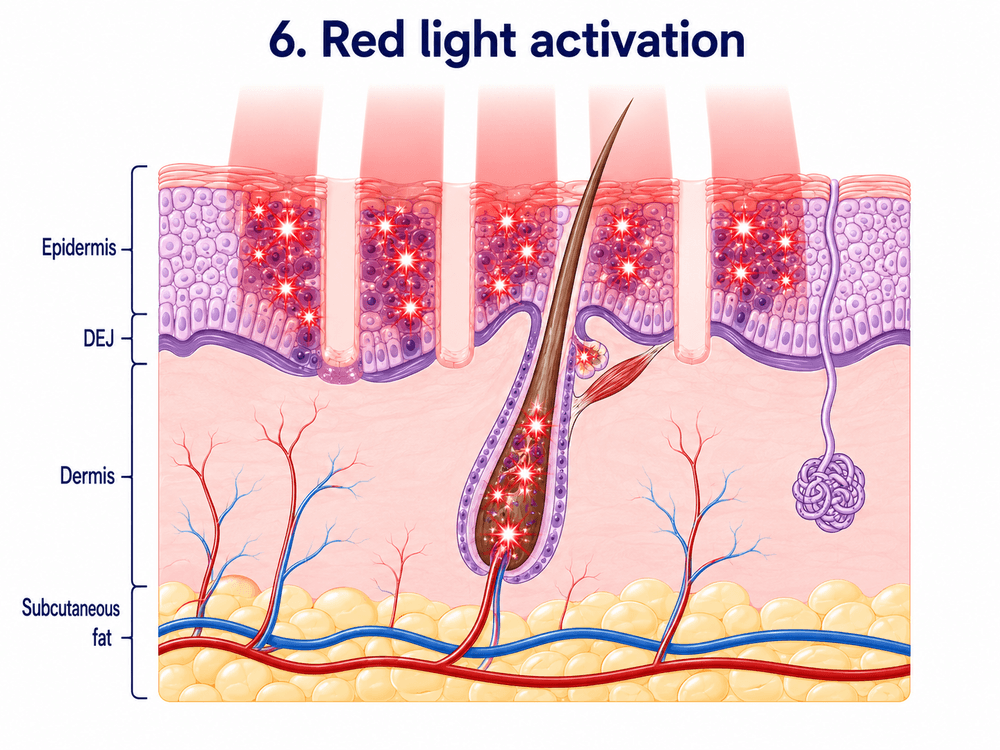
The excess cream is first wiped away — by this point the only photosensitiser left in the skin is inside the damaged and precancerous cells. We then shine the red treatment light onto the skin. This wavelength is designed to specifically interact with PpIX, generating reactive oxygen species (ROS) that preferentially damage and destroy cancerous and precancerous cells, while normal skin (with much lower PpIX levels) is relatively spared.
After treatment — a restored field
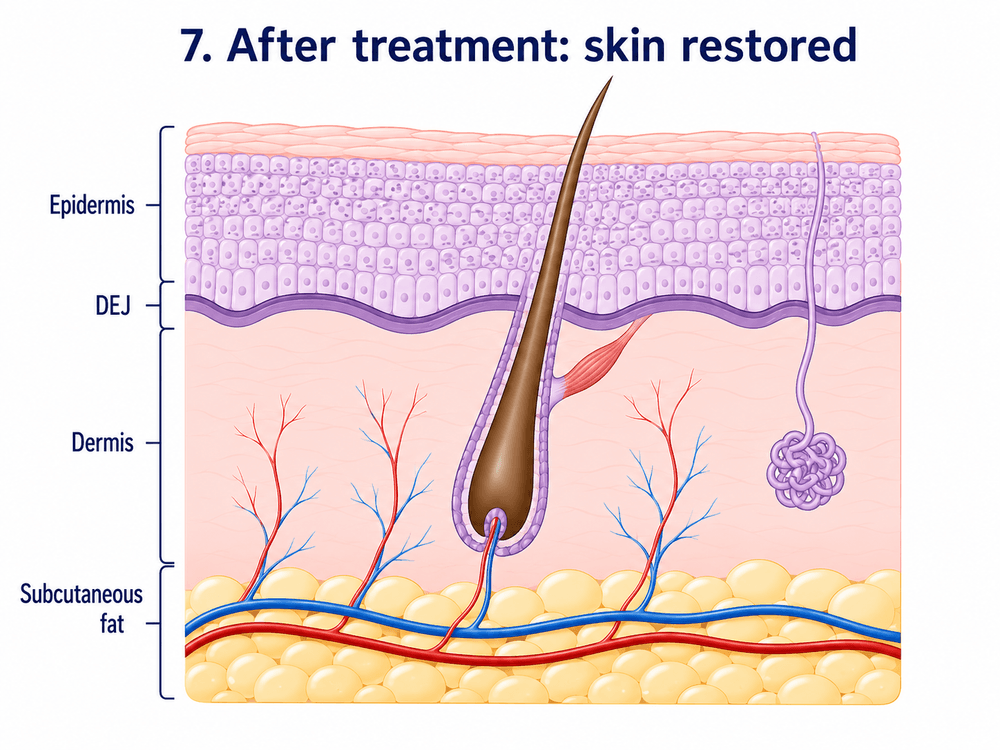
Over the following 5–7 days the treated field heals: the crust separates, the skin re-epithelialises, and the sun-damaged field is restored — clearing both the visible sunspots and the surrounding sub-clinical damage together.
Calcipotriol-assisted LA-PDT — for the most durable results
For widespread field damage, thicker keratoses, or skin that has not fully responded to previous treatment, we may add a calcipotriol prime before the laser-and-PDT protocol. Calcipotriol is a topical vitamin D analogue; applied once daily for up to two weeks beforehand, it primes sun-damaged cells to make even more PpIX, increasing the strength and selectivity of the photodynamic reaction.
The clinical results are why we offer it. In a randomised split-scalp trial, calcipotriol-assisted PDT cleared 92% of lesions at three and six months and maintained 90.7% clearance at twelve months — compared with 82% and 77.5% for conventional PDT on the same patients. 4,5 A separate randomised trial (Seo & Song, 2018) confirmed that calcipotriol improves laser-assisted PDT outcomes specifically, including in darker (Fitzpatrick III–V) skin types. 6 Across the wider evidence base, meta-analysis shows that combining PDT with a topical agent such as calcipotriol produces higher clearance than PDT alone. 8
The trade-off is a little more redness and scaling during the priming phase, which most patients tolerate well. We discuss whether a calcipotriol prime is right for you at consultation.
What LA-PDT can treat
- Precancerous lesions: solar/actinic keratoses (AKs).
- Superficial skin cancers: SCC in situ (Bowen’s disease) and superficial basal cell carcinoma — see our LA-PDT for non-melanoma skin cancer page for the cancer-specific pathway.
- Precancerous change on the lip: actinic cheilitis — treated by laser vermilionectomy, where erbium laser ablation of the vermilion is often followed by PDT for the surrounding field. In a randomised actinic cheilitis trial, Er:YAG laser-assisted MAL-PDT achieved 92% complete response versus 59% for PDT alone, with 12-month recurrence of 8% versus 50%.
- Cosmetic concerns: redness, broken capillaries, sun spots, pigmentation, fine lines and texture.
- Acne: moderate inflammatory acne — by reducing oil production and inflammation.
How effective is laser-assisted PDT?
In randomised controlled trials, laser-assisted PDT clears over 92% of treated actinic keratoses. An erbium fractional laser-assisted MAL-PDT trial reported 91.7% complete clearance at three months, with a 12-month recurrence of just 7.5% — versus 22.1% after conventional PDT. 3 A further randomised trial of ablative fractional laser-assisted MAL-PDT (3-hour MAL incubation) recorded 92.2% complete clearance at three months. 12 A systematic review and meta-analysis found laser pre-treatment makes clearance about a third more likely than PDT alone (risk ratio 1.33). 7 When durability matters most, a calcipotriol prime sustains 90.7% clearance at twelve months. 4
Comparison
Benefits over cream-based treatments
| Field creams (Efudix / Aldara) | Laser-assisted PDT | |
|---|---|---|
| Treatment effort | 4+ weeks of strict daily cream at home | One in-clinic session |
| Visible skin reaction | Often several weeks | Usually 5–7 days |
| Reaches the whole field | Yes (surface) | Yes — plus deeper delivery via laser channels |
| 12-month recurrence | Varies | ≈7.5% after LA-PDT |
| Best suited to | Motivated patients, smaller areas | Many AKs, “chemo-cream fatigue”, cosmetically sensitive sites |
Shorter healing time compared to Efudix or Aldara
Laser-assisted PDT generally causes less skin irritation and faster recovery than creams like 5-fluorouracil (Efudix) or imiquimod (Aldara). Most patients recover in 5–7 days, while creams can cause visible reactions for several weeks. 3,10
No daily application required — addressing “chemo-cream fatigue”
Unlike creams, which require 4+ weeks of strict daily application at home, LA-PDT is performed in one in-clinic session. It is the preferred pathway for patients with multiple AK spots, difficulty following daily home regimens, or “chemo-cream fatigue” from prior cream courses that produced weeks of visible reaction.
Excellent cosmetic results after healing
LA-PDT is gentle on surrounding healthy skin and avoids scarring or pigment changes. Many patients are highly satisfied with the cosmetic appearance of their skin after healing — particularly important for face, scalp and lower-leg sites where prolonged cream reactions or surgical scarring are undesirable. 3
Related pages
- LA-PDT for Non-Melanoma Skin Cancer — companion pathway for superficial BCC, SCC in situ, and selected nodular BCC
- Non-Surgical Treatment of Non-Melanoma Skin Cancer — sub-hub comparing all non-surgical options
- Actinic Keratosis Treatment Options — overview comparing LA-PDT, Efudix, Aldara and cryotherapy
- Laser Vermilionectomy for Actinic Cheilitis — the equivalent pathway when the sun damage is on the vermilion of the lip, where PDT is often added after erbium laser ablation
- Efudix (5-fluorouracil)
- Aldara (imiquimod)
- Actinic Keratosis (condition)
What to expect
-
Consultation and field assessment
Photographs and dermoscopic review of the sun-damaged field. Suspicious lesions are biopsied first if there is any concern for invasive cancer.
-
Step 1 — Erbium laser ablation of visible AKs
Visible thicker actinic keratoses are precisely ablated with an erbium laser. AKs sit in the uppermost layer of the skin (the epidermis), allowing complete destruction without scarring.
-
Step 2 — Fractional ablative laser pre-treatment
A fractional ablative laser is used across the treatment field to create microscopic channels. These wells enhance absorption of the photosensitising cream and directly destroy some abnormal cells.
-
Step 3 — Photosensitising cream
Aminolevulinic acid (ALA) or methyl aminolevulinate (MAL, Metvix) is applied as a cream to the treated field. Over 1–3 hours, abnormal and sun-damaged cells preferentially take up the drug and convert it into protoporphyrin IX (PpIX). Where indicated, a calcipotriol prime is applied daily for up to two weeks beforehand.
-
Step 4 — Red LED light activation
Excess cream is wiped away. A red treatment light is then shone onto the area. The light interacts specifically with PpIX inside damaged cells, generating reactive oxygen species that selectively destroy the targeted cells.
Results timeline
- Immediately after treatment Treated field is red, swollen, tender. A crusted reaction develops over the next 24–48 hours.
- 5–7 days Crusts separate and the skin re-epithelialises. Shorter recovery than topical creams, which can cause visible reactions for several weeks.
- 6–8 weeks Clinical review of the treated field. Any residual or new AKs identified and a focused approach planned. Decisions made about ongoing field therapy frequency.
- Ongoing 6–12 monthly skin checks. Repeat field therapy every 1–2 years may be appropriate if ongoing sun damage produces new lesions.
Ideal candidate
- Patients with widespread actinic keratosis (AK) or "field" sun damage on the face, scalp, ears, neck or hands.
- Patients who have had previous AKs or SCCs and want to reduce the risk of new lesions.
- Patients with "chemo-cream fatigue" — those who want to avoid 4–8 weeks of inflammatory reaction and daily home application of Efudix (5-fluorouracil) or Aldara (imiquimod).
- Patients who prioritise cosmetic outcomes — particularly on the face, scalp or lower legs where prolonged cream reactions or surgical scarring are undesirable.
- Immunosuppressed patients (eg. transplant recipients) with elevated AK and SCC risk.
- Patients without active infection, open wounds or photosensitivity disorders affecting the treatment area.
Frequently asked questions
-
Why treat actinic keratosis as a "field" rather than spot by spot?
AKs are best understood as a sign of wider sun damage, not isolated rough spots. Treating only the visible lesions is a game of catch-up — field therapy targets both visible and sub-clinical pre-cancerous cells across the whole damaged area, reducing the rate of new AKs and SCCs over time. -
How effective is laser-assisted PDT for AKs?
In randomised trials, laser-assisted PDT clears over 92% of treated actinic keratoses. Randomised trials report 91.7% and 92.2% complete clearance at three months, with only 7.5% recurrence at one year versus 22.1% after conventional PDT. Adding a calcipotriol prime sustains 90.7% lesion clearance at twelve months. These figures describe the proportion of treated lesions that resolve; individual results vary with lesion thickness, number and site. -
What is calcipotriol-assisted LA-PDT, and is it better?
Calcipotriol is a topical vitamin D analogue applied for up to two weeks before treatment to prime sun-damaged cells to make more of the light-sensitive compound PpIX. In a randomised split-scalp trial it cleared 92% of lesions at three and six months and held 90.7% clearance at twelve months, versus 82% and 77.5% for conventional PDT on the same patients, and a separate trial confirmed it improves laser-assisted PDT outcomes including in darker (Fitzpatrick III–V) skin. We use it where durability matters most — widespread or thicker field damage. -
How does LA-PDT compare to Efudix (5-fluorouracil) or Aldara (imiquimod)?
LA-PDT is completed in one in-clinic session with healing in 5–7 days. Efudix (5-fluorouracil) and Aldara (imiquimod) require 4+ weeks of strict daily home application and can cause visible inflammatory reactions for several weeks. LA-PDT is the preferred pathway for patients with multiple AKs, difficulty following daily home regimens, or "chemo-cream fatigue" from prior cream courses. -
When is LA-PDT preferred over cryotherapy, creams or surgery?
LA-PDT is most useful when the field is widely affected (multiple visible AKs on the face, scalp, ears, neck or hands), or when prior cryotherapy or topical creams have been incomplete. Cryotherapy targets individual visible spots and does nothing for the surrounding sub-clinical sun damage. Surgery is reserved for invasive or atypical lesions identified during the workup. LA-PDT pairs single-session in-clinic delivery with field-level reach — it is rarely the right tool for an isolated single lesion. -
Will my AKs come back?
Field therapy clears visible AKs and reduces the rate of new AKs and SCCs over time, and recurrence after laser-assisted PDT is low (about 7.5% at twelve months). However, ongoing sun exposure can produce new lesions. Daily SPF 50+, sun protection and regular skin checks are essential. Many patients with widespread sun damage benefit from repeat field therapy every 1–2 years. -
I'm immunosuppressed — does this change anything?
Immunosuppressed patients (eg. transplant recipients) have a much higher rate of AKs and SCCs. We typically recommend more aggressive and more frequent field therapy plus closer skin surveillance — often 3 or 6-monthly checks rather than annual. -
Is LA-PDT covered by Medicare or private health insurance?
LA-PDT for actinic keratosis is generally not covered by Medicare in Australia (no specific MBS item for this combined laser-plus-PDT protocol). Some private health funds cover a portion of the consultation. The treatment cost and any subsidies that apply to your circumstances are discussed transparently at consultation. -
Do I need a referral?
No referral is required. You can book directly via the booking panel in the sidebar. If you have a referral from your GP or dermatologist for our records we welcome it, but it is not required to book or to be seen.
References
- Balcere A, et al. Clinical characteristics of actinic keratosis associated with the risk of progression to invasive squamous cell carcinoma — a systematic review. J Clin Med. 2022;11(19):5899.DOI: 10.3390/jcm11195899
- de Andrade FAG, Isoldi FC, Ferreira LM. Skin field cancerisation — a systematic review of the literature regarding its treatment. Eur J Cancer Care. 2021;30(2):e13366.DOI: 10.1111/ecc.13366
- Choi SH, Kim KH, Song KH. Efficacy of ablative fractional laser-assisted photodynamic therapy with short-incubation time for facial and scalp actinic keratosis — 12-month follow-up of a randomized comparative trial. J Eur Acad Dermatol Venereol. 2015;29(8):1598–1605.DOI: 10.1111/jdv.12953
- Torezan L, et al. A 12-month follow-up split-scalp study comparing calcipotriol-assisted MAL-PDT with conventional MAL-PDT for actinic keratosis — a randomized controlled trial. Eur J Dermatol. 2021;31(5):638–644.DOI: 10.1684/ejd.2021.4137
- Torezan L, et al. A randomized split-scalp study comparing calcipotriol-assisted MAL-PDT with conventional MAL-PDT for the treatment of actinic keratosis. Br J Dermatol. 2018;179(4):829–835.DOI: 10.1111/bjd.16473
- Seo JW, Song KH. Topical calcipotriol before ablative fractional laser-assisted photodynamic therapy enhances outcomes for actinic keratosis in Fitzpatrick grades III–V skin — a prospective randomized clinical trial. J Am Acad Dermatol. 2018;78(4):795–797.DOI: 10.1016/j.jaad.2017.10.015
- Steeb T, et al. Laser-assisted photodynamic therapy for actinic keratosis — a systematic review and meta-analysis (pooled risk ratio 1.33 for clearance vs PDT alone). J Am Acad Dermatol. 2019;80(4):947–956.DOI: 10.1016/j.jaad.2018.09.021
- Heppt MV, Steeb T, Leiter U, Berking C. Efficacy of photodynamic therapy combined with topical interventions for actinic keratosis — a meta-analysis. J Eur Acad Dermatol Venereol. 2019;33(5):863–873.DOI: 10.1111/jdv.15459
- Labadie JG, et al. Evidence-based clinical practice guidelines for laser-assisted drug delivery. JAMA Dermatol. 2022;158(10):1193–1201.DOI: 10.1001/jamadermatol.2022.3234
- Patel P, Wang J, Bitterman D, et al. Systematic review of randomized controlled trials of topicals for actinic keratosis field therapy. Arch Dermatol Res. 2024;316(4):108.DOI: 10.1007/s00403-024-02839-y
- DermNet — Actinic keratoses (solar keratosis), diagnosis and treatment.
- Choi SH, Kim TH, Song KH. Efficacy of iontophoresis-assisted ablative fractional laser photodynamic therapy with short incubation time for the treatment of actinic keratosis — 12-month follow-up of a prospective, randomised, comparative trial (92.2% complete clearance at three months with ablative fractional laser-assisted MAL-PDT, 3-hour incubation). Photodiagnosis Photodyn Ther. 2017;18:105–110.DOI: 10.1016/j.pdpdt.2017.01.184
- Jansen MHE, Kessels JPHM, Nelemans PJ, et al. Randomized trial of four treatment approaches for actinic keratosis — at 12 months, 74.7% of fluorouracil (Efudix) patients retained at least a 75% reduction in lesion count, versus 37.7% for MAL-PDT, 53.9% for imiquimod and 28.9% for ingenol mebutate; 5-fluorouracil was applied twice daily for four weeks. N Engl J Med. 2019;380(10):935–946.DOI: 10.1056/NEJMoa1811850
Related
Related conditions
Medically reviewed by Dr Christopher Irwin, MBChB, FRACGP, MMed (Skin Cancer), FACAM, MSCCA · Published 2026-06-06 · Updated 2026-06-19 · Editorial policy