
- Prescription immune-modifier cream that triggers a local immune attack on abnormal cells.
- Used mainly for superficial BCC, SCC in situ (Bowen's disease) and selected actinic keratosis.
- Typical course — once daily, 5 days per week, for 6 weeks.
- Reported clearance rates around ~70–80% for properly selected superficial lesions.
- Produces a progressive inflammatory reaction peaking in weeks 3–6.
- Generally avoided in pregnancy; caution in breastfeeding and immunosuppression.
- Also approved for genital warts; off-label and not first-line for common warts, and not recommended for molluscum (no proven benefit over placebo).
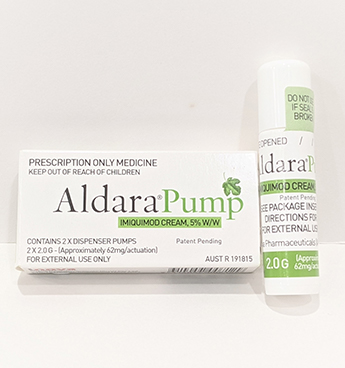
Aldara (imiquimod) is a prescription immune-activating cream used to treat selected, thin skin cancers and sun-damage pre-cancer. At The Skin Doctor, we use Aldara (imiquimod) mainly for:
- Superficial basal cell carcinoma (sBCC) — see Superficial BCC
- Squamous cell carcinoma in situ (SCCis / Bowen’s disease) — see SCC in Situ (Bowen’s)
- Actinic keratosis (AK) in selected cases — see Actinic Keratosis and Actinic Keratosis Treatment
- Warts (off-label use) — see Warts
If you’re deciding between topical treatments, also read:
- Efudix (5-fluorouracil)
- Laser-Assisted PDT for non-melanoma skin cancer
- Laser-Assisted PDT for actinic keratosis
When Aldara (imiquimod) is a good option
Aldara (imiquimod) can be a good choice when:
- The lesion is confirmed (often by biopsy) to be suitable and thin/superficial.
- You want to avoid (or delay) surgery where appropriate.
- The location or your scarring preference makes a non-surgical approach attractive.
Aldara (imiquimod) is not suitable for every lesion. Depth, subtype, location, immune status and diagnostic certainty matter.
If you have one to three spots you’re worried about, start with a Targeted Skin Spot Check.
How Aldara (imiquimod) works
Aldara (imiquimod) activates immune signalling in the skin (including Toll-like receptor pathways), which helps your body recognise and destroy abnormal cells. 1
A key concept: Aldara (imiquimod) works by creating an immune reaction. Some redness and inflammation is expected — and often correlates with response — but we still want the reaction to remain safe and controlled.
How effective is Aldara (imiquimod)?
For properly selected superficial lesions, studies show clearance rates in the roughly 70–80% range depending on the protocol and how clearance is defined (clinical versus histological). 2,3,4
For context, surgical removal of a suitable low-risk lesion usually has a higher cure rate (around 97% for low-risk lesions), but involves a scar and surgical downsides. 5
What patients often like about Aldara (imiquimod):
- usually minimal scarring
- no cutting, stitches or surgical wound care
- treatment is done at home (with structured follow-up)
Aldara (imiquimod) vs Efudix (5-fluorouracil): which is “easier”?
People often find Aldara (imiquimod) more tolerable than Efudix (5-fluorouracil), but reactions vary widely.
If you’re treating actinic keratoses (AK), we often prefer Efudix (5-fluorouracil) — it tends to be more convenient and predictable, and in head-to-head trials it clears AK more effectively than imiquimod — but Aldara (imiquimod) can still be appropriate in selected situations. 6
Compare: Efudix (5-fluorouracil).
Aldara or laser-assisted photodynamic therapy (LA-PDT)?
Aldara (imiquimod) is one of several ways to treat selected superficial skin cancers and sun-damage pre-cancer. For a widespread field of sun damage, LA-PDT clears the area in a single in-clinic session — instead of weeks of daily cream.
| Superficial BCC clearance | SCC in situ clearance | AK clearance | Course & downtime | Cosmetic outcome | |
|---|---|---|---|---|---|
| Laser-assisted PDT | Up to ~100% clearance 11,12 | ~93.8% clearance 10 | ~92% complete clearance 8,9 | 1 in-clinic session; heals in 5–7 days | Excellent — minimal scarring or pigment change |
| Aldara (imiquimod) | ~80–82% (non-facial lesions) 2,3 | ~73% clearance 4 | ~54% 6 | Once-daily cream at home, 5 days/week for ~6 weeks; weeks of reaction 2 | Good — usually minimal scarring, some risk of pigment change |
Not sure which suits you? LA-PDT clears the field in one session with far less downtime — but Aldara (imiquimod) is an effective, lower-cost option you can do at home. Read more about LA-PDT for actinic keratosis or skin cancer here, or book a 20-minute review with Dr Chris to discuss the best option for your skin.
How to use Aldara (imiquimod)
Your exact plan should come from your doctor. A common regimen for selected superficial skin cancers is:
- Apply Aldara (imiquimod) once daily, 5 days per week, for 6 weeks.
How much to use
More is not better. A practical guide:
- A thin film is the goal.
- A pea-sized amount is usually enough for a small lesion area.
- By about 10 minutes after applying, you generally shouldn’t see visible white cream sitting on the skin.
Step-by-step
- Timing — apply 2–3 hours before bed so it can absorb and won’t rub off onto bedding.
- Clean the area — wash with warm water, avoid harsh cleansers or scrubs, pat dry, then wait 10–15 minutes.
- Apply correctly — use a glove (or wash hands thoroughly afterwards). Apply to the lesion plus the margin your doctor recommends (often about 5 mm). Avoid eyes, nostrils, lips and other mucous membranes.
- Don’t occlude unless instructed — occlusive dressings can intensify the reaction.
- After applying — wash hands well. After about 20 minutes you can apply moisturiser, sunscreen and/or makeup as needed.
- Treatment area limits — do not treat large areas unless specifically instructed.
- Review after treatment — we normally review the area after the course is finished (often including dermoscopy) to check response and decide if further treatment or biopsy is needed.
What to expect during treatment
A typical timeline:
- Week 1–2 — mild redness/itching can start.
- Week 3–6 — inflammation often ramps up (redness, crusting, soreness).
- After finishing — the area gradually settles over weeks, and the final appearance continues to improve.
Some areas (for example, the side of the nose) can swell and look dramatic. This can be normal — but if you’re worried, contact your treating doctor.
Side effects and risks
Common local effects
- redness, burning, itching
- crusting / scabbing
- swelling
- weeping or mild erosions
Pigment change
Any significant inflammation can disrupt pigment cells and cause lighter or darker patches. Risk is higher with UV exposure during or after treatment.
Strict sun avoidance and sunscreen are important during treatment and for weeks afterwards.
Scarring (uncommon)
Most people do not scar, but intense inflammation can occasionally cause scarring. If scarring risk is a major concern, discuss alternatives such as LA-PDT for non-melanoma skin cancer or surgery.
Worsening facial redness / rosacea-type vessels (rare)
Inflammation can sometimes unmask or worsen facial redness. If you already have rosacea or are redness-prone, discuss options first.
Non-healing ulcer
Lower legs have relatively reduced blood supply, and inflammation can occasionally cause delayed healing. Lower-leg lesions are managed cautiously and under close review.
Infection (uncommon)
Treated skin can look alarming without being infected. Seek review promptly if you have rapidly spreading redness, increasing pain or warmth, pus, or fevers / feeling unwell.
Who should not use Aldara (imiquimod)?
Generally avoid or use only under specialist guidance in:
- pregnancy
- breastfeeding (limited data — caution)
- immunosuppression (may be less effective; planning differs)
Always tell your doctor about medical history and medications.
When to contact your doctor urgently
Stop and seek medical advice if you develop:
- severe pain, extensive ulceration, or rapidly worsening swelling
- fever, rigors or feeling systemically unwell
- signs of spreading infection
- eye involvement (especially eyelid swelling with visual symptoms)
Alternatives
Depending on diagnosis and site, alternatives may include:
- Efudix (5-fluorouracil)
- LA-PDT for non-melanoma skin cancer
- Actinic Keratosis Treatment Options (field treatment)
- Surgery (often the highest-cure option when appropriate)
Aldara (imiquimod) for warts and molluscum
Most of this page covers Aldara (imiquimod) for skin cancer and sun-damage pre-cancer. Because imiquimod works by stimulating a local immune response, it is also used for some virus-related skin conditions — and these are common questions:
- Genital and perianal warts — imiquimod 5% cream is an approved treatment for external genital and perianal warts in adults, applied a few times a week over several weeks.
- Common warts (hands, fingers) and flat warts — here imiquimod is off-label and not a first-line option, and most ordinary warts are treated first with cryotherapy (freezing) or salicylic acid. Where it is used for stubborn or widespread warts, the response is modest: a randomised trial in flat (plane) warts found imiquimod cleared about 50% of patients, 13 while in previously-resistant common warts about 30% cleared completely (and roughly half had a meaningful reduction). 14 See our warts page for the full range of options.
- Molluscum contagiosum — imiquimod is not recommended. A Cochrane review of randomised trials found it no more effective than a placebo cream, and it is not approved for this use. 7 Most molluscum clears on its own, so gentler measures are usually preferred — especially in children.
How it works on warts is the same as on skin cancer: it triggers a local immune reaction rather than dissolving the wart directly, so some redness and irritation is expected and is a sign the cream is active. If a treated spot looks redder, sore or crusted, that is usually the intended reaction — but if warts are clearly spreading, or you are unsure, have it reviewed.
Warts and molluscum are diagnosed and managed differently from skin cancer. If you would like a plan, book a consultation and we will confirm the diagnosis and the most appropriate treatment.
Related pages
What to expect
-
Consultation and diagnosis
Clinical examination and dermoscopy, with biopsy where appropriate. We confirm the lesion is thin and superficial enough for Aldara (imiquimod) and rule out higher-risk subtypes that need surgery.
-
Written treatment plan
A common regimen for selected superficial skin cancers is Aldara (imiquimod) once daily, 5 days per week, for 6 weeks. You receive a written plan with area to treat, dose, and what to expect at each phase.
-
At-home application
Apply Aldara (imiquimod) 2–3 hours before bed so it can absorb without rubbing onto bedding. Wash with warm water, pat dry, wait 10–15 minutes, then apply a thin film to the lesion plus the margin advised (often around 5 mm). Avoid eyes, nostrils, lips and other mucous membranes.
-
Managing the reaction
Expect mild redness in weeks 1–2, building to peak inflammation in weeks 3–6 (redness, crusting, soreness, sometimes weeping). Do not occlude the area. Moisturiser, sunscreen and makeup are usually fine after about 20 minutes.
-
Review and surveillance
We review the area after the course, usually with dermoscopy, to check response and decide if further treatment or biopsy is required.
Results timeline
- Week 1–2 Mild redness and itching may begin.
- Week 3–6 Inflammation peaks — redness, crusting, soreness. Some areas (eg. side of nose) may swell dramatically.
- After finishing The area gradually settles over weeks; appearance continues to improve.
- Reassessment Clinical and dermoscopic review after the course. Biopsy if there is any doubt about clearance.
Ideal candidate
- Patients with biopsy-confirmed superficial basal cell carcinoma (sBCC) suitable for non-surgical treatment.
- Patients with biopsy-confirmed SCC in situ (Bowen's disease / intraepidermal carcinoma).
- Selected patients with actinic keratosis (AK) where Aldara (imiquimod) is preferred over Efudix (5-fluorouracil).
- Patients who want to avoid (or delay) surgery where appropriate.
- Patients who can tolerate visible inflammation and several weeks of cosmetic downtime.
- Patients who are not pregnant and are otherwise immunocompetent (immunosuppression requires specialist planning).
Frequently asked questions
-
How long does Aldara (imiquimod) take to work?
Most people notice increasing redness and irritation over the first 2–4 weeks, with the peak reaction often during weeks 3–6. Healing can continue for several weeks after you stop. -
Is a strong reaction a good sign?
A visible inflammatory response is often expected and correlates with response, but "stronger" isn't always "better" — excessive ulceration or severe pain can increase complication risk. Contact your treating doctor if you're worried. -
Can I wear sunscreen or makeup with Aldara (imiquimod)?
Usually yes once the product has absorbed (after about 20 minutes). Choose non-irritating products. Sun protection is important during and after treatment. -
Can I cover the area with a dressing?
Not usually. Occlusive dressings can intensify the reaction. Light, non-occlusive dressings may be acceptable — discuss with your doctor first. -
Will Aldara (imiquimod) leave a scar?
Most people do not scar, but scarring can occur. Discuss alternatives like LA-PDT or surgery if scarring is a major concern. -
Is Aldara (imiquimod) safe in pregnancy or breastfeeding?
Aldara (imiquimod) is generally avoided in pregnancy; caution in breastfeeding. Always tell your doctor. -
How do you confirm the cancer is gone after treatment?
Reassessment clinically and with dermoscopy after the course; biopsy if any doubt or recurrence. -
Can I use Aldara (imiquimod) on warts?
Imiquimod is approved for external genital and perianal warts. For common warts on the hands or flat warts it is off-label and not first-line — cryotherapy or salicylic acid are usually tried first — but it is sometimes used for stubborn cases under a doctor's guidance. -
Does Aldara (imiquimod) work for molluscum contagiosum?
It is generally not recommended. A Cochrane review of randomised trials found imiquimod no more effective than placebo for molluscum, and it is not approved for this use. Most molluscum clears on its own, so gentler approaches are usually preferred, especially in children.
References
- Schön MP, Schön M. Imiquimod — mode of action. Br J Dermatol (2007).
- Geisse J, et al. Imiquimod 5% cream for the treatment of superficial basal cell carcinoma — results from two phase III, randomized, vehicle-controlled studies. J Am Acad Dermatol (2004). Histologic clearance ~82% with the 5-times-weekly regimen.
- Jansen MHE, et al. Five-year results of a randomized controlled trial comparing photodynamic therapy, topical imiquimod and topical 5-fluorouracil for superficial basal cell carcinoma. J Invest Dermatol (2018). Five-year tumour-free survival for imiquimod 80.5%.
- Patel GK, et al. Imiquimod 5% cream monotherapy for cutaneous squamous cell carcinoma in situ (Bowen's disease) — a randomized, double-blind, placebo-controlled trial. J Am Acad Dermatol (2006). 73% cleared with no relapse at 9 months.
- Thomson J, et al. Interventions for basal cell carcinoma of the skin. Cochrane Database of Systematic Reviews (2020). Surgical excision 5-year recurrence ~2.3% (about 97% clearance).
- Jansen MHE, et al. Randomized trial of four treatment approaches for actinic keratosis. N Engl J Med (2019). At 12 months, 5-fluorouracil cleared AK more effectively (74.7%) than imiquimod (53.9%).
- van der Wouden JC, et al. Interventions for cutaneous molluscum contagiosum. Cochrane Database Syst Rev (2017). Found imiquimod no more effective than placebo for molluscum.
- Choi SH, Kim KH, Song KH. Ablative fractional laser-assisted photodynamic therapy for facial and scalp actinic keratosis — 12-month randomized comparative trial. J Eur Acad Dermatol Venereol (2015). ~92% AK clearance.
- Choi SH, Kim TH, Song KH. Iontophoresis-assisted ablative fractional laser photodynamic therapy for actinic keratosis — 12-month randomized comparative trial. Photodiagnosis Photodyn Ther (2017). ~92% AK clearance.
- Ko DY, Kim KH, Song KH. MAL-PDT with versus without Er:YAG ablative fractional laser for lower-extremity Bowen disease — 12-month randomized trial. Br J Dermatol (2014). ~93.8% clearance.
- Genouw E, et al. Laser-assisted photodynamic therapy for superficial basal cell carcinoma and Bowen disease — a randomized intrapatient comparison of continuous versus fractional ablative CO2 laser. J Eur Acad Dermatol Venereol (2018).
- Shokrollahi K, et al. Combined carbon dioxide laser with photodynamic therapy for nodular and superficial basal cell carcinoma. Ann Plast Surg (2014). Up to ~100% clearance / 97.1% recurrence-free in the treated series.
- Nofal H, et al. Tazarotene is as effective and well-tolerated as imiquimod in the treatment of verruca plana — a comparative randomized controlled trial. Clin Exp Dermatol (2024). Imiquimod cleared 50% of plane (flat) warts at 12 weeks.
- Hengge UR, et al. Self-administered topical 5% imiquimod for the treatment of common warts and molluscum contagiosum. Br J Dermatol (2000). 30% complete clearance of previously-resistant common warts (56% with at least 50% reduction).
Related
Related conditions
Medically reviewed by Dr Christopher Irwin, MBChB, FRACGP, MMed (Skin Cancer), FACAM, MSCCA · Last reviewed 2026-06-06 · Editorial policy