A dedicated Skin of Colour Clinic at The Skin Doctor providing safe, doctor-led aesthetic and laser care for Fitzpatrick IV–VI skin. Treatment is deliberately conservative — Nd:YAG (Q-switched and long-pulsed) lasers selected for melanin-rich skin safety, pigment-stabilising skincare, and culturally aware planning led by Dr Chris Irwin.
- Long-pulsed and Q-switched Nd:YAG lasers selected for melanin-rich skin safety.
- Doctor-led laser-safety expertise across aesthetics AND skin cancer medicine.
- Conservative, staged plans prioritising pigment stability and skin integrity over short-term change.
- Care pathways for pigmentation, melasma, acne, scarring, keloid prevention, hair removal and rejuvenation.
- Pre-conditioning with topical pigment-modulators for 4–6 weeks before procedural treatment.
- For African, Afro-Caribbean, South Asian, Middle Eastern, Latin American, Pacific Islander, East Asian and Southern European heritage.
- Care provided across two Melbourne clinics — Ivanhoe and Diamond Creek.
Skin of Colour Clinic
A dedicated Skin of Colour Clinic at The Skin Doctor providing safe, doctor-led aesthetic and laser care for Fitzpatrick IV–VI skin. Treatment is deliberately conservative — Nd:YAG (Q-switched and long-pulsed) lasers selected for melanin-rich skin safety, pigment-stabilising skincare, and culturally aware planning led by Dr Chris Irwin.
Quick definition
Skin of colour in dermatology refers to Fitzpatrick IV–VI skin — skin that tans easily, burns rarely and contains more active melanin. It behaves differently under inflammation, heat and energy-based treatment than lighter skin: higher risk of post-inflammatory hyperpigmentation (PIH), greater keloid and hypertrophic scarring tendency, and laser-safety constraints that rule out some commonly-used wavelengths. Our Skin of Colour Clinic at The Skin Doctor provides conservative, doctor-led care — long-pulsed and Q-switched Nd:YAG lasers, pigment-stabilising skincare, and culturally aware planning led by Dr Chris Irwin. For patients of African, Afro-Caribbean, South Asian, Middle Eastern, Latin American, Pacific Islander, East Asian and Southern European heritage.
Darker skin tones are beautiful, diverse and uniquely complex. Melanin-rich skin (Fitzpatrick IV–VI) requires specialised knowledge, careful technology selection, and a deep understanding of pigmentation behaviour, scarring risk and laser safety.
At The Skin Doctor we offer a dedicated Skin of Colour Clinic for patients with African, Afro-Caribbean, South Asian, Middle Eastern, Latin American, Pacific Islander, East Asian and Southern European heritage. Our approach combines:
- advanced laser and pigmentation expertise
- cultural understanding and representation
- evidence-based dermal therapy delivered by experienced clinicians
This allows us to provide safe, effective and personalised care for all shades of melanin — without compromising skin integrity or long-term outcomes.
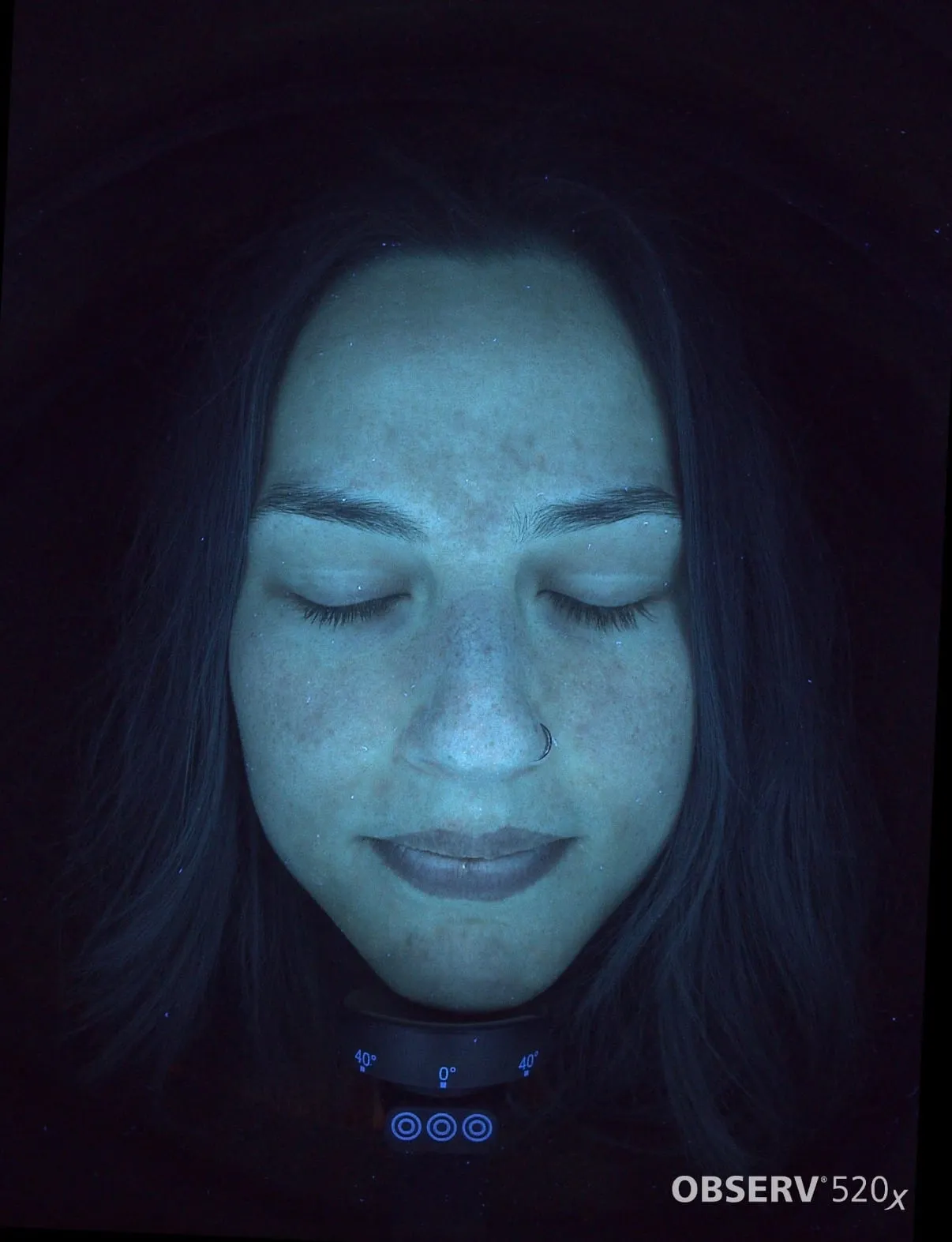
Why darker skin needs specialised care
Melanin-rich skin behaves differently under inflammation, trauma and energy-based treatments. These differences directly influence how treatments must be planned and delivered.
Higher risk of post-inflammatory hyperpigmentation
Even minor irritation, heat or injury can trigger pigmentation that may persist for months or years. See Post-inflammatory hyperpigmentation → for the full pathway.
Increased tendency toward keloid and hypertrophic scarring
This requires careful risk assessment, conservative technique and preventative strategies before any procedure.
Laser and energy-based treatment risks
Certain wavelengths, devices or settings can be unsafe in darker skin, increasing the risk of burns, pigment loss or scarring if used incorrectly. Operator expertise and parameter selection matter more than the device.
Different pigmentation behaviour
Conditions such as melasma and deeper dermal pigmentation require long-term, stabilising management rather than aggressive treatment.
Acne-related pigmentation
Post-acne dark marks are often more prominent and longer-lasting than active acne itself, and frequently become the primary cosmetic concern.
For these reasons, medically supervised, carefully selected treatments are essential.
What makes our Skin of Colour Clinic different
Doctor-led laser safety
Dr Chris Irwin is one of the few Melbourne doctors who routinely uses medical-grade lasers across both aesthetic medicine and skin cancer treatment. This cross-disciplinary practice provides a deep understanding of laser–tissue interaction, risk minimisation and safe parameter selection for melanin-rich skin.
Evidence-based dermal care
Our dermal therapists have extensive experience treating pigmentation, melasma, acne, scarring and texture concerns in darker skin types. Care prioritises skin-barrier support, pigment stability and long-term outcomes.
Technology suitable for skin of colour
We use Nd:YAG laser technologies — including both Q-switched and long-pulsed modalities — selected carefully according to skin type, pigmentation behaviour and clinical indication.
Treatment parameters and modality choice are deliberately conservative to minimise the risk of post-inflammatory hyperpigmentation, pigment loss and scarring. All laser care is medically overseen and individualised.
Learn more about our approach at Laser & light treatments →.
Conditions we treat safely
Pigmentation and melasma
Tailored protocols using Nd:YAG laser technology only where appropriate, pigment-stabilising skincare, skin-of-colour-safe peels and long-term pigment control strategies. Melasma is managed cautiously, with an emphasis on stability and maintenance rather than aggressive intervention — over-treatment commonly flares melasma significantly.
- For laser-responsive pigmentation, see Pigmentation & tattoo removal →
- For melasma-specific care, see Melasma →
Acne, scarring and post-inflammatory hyperpigmentation
Management of inflammatory and hormonal acne, pigmentation following acne, and selected scarring using safe, staged treatment pathways.
- See Acne → for the medical hub
- See Post-inflammatory hyperpigmentation → for PIH pathway
- See Acne scarring treatments → for the structured combination approach
Keloid and scar prevention
Risk assessment before procedures, with medically supervised scar-prevention strategies including corticosteroid therapy where indicated.
See Hypertrophic & keloid scars →.
Laser hair removal for darker skin
Long-pulsed Nd:YAG laser — the global standard for safe hair removal in melanin-rich skin — providing effective results while minimising burn risk. Other wavelengths commonly used in lighter skin (IPL, alexandrite, diode) carry significantly higher complication risk in Fitzpatrick IV–VI and are generally avoided.
Texture, tone and rejuvenation
Gentle, non-ablative laser treatments and dermal therapies to improve luminosity, hydration and overall skin quality without compromising safety.
Your first visit
Your consultation includes:
- a detailed skin assessment focusing on pigment depth, pattern and behaviour
- review of medical history, scarring tendency and previous treatments
- discussion of which technologies are safe and appropriate for your skin type
- a personalised treatment plan developed collaboratively
This ensures results are achieved gradually, safely and with long-term skin health in mind.
Why our approach works
Our philosophy combines medical assessment, laser physics, dermatologic science and culturally aware care. We favour conservative, stepwise plans that prioritise:
- skin integrity
- pigment stability
- minimal downtime
- long-term reliability rather than short-term change
This approach produces natural, healthy and predictable outcomes for melanin-rich skin.
Enquiries
If you have concerns about pigmentation, acne, scarring or safe laser options for darker skin tones, we welcome you to book a consultation to discuss suitable treatment pathways.
Pigment
Pigmentation & Tattoo Removal
Laser-responsive pigmentation and ink, with care matched to skin-of-colour safety.
Pigmentation
Melasma
Cautious stabilising care for dermal pigmentation — laser used selectively.
PIH
Post-Inflammatory Hyperpigmentation
Prevention and treatment of dark marks that follow inflammation or procedures.
Lasers
Laser & Light Treatments
Wavelengths and protocols selected for melanin-rich skin safety.
Acne
Acne (Medical)
Inflammatory and hormonal acne care, with pathways for post-acne pigmentation.
Scarring
Hypertrophic & Keloid Scars
Risk assessment and prevention strategies for raised or expanding scars.
Frequently asked questions
-
What does "skin of colour" mean in dermatology?
In dermatology, skin of colour generally refers to Fitzpatrick skin types IV–VI — skin that tans easily, burns rarely, and contains more active melanin. This includes patients with African, Afro-Caribbean, South Asian, Middle Eastern, Latin American, Pacific Islander, East Asian and many Southern European backgrounds. The term reflects how skin behaves under inflammation, trauma and energy-based treatment rather than ethnicity per se. -
Why does my skin pigment after a treatment that didn't affect a lighter-skinned friend?
Melanin-rich skin has more reactive melanocytes that respond strongly to inflammation, heat or injury — even minor trauma can trigger post-inflammatory hyperpigmentation (PIH) that may persist for months or years. The same laser setting, peel strength or aggressive scrub that is unremarkable in lighter skin can drive significant pigment change in darker skin. This is why parameters, pre-conditioning and operator expertise matter more in melanin-rich skin than the device itself. -
Do I need to wait longer between treatments?
Often yes. Conservative protocols in melanin-rich skin typically use lower energies and longer intervals between sessions (4–8 weeks rather than 2–4 weeks for many modalities) so the skin can recover fully and any pigment response can be assessed before the next treatment. This usually means more sessions overall but a lower complication risk and a better cumulative outcome. -
Is laser hair removal safe on darker skin?
Yes, when the right device and parameters are used. Long-pulsed Nd:YAG laser is the global standard for hair removal in melanin-rich skin (Fitzpatrick IV–VI) because its longer wavelength bypasses surface melanin and targets the hair follicle. IPL and shorter-wavelength lasers (alexandrite, diode) commonly used for lighter skin types carry a much higher burn and pigment-change risk in darker skin and are generally not suitable. Make sure your provider uses Nd:YAG specifically for skin of colour. -
Is hydroquinone safe for darker skin?
Short-term, specialist-guided hydroquinone (typically 4%) is well-established for treating PIH and melasma in melanin-rich skin. Long-term uninterrupted use is avoided because of the small risk of paradoxical darkening (exogenous ochronosis), which is more common in darker skin types. Cycling on and off, or using non-hydroquinone alternatives (azelaic acid, niacinamide, cysteamine, tranexamic acid), is often the safer maintenance pathway. We discuss the specific plan at your consultation.
Medically reviewed by Dr Christopher Irwin, MBChB, FRACGP, MMed (Skin Cancer), FACAM, MSCCA · Last reviewed 2026-06-06 · Editorial policy