- Ocular rosacea is driven by eyelid margin inflammation and meibomian gland dysfunction with an unstable tear film.
- The foundation is consistent lid hygiene plus warm compresses, plus a barrier-friendly facial routine and trigger strategy.
- Many patients need a step-up plan during flares (short prescription courses) and a step-down maintenance plan.
- Eye pain, light sensitivity or vision change needs urgent assessment because the cornea can be involved.
- Demodex burden at the lash line can contribute to recurrent styes.
- Treating facial rosacea well usually improves ocular symptoms too.
- Eye symptoms can precede or dominate over facial symptoms in a subset of patients.
- Oral anti-inflammatory doxycycline often improves ocular rosacea when lid care alone is not enough.
- Daily disposable contact lenses are usually better tolerated than monthly lenses during ocular rosacea.
Ocular rosacea can cause dry, gritty, irritated eyes, red eyelid margins, crusting, burning and recurrent styes. It is common — and it often overlaps with blepharitis and meibomian gland dysfunction (MGD) (blocked oil glands in the eyelids). In some patients, eye symptoms can appear before the classic facial redness. (1,2,5)
The highest-yield starting point for most patients is a combined appointment — 20 minutes with Dr Chris (diagnosis, severity check, medical plan and coordination if eye referral is needed) followed by 40 minutes with a dermal therapist (barrier routine, trigger strategy, practical eyelid-care coaching so the plan is easy to follow consistently).
Symptoms — what ocular rosacea feels like
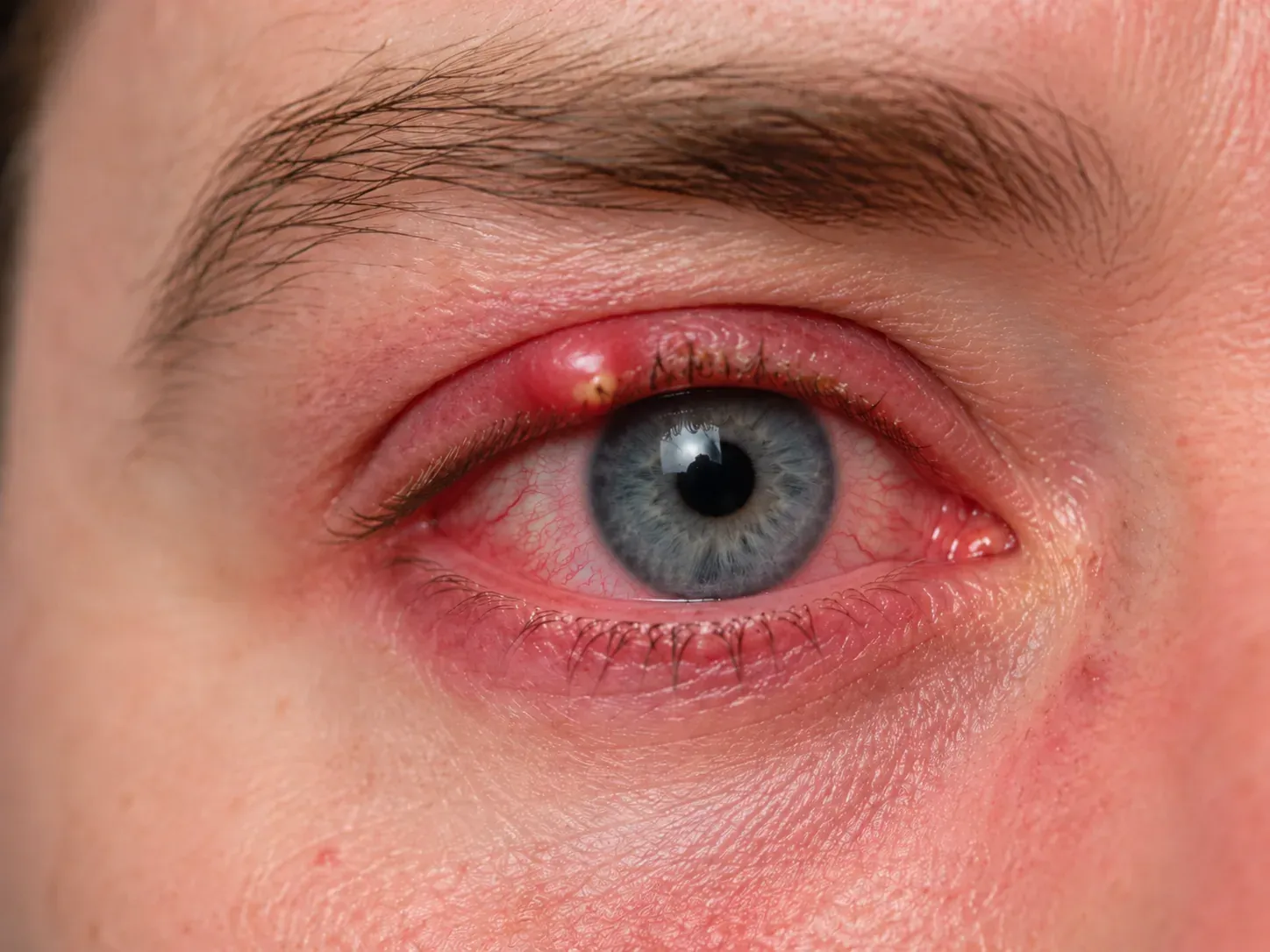
Ocular rosacea often causes:
- dry, gritty, sandy sensation
- burning or stinging eyes
- red, irritated eyelid margins
- crusting on lashes, especially in the morning
- frequent styes or chalazia
- fluctuating blur, often improving after blinking
- sensitivity to wind, air-conditioning and screens (1,2,5)
Some patients have mild eye symptoms with significant facial rosacea. Others have the opposite.
What is happening — why rosacea affects the eyes
Most ocular rosacea is essentially rosacea-driven blepharitis and meibomian gland dysfunction:
- the eyelid margins are inflamed
- the oil glands (meibomian glands) do not release healthy oil
- tears evaporate too fast, producing dryness, burning and grittiness
- inflamed eyelids increase the risk of styes (1,2,5)
This is why the core treatment is not one magic drop — it is a consistent eyelid routine plus targeted step-ups when needed.
The 2-week eyelid reset plan
The most useful starting plan for most patients.
Step 1 — Warm compresses
Place a warm — not hot — compress or heated eye mask over closed eyelids for 10 to 15 minutes.
The compress should stay comfortably warm for the full treatment time. If you use a wet face cloth, re-warm it as it cools — otherwise it may stop being effective after the first few minutes. A purpose-made heated eye mask often holds warmth more consistently.
Use once daily for maintenance, or up to three times daily when symptoms are active. Your doctor will recommend a routine specific to you.
Purpose: warmth helps soften thickened meibomian gland secretions, supports oil flow into the tear film, and reduces eyelid gland blockage. (5,7)
Step 2 — Gentle lid massage
After the warm compress, wash your hands and gently massage the eyelids to help the softened oils move out of the meibomian glands. Use a clean fingertip or cotton bud — the massage should be gentle and should never hurt.
- for the upper eyelid, gently roll or sweep downward towards the upper lash line
- for the lower eyelid, gently roll or sweep upward towards the lower lash line
Work slowly along the eyelid from the inner corner to the outer corner, for around 30 seconds per eyelid. Avoid aggressive rubbing, pressing hard on the eyeball, or squeezing the eyelids like a pimple.
Purpose: warmth softens the thickened oils, and gentle massage helps encourage the meibomian glands to release oil into the tear film. (5,7)
Step 3 — Lid margin cleaning
After warmth and gentle massage, clean along the lash line to remove crusting, oil, debris and irritants that can worsen eyelid inflammation.
Use a purpose-made eyelid wipe or eyelid cleanser, or another lid-cleaning method recommended by your doctor. Eyelid wipes are often easier, cleaner and less irritating than homemade solutions — for example, Systane Lid Wipes. Gently wipe along the upper and lower lash lines with the eye closed. Do not scrub aggressively, and avoid getting cleanser directly into the eye.
During an active flare, this is usually done once to twice daily for a few weeks, then reduced to a maintenance routine once symptoms are controlled. Your doctor will recommend a routine specific to you.
If you use dilute baby shampoo, use only a few drops mixed into lukewarm water, apply gently with a clean cotton pad or cotton bud, then rinse the eyelid with clean water and pat dry. Many patients find purpose-made eyelid wipes easier and less irritating.
If Demodex mites are suspected, your doctor may recommend a specific eyelid cleanser — such as a tea-tree-oil-based eyelid product — rather than standard baby shampoo. (1)
Purpose: lid margin cleaning helps reduce crusting, oil build-up and bacterial debris at the lash line. In selected patients, specific eyelid cleansers may also help reduce Demodex-related build-up. (5,7)
Step 4 — Artificial tears (as needed)
- prefer preservative-free tears if using frequently
Purpose: symptom relief while the lid routine starts working. (1,2,5)
Step 5 — Reduce irritants
- avoid smoky environments where possible
- limit eye makeup during flares; remove gently
- screen breaks and blink reminders can help dryness (1,2,5)
The dermal therapist session is where patients typically do best — simplifying the facial routine (less stinging), teaching the eyelid routine properly, and helping you choose products you can actually tolerate, which is what makes the routine stick.
Maintenance plan
Ocular rosacea behaves like facial rosacea — it often relapses if you stop everything.
A typical maintenance pattern after the first 2 weeks:
- warm compresses 3 to 4 times per week
- lid cleaning 3 to 4 times per week — or daily if symptoms return quickly
- preservative-free tears as needed
- keep skincare barrier-friendly and trigger-aware (1,2,5)
When prescriptions are helpful
Many patients improve with the routine above, but prescriptions are often added when:
- symptoms persist despite correct lid care
- styes are frequent
- there is significant ocular surface inflammation
- facial rosacea is also active and driving ongoing inflammation (1,6)
Options used in ocular rosacea / MGD care (chosen case-by-case):
- short courses of topical anti-inflammatories, typically under eye-care guidance
- oral anti-inflammatory antibiotics such as doxycycline — commonly used for rosacea and MGD
- prescription drops for dry eye inflammation (e.g. cyclosporine or lifitegrast in some health systems) (1,6)
This article is not a substitute for individual prescribing — the right choice depends on severity, contact lens use, corneal involvement and medical history.
Demodex and recurrent styes
Some patients with ocular rosacea have a higher Demodex mite burden at the lash line, which can worsen blepharitis and contribute to recurrent styes. (1,6)
If styes are frequent despite good lid care, it is worth reviewing:
- whether Demodex is contributing
- whether your lid cleaning approach is adequate
- whether you need a step-up plan (1,6)
How facial rosacea treatment fits in
Ocular rosacea often improves when facial rosacea is controlled — less background inflammation overall. Depending on your pattern, the plan may include:
- the ETR pathway (redness and flushing) — see ETR rosacea
- the papulopustular pathway (bumps) — see papulopustular rosacea plan
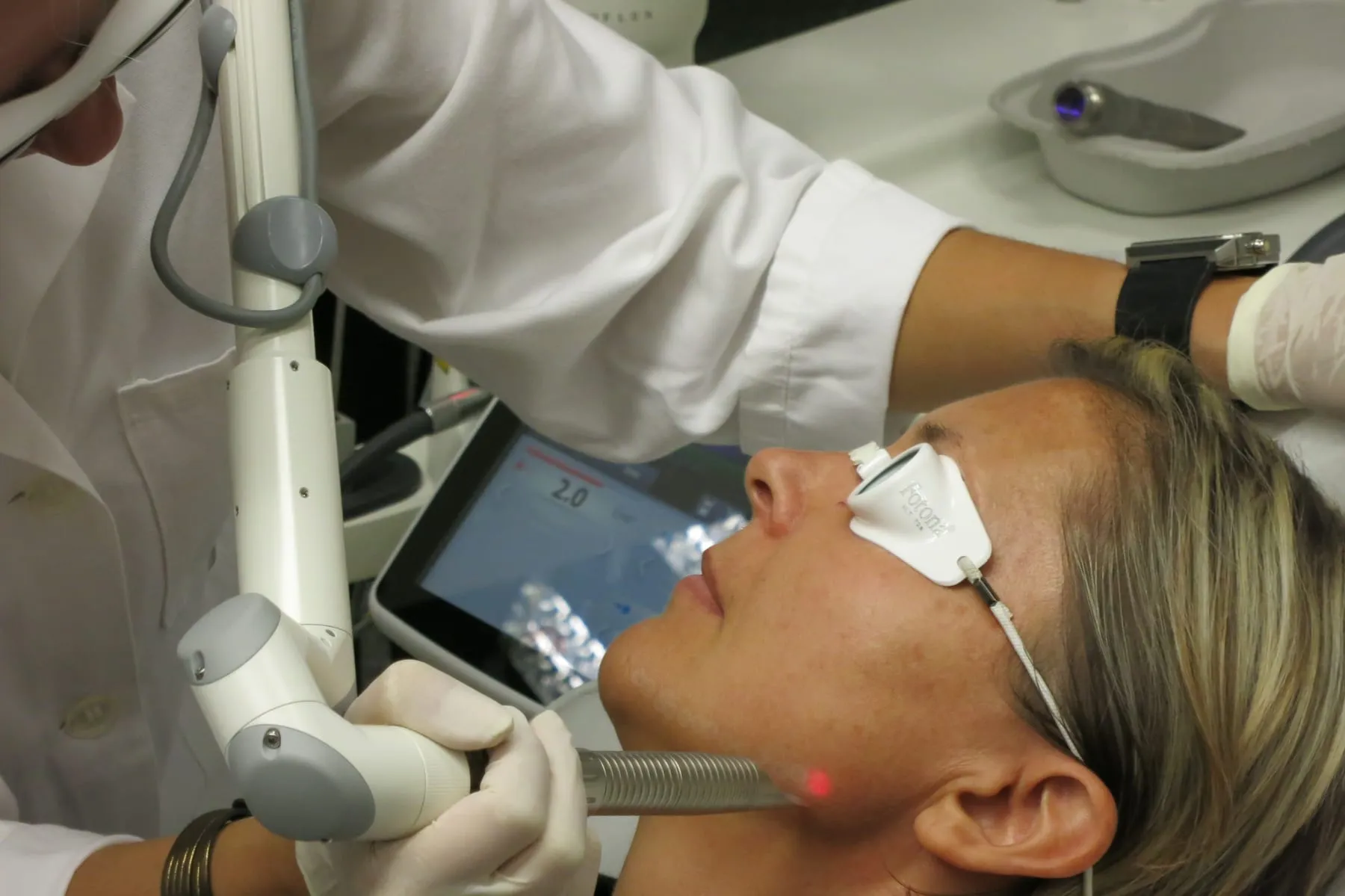
- vascular laser where appropriate for persistent facial redness
- barrier-first skincare and trigger strategy — see rosacea skincare routine and rosacea triggers and lifestyle
When to book urgently
Book urgent review — same day if possible — if you have:
- significant eye pain
- light sensitivity
- reduced or blurred vision that does not clear with blinking
- a very red eye, especially one-sided
- increasing discharge or swelling around the eye
Ocular rosacea can sometimes involve the cornea, and severe cases should be assessed promptly. (6)
Where this fits
Adjacent reads in the rosacea library:
- Rosacea condition page — diagnostic overview and the four-subtype map
- ETR rosacea — redness, flushing and broken capillaries
- Papulopustular rosacea plan — bumps and pustules
- Rosacea skincare routine — barrier-first routine
- Peri-orificial dermatitis — overlap pattern
If your eyes feel dry, gritty or irritated, or you are stuck with recurrent styes, the combined appointment confirms whether ocular rosacea is contributing and builds a practical, sustainable plan.
Frequently asked questions
-
Can ocular rosacea occur without obvious facial rosacea?
Yes. Eye symptoms can precede skin symptoms by months to years, or be the dominant feature throughout. A subset of patients have prominent ocular symptoms with only mild facial findings. This is one reason ocular rosacea is sometimes missed when patients present primarily to optometry or ophthalmology rather than dermatology. -
Are warm compresses actually effective?
Yes — they are a core part of blepharitis and meibomian gland dysfunction (MGD) management and often the highest-yield habit once done consistently. The warmth softens thickened meibomian gland secretions and improves flow, which stabilises the tear film. The most common reason warm compresses do not work is inconsistent application — daily for 10 to 15 minutes during the reset, then 3 to 4 times per week for maintenance. -
Why do I keep getting styes?
Styes are often related to gland blockage and eyelid margin inflammation. Ocular rosacea and meibomian gland dysfunction increase the risk, especially when the lid hygiene routine is inconsistent or when Demodex burden at the lash line is contributing. Frequent styes despite good lid care warrant review for a structured step-up plan. -
How long until the eyelid reset plan takes effect?
Most patients notice meaningful improvement in dryness, grittiness and crusting within 2 to 4 weeks of consistent lid care. Recurrent styes typically reduce over 6 to 12 weeks of combined lid hygiene plus, where indicated, oral anti-inflammatory therapy. Improvement is gradual rather than dramatic, and consistency matters more than intensity. -
When is oral doxycycline used for ocular rosacea?
Oral doxycycline is commonly added when ocular symptoms persist despite correct lid care, when styes are frequent, when there is significant ocular surface inflammation, or when facial rosacea is also driving ongoing inflammation. Anti-inflammatory dosing (often around 50 mg daily) is the typical starting point in Australia, used as a time-limited course then tapered. -
Should I see an eye specialist as well?
Sometimes. Most ocular rosacea is managed with rosacea-focused care plus consistent eyelid hygiene. Referral to optometry or ophthalmology is warranted when there is corneal involvement, significant pain, light sensitivity, vision change, or symptoms that do not respond to the standard plan. We coordinate referral where it is the right step. -
Can I wear contact lenses with ocular rosacea?
Often yes — but with some adjustments. Contact lens wear can worsen ocular surface dryness, so daily disposables are usually better tolerated than monthly lenses, and using preservative-free artificial tears alongside lenses helps. During an active flare with significant grittiness or styes, pausing contact lens wear for a short period often accelerates settling. -
Do I need a referral?
No referral is required. You can book directly. A referral from your GP or treating clinician is welcome — it helps with collegial communication and continuity of care — but is not a barrier to accessing the service. Both clinics (Ivanhoe and Diamond Creek) operate the same pathway.
References
- Ocular Rosacea — An Updated Review (2025)
- Rosacea — A to Z of skin (Australasian College of Dermatologists)
- Rosacea — DermNet NZ
- Rosacea — StatPearls (NCBI Bookshelf)
- Blepharitis Preferred Practice Pattern (PPP) — eyelid hygiene and warm compress guidance (American Academy of Ophthalmology 2023)
- Rosacea — ocular manifestations, corneal risk and referral (RACGP / Australian Family Physician)
- What is blepharitis? — warm compress and lid cleaning overview (American Academy of Ophthalmology)
Related
Related reading

By Dr Christopher Irwin, MBChB, FRACGP, MMed (Skin Cancer), FACAM, MSCCA
Published 2026-06-06 · Updated 2026-07-06 · Editorial policy