- Rosacea skin is often barrier-impaired — skincare should reduce stinging, not chase strong actives.
- The best routine is usually short — cleanser, moisturiser, sunscreen.
- Daily sunscreen is a major win because sun is one of the most commonly cited rosacea triggers.
- Mineral sunscreens (zinc oxide / titanium dioxide) are often better tolerated than chemical filters.
- Introduce one new product at a time, and buffer prescriptions with moisturiser if they sting.
- When flaring, do a 48 to 72 hour reset back to cleanser plus moisturiser plus sunscreen only.
- Avoid fragrance, essential oils, menthol, alcohol-heavy toners and "tingly" products.
- Cream textures often outperform gels in rosacea — gels can contain higher alcohol content.
- Niacinamide, ceramides and hyaluronic acid are often the most useful over-the-counter combination — over-the-counter effects are adjuncts, subtle compared with medical treatment.
- The dermal therapist component of the combined appointment is where product selection is personalised.
If you have rosacea, your skin barrier is often more reactive than average — which is why products sting, redness flares easily, and “too many actives” can keep you stuck in a flare cycle. The goal of rosacea skincare is not perfection. It is calm, consistent, low-irritant control that supports the medical or laser plan. (1–5)
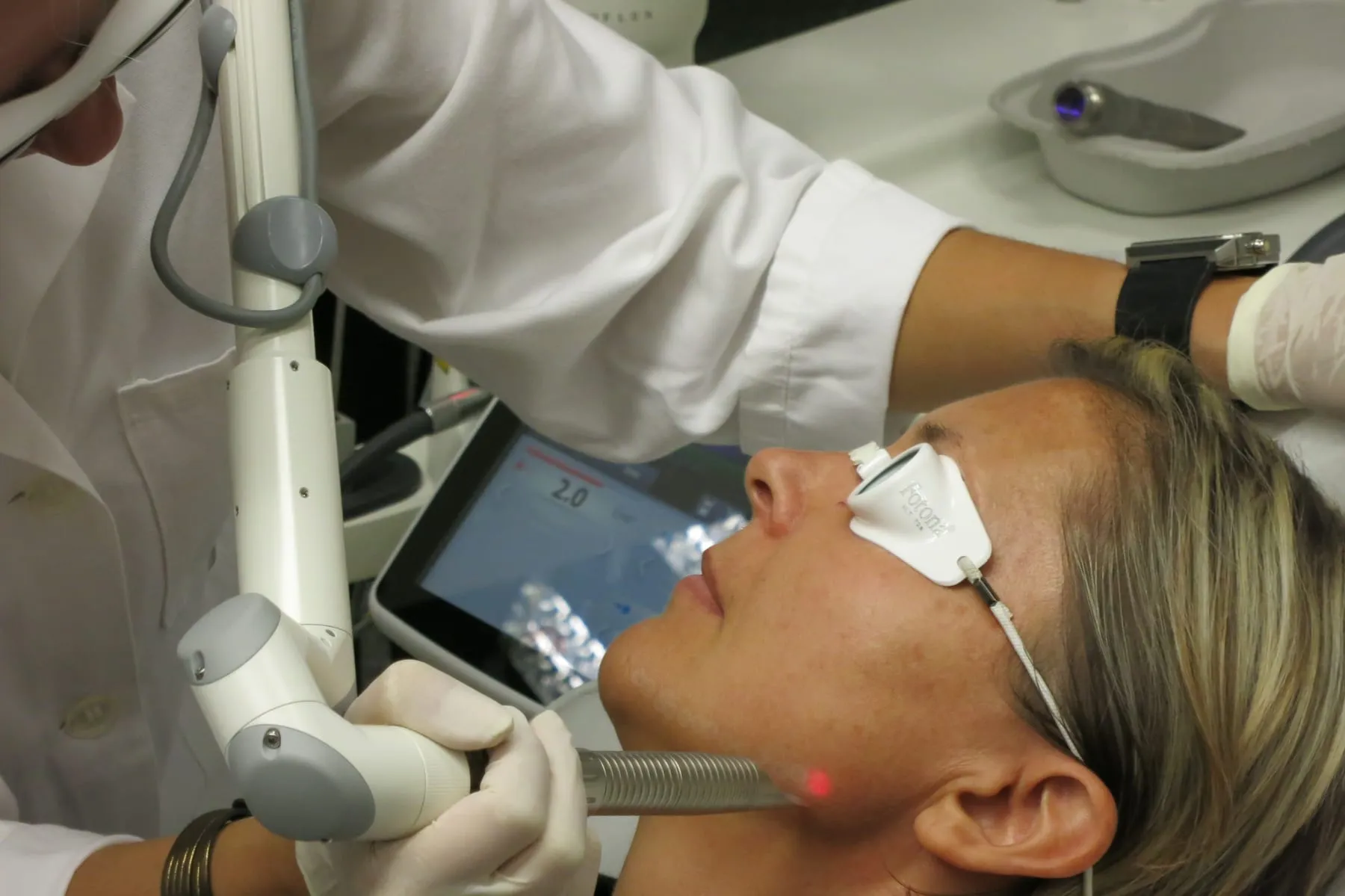
The highest-yield starting point for most rosacea patients is a combined appointment — 20 minutes with Dr Chris (diagnosis plus medical or laser plan) followed by 40 minutes with a dermal therapist (barrier routine, product selection, trigger strategy, supportive treatments like LED).
The rosacea-safe routine (AM and PM)
Morning — calm and protect
- cleanse (optional) — if your skin is not oily or sweaty, rinsing with lukewarm water is often enough; otherwise use a gentle, soap-free cleanser
- moisturise — a bland, barrier-supporting moisturiser that does not sting
- sunscreen every day — broad-spectrum SPF 50+ (1–4)
- makeup (optional) — fragrance-free, sensitive-skin formulas; green-tint can visually reduce redness
Evening — remove irritants and repair
- gentle cleanse to remove sunscreen and makeup without scrubbing
- moisturise — barrier repair is the long game
- prescription treatment if prescribed — applied once the skin is comfortable (see “introducing actives” below) (1–5)
Sunscreen for rosacea
Sun exposure is one of the most commonly cited rosacea triggers. Daily sunscreen is one of the biggest maintenance levers you control. (1–4)
What rosacea patients usually tolerate best
- mineral sunscreens (zinc oxide and/or titanium dioxide) often sting less because they sit on top of the skin rather than relying on chemical absorption (1–4)
- tinted mineral sunscreens can be excellent for visible redness — they neutralise erythema and are often more cosmetically wearable
Practical rules that stop sunscreen from becoming a trigger
- patch test new sunscreen for a few days before full-face use
- avoid fragrance and cooling ingredients (menthol, eucalyptus, peppermint)
- press and smooth gently — do not rub aggressively when applying
- reapply if outdoors and sweating, especially during laser or active treatment phases
If you are on photosensitising medication — common in rosacea treatment — sunscreen planning becomes even more important.
Moisturisers that reduce stinging
Rosacea skin often stings because the barrier is inflamed and leaky. Barrier-support moisturisers aim to reduce that reactivity. (1–5)
Ingredients commonly helpful
- ceramides, cholesterol, fatty acids — barrier lipids
- glycerin, hyaluronic acid — hydration support
- niacinamide — often helpful, but a minority sting; start low and patch test (1–5)
- colloidal oatmeal — soothing
Textures that usually work best
Creams and lotions often outperform gels for rosacea because gels can contain higher alcohol content or feel stingy.
Cleansers
What to use
- gentle, soap-free cleansers
- lukewarm water — hot water is a common flushing trigger (1–4)
What to avoid
- scrubs, cleansing brushes, gritty exfoliants
- high-foaming sulfate cleansers that leave the skin “squeaky clean”
- alcohol-heavy toners and astringents
- essential oils and fragrance-heavy products — both common irritants (1–4)
Cosmeceutical ingredients — what helps (and some that hurt)
Beyond the core routine, some over-the-counter ingredients have genuine supporting evidence in rosacea-prone skin — and others reliably make it worse.
Helpful ingredients for rosacea-prone skin
- Niacinamide (vitamin B3) — anti-inflammatory, improves the barrier by increasing ceramide production. Studies show a moisturiser with 2% niacinamide daily for a month significantly decreases redness, dryness and roughness. Note: niacin is a different form of vitamin B3 and can worsen flushing — make sure you are using niacinamide, not niacin.
- Ceramides and hyaluronic acid — barrier-repair lipids and a hydrator. Niacinamide plus ceramides plus hyaluronic acid is often the most useful combination for sensitive rosacea-prone skin.
- Azelaic acid — available over-the-counter at lower strengths (around 10%) as a gentle cosmeceutical that exfoliates lightly, reduces redness and combats bumpiness. Also reduces Demodex burden.
- Green tea extract — polyphenol antioxidants with anti-inflammatory and anti-redness properties. Common in redness-relief products.
- Licorice extract (Glycyrrhiza inflata / licochalcone A) — redness-reducing and soothing.
- Colloidal oatmeal — protective and anti-inflammatory; safe for rosacea and often immediately soothing.
- Allantoin, panthenol, chamomile, feverfew, aloe vera, ginkgo biloba — botanical and vitamin agents that complement treatment by damping inflammatory responses.
Ingredients to approach cautiously
- Exfoliating acids (AHAs and BHAs) — glycolic, lactic, salicylic acid. Low strengths may help texture, but stronger formulations often sting. Many reactive rosacea patients avoid them entirely.
- Retinol and retinoids — may help thickening and bumpiness long-term but commonly cause significant initial irritation. If attempted, use lowest strength, buffer with moisturiser, and apply only twice weekly initially.
- Vitamin C (L-ascorbic acid) — effective forms are acidic (pH ~3.5) and can burn or irritate rosacea skin. Buffered derivatives (magnesium ascorbyl phosphate) are milder but less potent.
- Benzoyl peroxide and tea tree oil — both common acne ingredients. Benzoyl peroxide is often very irritating in rosacea. Tea tree oil is antimicrobial (and reduces Demodex) but is a potent essential oil that can cause contact dermatitis.
- Alcohol-based or astringent products — toners and mists containing alcohol, menthol, witch hazel almost always aggravate rosacea.
Manage expectations: over-the-counter products can support rosacea management but their effects are subtle compared with medical treatments. They are best used as adjuncts to good skincare and medical therapy.
How to introduce prescriptions and actives without flaring
This is where many patients derail — they start multiple actives at once, sting, then stop everything.
The “one change at a time” rule
- introduce one new product or prescription at a time
- give it 1 to 2 weeks before adding anything else
- if you sting, reduce frequency rather than quitting immediately
Buffering — simple and effective
If your prescription stings:
- moisturiser first, then prescription once the skin is calm
- start every second night and build up as tolerated (1–5)
Actives to be cautious with
The usual culprits are the ones covered in the cosmeceutical section above — strong acids, retinoids, strong vitamin C and benzoyl peroxide. (1–5)
This does not mean “never”. It means timing matters — stabilise first, then introduce carefully if needed.
The flare protocol — what to do when the skin is angry
If you flare — burning, stinging, sudden redness, everything feels reactive:
48 to 72 hour reset
- strip back to gentle cleanse plus moisturiser plus sunscreen only
- avoid scrubbing, hot showers, exfoliation, fragrance
- pause non-essential actives until comfort returns (1–5)
If your flare is frequent or severe, that is a sign you need a personalised plan rather than more experimentation.
Makeup, shaving and fragrance rules
- makeup — fine with rosacea if chosen wisely. Green-tinted primers or concealers counteract redness visually; mineral powder foundations or silicone-based liquid foundations are often well-tolerated. Prefer fragrance-free, oil-free formulations, and remove gently at day’s end with a mild lipid-based cleanser
- shaving — bland shaving gel or cream; avoid alcohol aftershaves; moisturise afterwards
- fragrance — avoid scented skincare and essential oils; “natural” does not mean gentle in rosacea (1–4)
Dermal therapist support — why it improves outcomes
Rosacea skincare is less about “more products” and more about the right few products in the right order.
A dermal therapist appointment helps you:
- build a routine that does not sting
- choose sunscreen and moisturiser you will actually use daily
- identify irritant triggers in your current product lineup
- plan supportive treatments (often calming LED where appropriate) between flares
- improve tolerance of prescription creams and laser recovery pathways (1–5)
Where this fits
Adjacent reads in the rosacea library:
- Rosacea condition page — diagnostic overview and the four-subtype map
- ETR rosacea — redness, flushing and broken capillaries
- Papulopustular rosacea plan — bumps and pustules
- Phymatous rosacea & rhinophyma — thickening and texture change
- Rosacea triggers and lifestyle — the trigger picture in depth
- Ocular rosacea — dry, gritty eyes, blepharitis and styes
If you are stuck in a cycle of flares, product intolerance and persistent redness, the combined appointment confirms the pattern and builds a practical, sustainable skincare plus treatment plan.
Frequently asked questions
-
Why does everything sting?
Barrier instability and inflammation make nerve endings more reactive. The fix is usually simplification and barrier repair — not stronger actives. Stripping back to a cleanser-moisturiser-sunscreen routine for 48 to 72 hours then reintroducing products slowly is more useful than chasing a new prescription. -
Do I really need sunscreen every day?
Yes — particularly in Australia and especially during active rosacea treatment. Sun exposure is one of the most commonly cited rosacea triggers. Daily broad-spectrum SPF 50+ is one of the highest-yield maintenance levers you control, and mineral sunscreens are often better tolerated than chemical filters in reactive skin. -
Is "natural skincare" safer for rosacea?
Not automatically. Many natural products contain essential oils and fragrance — both commonly trigger rosacea flares. Tea tree, eucalyptus, peppermint, lavender and citrus oils are particularly common irritants. Patch test everything, regardless of how natural the marketing claims to be. -
What is the best appointment type?
For most rosacea patients, the combined doctor plus dermal therapist appointment is the highest-yield starting point — diagnosis plus medical or laser plan plus a tolerable routine is the fastest path to stability. Skincare without the right diagnosis often misses the mark; medical or laser treatment without a stable routine is harder to tolerate. -
How do I know if I should use mineral or chemical sunscreen?
Mineral sunscreens (zinc oxide and titanium dioxide) sit on top of the skin and are usually better tolerated in reactive skin. Chemical filters can sting in some rosacea patients. Tinted mineral options have the additional benefit of neutralising visible redness. If chemical filters have worked previously without stinging, you can continue them — but mineral is the safer default during a flare. -
Can I use vitamin C, retinol or acids with rosacea?
Yes — cautiously and after the skin is stable. Strong forms (L-ascorbic acid at low pH, high-strength retinoids, glycolic or salicylic acid) commonly sting in rosacea-prone skin. If the skin is reactive, pause actives entirely until stable, then reintroduce one at a time with buffering (moisturiser first, then active) and infrequent application initially. -
How long does the routine take to make a difference?
The initial barrier-stabilising effect is often noticeable within 2 to 4 weeks — less stinging, less day-to-day reactivity, fewer micro-flares from small triggers. The fuller effect on persistent redness usually comes when skincare is combined with medical therapy or vascular laser. Skincare alone reduces flare frequency; treatment addresses the established changes. -
Do I need a referral?
No referral is required. You can book directly. A referral from your GP or treating clinician is welcome — it helps with collegial communication and continuity of care — but is not a barrier to accessing the service. Both clinics (Ivanhoe and Diamond Creek) operate the same pathway.
References
Related
Related reading

By Dr Christopher Irwin, MBChB, FRACGP, MMed (Skin Cancer), FACAM, MSCCA
Published 2026-06-06 · Updated 2026-07-06 · Editorial policy