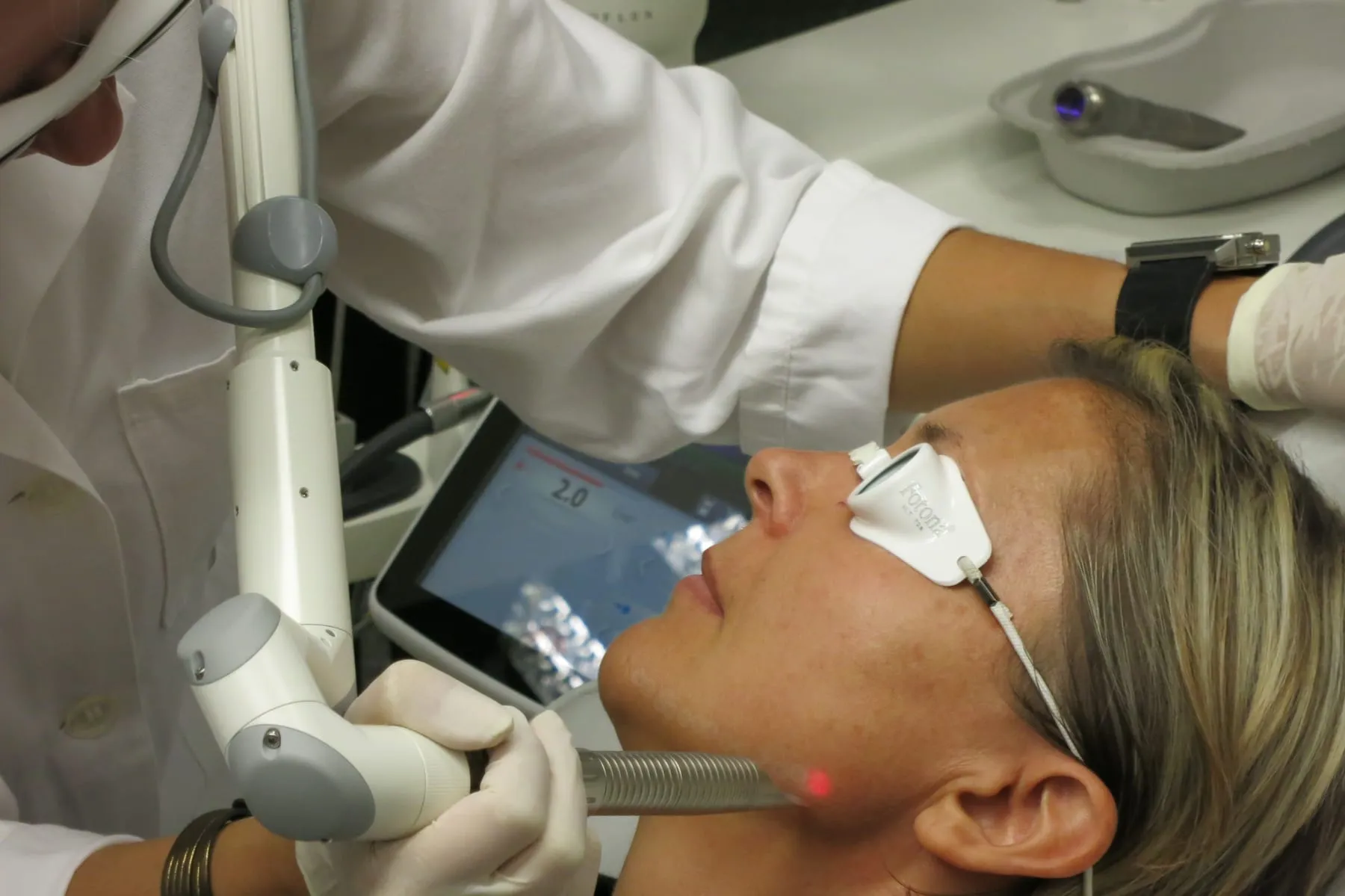
- Triggers don't cause rosacea but they switch it on — reducing trigger load helps treatments work.
- Most patients only need to manage their top 2–3 triggers to see a big improvement.
- Common triggers include sun, heat, alcohol, hot drinks, spicy food, stress and irritating skincare.
- Exercise is encouraged — use a cooling protocol rather than avoiding movement.
- High-dose niacin can worsen flushing; niacinamide (vitamin B3) is the rosacea-friendly form.
- A 2-week rosacea diary often reveals dominant triggers and makes treatment more precise.
- Most patients see meaningful improvement in 4–6 weeks once top triggers are addressed.
- Heat is often the hidden trigger — hot showers, indoor heating and post-exercise overheating contribute.
- Photosensitising medications (some antibiotics used for rosacea) make daily SPF non-negotiable.
- The combined doctor + dermal-therapist appointment is the fastest route to stable rosacea.
In one sentence: Rosacea trigger control is not about “avoid everything forever” — it is about identifying your top 2–3 personal triggers and using practical workarounds for those specific triggers. Triggers don’t cause rosacea, but they switch it on. Reducing trigger load helps medical treatments and vascular laser work better. (1–4) Most patients get meaningful improvement within 4–6 weeks by focusing on a small number of high-yield habits: daily SPF, heat management, a barrier-supportive skincare routine, and a few specific adjustments around alcohol, spicy food, exercise and stress. A 14-day rosacea diary is the fastest way to identify your dominant triggers.
For most patients, the fastest way to stabilise rosacea is the combined pathway: a 20-minute medical consultation with Dr Chris (diagnosis, subtype assessment, prescription pathway where appropriate) followed by 40 minutes with a dermal therapist (skincare barrier plan + sunscreen strategy + trigger coaching + supportive LED where appropriate). This combination often prevents the trial-and-error-for-months cycle.
Companion reading: Rosacea condition overview · Rosacea skincare routine · ETR — redness and flushing pathway · Papulopustular rosacea (bumps) plan · Ocular rosacea · Photosensitising medications
The “top 3 triggers” method
Most people fail rosacea trigger advice because it is too broad (“avoid everything”). Do this instead:
- Pick your top three triggers — most common are heat/sun, alcohol, stress, spicy or hot drinks
- Use the strategies below for those triggers only
- Reassess in 4–6 weeks — if you are stable, you have won
If you want this done properly from the start, the combined appointment builds your trigger plan and skincare routine in one visit.
Sun and heat — the highest-yield trigger
Sun and heat are among the most common rosacea triggers and can drive both flushing AND persistent background redness. (1–4)
What to do — simple, effective:
- Daily SPF — see rosacea skincare routine for product selection
- Hat and shade when outdoors
- Avoid hot showers and steam rooms during active flares
- Keep the face cool — cool packs, cool water splash, a fan in hot environments
If you are on a photosensitising medication — some rosacea treatments (especially some oral antibiotics used for papulopustular rosacea) increase sun sensitivity. If you are on these, your sun strategy becomes non-negotiable. See photosensitising medications. (3,4)
Exercise without flushing — the cooling protocol
Exercise is good for health and mood — you do not have to give it up. The trick is reducing overheating.
The cooling protocol:
- Exercise in a cool environment (early morning, shaded, air-conditioned)
- Lower intensity, longer duration during flares
- Use a fan, cool towel or cold water splash during breaks
- Hydrate and avoid pre-workout stimulants if they flush you
- Avoid hot yoga or hot spin if heat is a major trigger
If your face stays red for hours after exercise, you are likely heat-trigger dominant — see the ETR pathway and the rosacea condition overview.
Alcohol and hot drinks — practical compromises
Alcohol is a common flushing trigger; red wine is especially notorious for many people. (1–4)
Practical strategies that still let you live:
- Choose lower-trigger options (varies person-to-person — some do better with white wine or spirits and cold mixers than with red wine)
- Drink slower, with food
- Alternate alcohol with water
- Keep the environment cool (a warm room plus alcohol stacks triggers)
Hot drinks — temperature matters more than “coffee vs tea” for many patients:
- Let drinks cool a little
- Try iced versions during active flushing periods
- Reduce “sipping for an hour” in hot environments (stacked triggers)
Spicy foods — how to keep them in your diet
Spicy foods trigger flushing through neurovascular pathways in many people, but you often do not need to eliminate them completely.
- Reduce heat level (mild → medium) rather than going to “none”
- Avoid spicy + alcohol + hot room combinations
- Use cooling add-ons (yoghurt, cucumber, mint-free cooling foods)
- Keep meals earlier in the day if night-time flushing affects sleep
Wind, cold and seasonal flares
Some people flare in winter: cold wind + low humidity + indoor heating = barrier stress.
- Barrier-first moisturiser twice daily
- Scarf or face protection in wind
- Avoid harsh foaming cleansers in winter
- Humidifier at night if indoor air is dry
- Do not “scrub off flaking” — that usually worsens redness
If you have eyebrow or eyelid flaking in winter, you may have a seborrhoeic dermatitis overlap — see also the facial seb derm plan.
Stress and sleep — why they matter
Stress and sleep debt are common rosacea flare accelerators. Even when you cannot remove stress, you can reduce its skin impact.
- Consistent bedtime and wake time
- Exercise using the cooling protocol above
- 5 minutes a day of down-regulation (walk outside, breathing, short meditation)
- Avoid stacking triggers when stressed (alcohol + hot shower + late night)
If stress-trigger flushing is dominant, the ETR pathway often needs both barrier work and a structural vessel plan (vascular laser).
Skincare and product triggers — quick rules
Most rosacea product triggers are not “mystery” — they are predictable.
Avoid:
- Fragrance and essential oils
- Alcohol-heavy toners
- Menthol, eucalyptus or peppermint “cooling” products (paradoxically they trigger flushing)
- Harsh exfoliation (scrubs, cleansing brushes)
- Starting multiple new actives at once
Do:
- Keep routine short — cleanser + moisturiser + sunscreen
- Introduce one change at a time
- Use the “flare reset” routine if you react
The dermal therapist appointment is the fastest way to stop product-trigger guessing.
Medication triggers — what to watch for
Some medications can worsen flushing in susceptible people, including vasodilators and high-dose niacin (a form of vitamin B3 that causes flushing). (3,4)
This does not mean “never take them” — it means:
- Recognise patterns — new med, new flushing
- Discuss alternatives where appropriate
- Avoid self-experimenting with high-dose niacin if flushing is an issue
- Note: niacinamide (the amide form of vitamin B3) does NOT cause flushing and is the rosacea-friendly form often used in skincare
If you want a proper review of triggers and treatment interactions, book the combined pathway.
A simple 14-day rosacea diary
Do this for 14 days — it is often enough to identify the big drivers.
Each day, score:
- Redness today (0–10)
- Flushing episodes (none / mild / moderate / severe)
- Triggers present (tick): sun, heat, exercise, alcohol, spicy food, hot drinks, stress, wind/cold, new product
- Notes: what helped? what made it worse?
Bring it to your appointment — it makes your plan dramatically more precise.
When to book a review
Book a review if:
- You are flaring weekly despite trying trigger control
- Your skin stings with most products (barrier instability)
- You have reduced triggers but persistent background redness or broken capillaries remain (ETR pathway)
- You have bumps and pustules that persist (papulopustular rosacea plan)
- You have eye symptoms — dry, gritty eyes, recurrent styes (ocular rosacea)
If you want fewer flare-ups and a plan that fits real life, we can help you identify your dominant triggers, stabilise your barrier and match treatment to your rosacea subtype. Clinics at Ivanhoe and Diamond Creek — book via the panel in the sidebar.
Frequently asked questions
-
Do I have to avoid all triggers forever?
No. Most people get excellent control by managing just their top 2–3 triggers and stabilising their skin barrier. The goal is fewer and less severe flares, not a trigger-free life — and trigger sensitivity often improves once the underlying inflammation is treated. -
Is sunscreen really that important for rosacea?
Yes. Sun is one of the most common rosacea triggers — both through heat and UV-driven vascular and inflammatory pathways. Daily broad-spectrum SPF 50+ (mineral or hybrid is usually best tolerated) is one of the highest-yield habits and is non-negotiable if you are on photosensitising medications. -
Can I still exercise with rosacea?
Yes — use the cooling protocol below. Overheating is the issue, not movement itself. Most patients can continue regular exercise by switching to cooler environments (early morning, shaded, air-conditioned), reducing intensity during active flares, and actively cooling the face during and after sessions. -
How long until I see improvement from trigger control?
Most patients see meaningful improvement within 4–6 weeks of identifying and managing their top 2–3 triggers, combined with barrier-supportive skincare. If you have not noticed any change in 6 weeks, your dominant trigger may not be on your list — that's where the 14-day rosacea diary becomes valuable. -
Which alcohol triggers rosacea least?
It is highly individual. Red wine is the most commonly reported flushing trigger, but some patients tolerate white wine, spirits with cold mixers, or low-alcohol options better. The combination of alcohol + warm environment + standing for long periods is usually worse than the alcohol alone. Drinking slowly with food, alternating with water, and keeping the room cool helps most patients keep drinking socially without triggering significant flushing. -
Does drinking water help rosacea?
Hydration matters for general skin health and barrier function, but no, drinking extra water does not directly reduce rosacea flushing or inflammation. The water-trigger relationship is the wrong question — the much more useful interventions are sun protection, heat management, and barrier-supportive skincare. -
What is the best appointment type for trigger work?
For most patients — a 20-minute medical consultation with Dr Chris (diagnosis, subtype assessment, prescription pathway where indicated) followed by 40 minutes with a dermal therapist (skincare barrier plan + sunscreen strategy + trigger coaching + supportive LED where appropriate). This combination is usually the fastest route to stability and avoids the trial-and-error-for-months cycle. -
Do I need a referral?
No referral is required. You can book directly via the booking panel in the sidebar. Both clinics — Ivanhoe and Diamond Creek — see rosacea patients. If you have a referral from your GP or dermatologist for our records we welcome it, but it is not required to book or to be seen.
References
- DermNet — Rosacea overview, subtypes, triggers and treatment.
- ACD A–Z — Rosacea (Australian dermatology peak body patient information).
- Maor D, Chong AH. Rosacea. Australian Family Physician. 2017. (Practice-focused Australian rosacea overview.)
- Lara Rivero A, Whitfeld M. An update on the treatment of rosacea. Australian Prescriber. 2018.
Related
Related reading
- Rosacea Skincare Routine — Barrier Repair, Sunscreen and What to Avoid
- Erythematotelangiectatic Rosacea — Persistent Redness, Flushing and Broken Capillaries
- Papulopustular Rosacea — Bumps and Pimples Treatment Plan
- Ocular Rosacea — Dry, Gritty Eyes, Blepharitis and Recurrent Styes
- Photosensitising Medications & Products — Before Laser & Light Treatments
By Dr Christopher Irwin, MBChB, FRACGP, MMed (Skin Cancer), FACAM, MSCCA
Last reviewed 2026-06-06 · Editorial policy