- Rosacea bumps are driven by inflammation and sometimes Demodex — not blocked pores. Acne routines commonly backfire.
- The most reliable approach is barrier-first, then one targeted prescription, then maintenance.
- Azelaic acid (Finacea), metronidazole (Rozex) and ivermectin (Soolantra) are the common topical options.
- Low-dose doxycycline is added when bumps are widespread, painful or persistent — short courses, then taper.
- Avoid topical steroids on the face — they can trigger peri-orificial dermatitis and worsen rosacea.
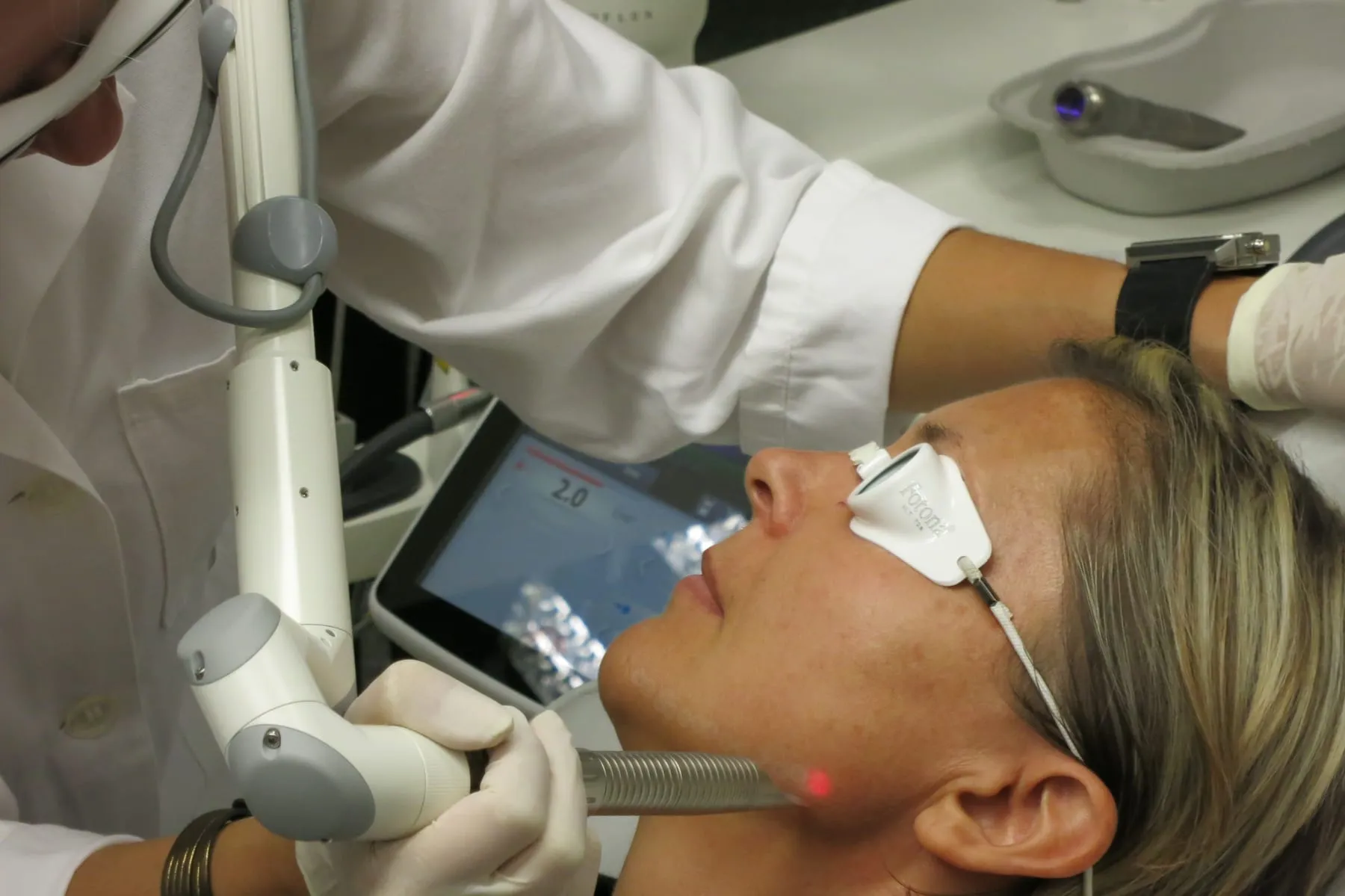
- If persistent redness remains after the bumps settle, vascular laser is usually the most direct next step.
- Meaningful improvement typically takes 6 to 12 weeks of consistent treatment.
- Doxycycline can cause photosensitivity — sun strategy matters during treatment.
- The combined doctor plus dermal therapist appointment is usually the highest-yield starting point.
Papulopustular rosacea causes inflamed bumps and pustules (often mistaken for acne) on a background of redness and sensitivity. The fastest way to improve it is usually a staged plan: calm the inflammation, rebuild the barrier, then maintain so it does not keep relapsing. (1–5)
The highest-yield starting point for most patients is a combined appointment — 20 minutes with Dr Chris (diagnosis and prescription plan) followed by 40 minutes with a dermal therapist (barrier repair routine, product selection, trigger strategy, supportive LED when appropriate). This is often what turns constant flare-ups into long stable periods.
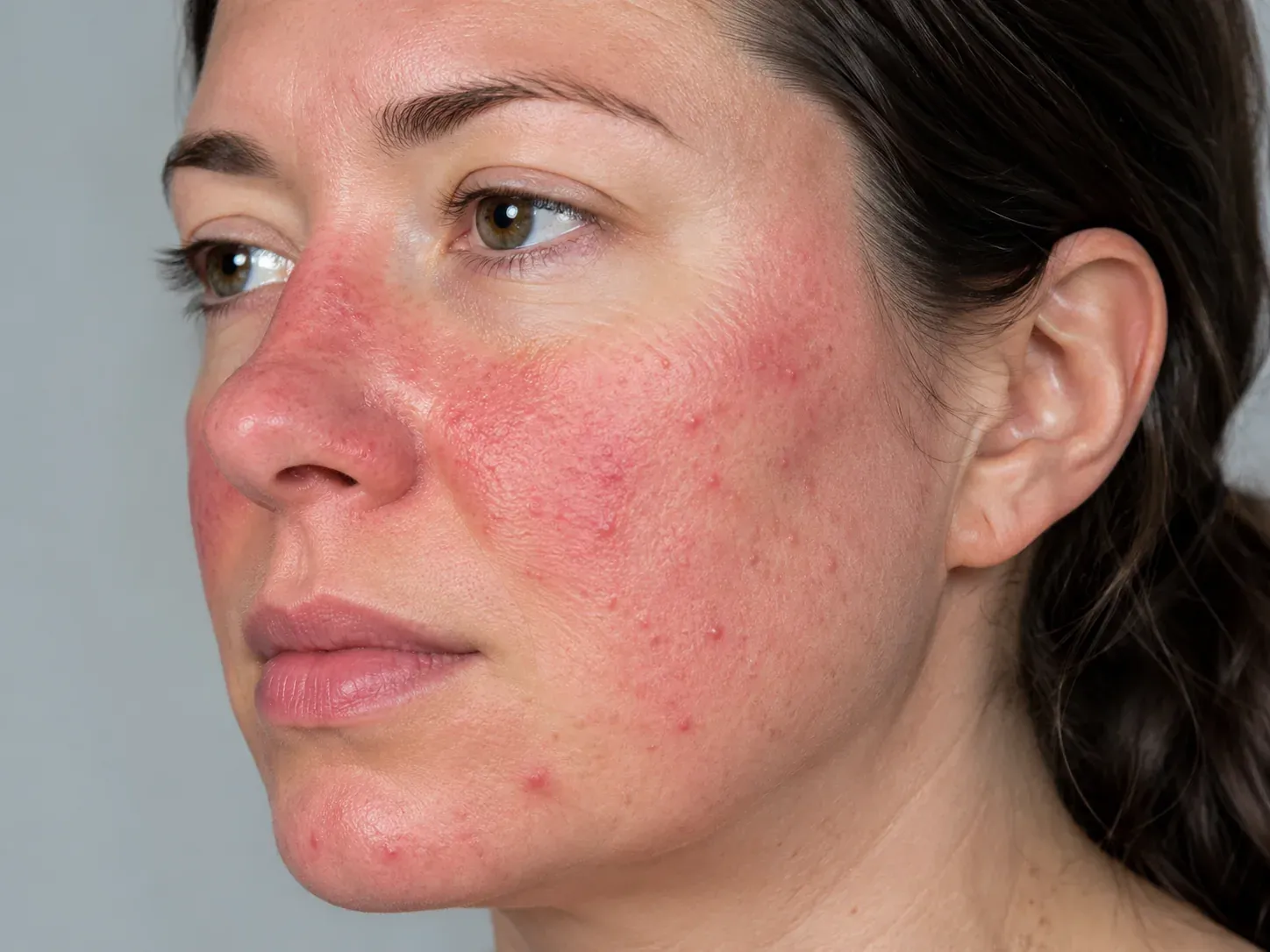
Is it rosacea bumps or acne?
Rosacea bumps are more likely if you notice:
- bumps on a background of redness and flushing
- central-face distribution — cheeks, nose, chin
- stinging and burning with easy irritation
- typically no blackheads (comedones) (1–5)
If bumps cluster around the mouth, nose or eyes and steroids made it worse, consider peri-orificial dermatitis. (6)
If you are unsure, book a consultation and save months of trial and error.
A staged approach to rosacea treatment
Rosacea skin is reactive, easily irritated and quick to flare, so I almost always build treatment in layers rather than starting several active creams at once. Stacking everything on day one is the fastest way to make the skin angrier — and it makes it impossible to tell what is actually helping and what is causing trouble.
The order I work in is simple: calm the barrier first, then treat the dominant pattern — bumps, pustules, flushing, fixed redness or visible vessels — and only add more if it is still needed.
Step 1 — calm and protect the skin barrier
Every rosacea plan I start begins here, with simple supportive care:
- a gentle, soap-free cleanser
- a moisturiser used regularly
- a daily broad-spectrum SPF
- avoiding harsh scrubs, exfoliating acids, retinoids and alcohol-heavy products
- reducing your triggers where you can — heat, UV, alcohol, spicy food and long hot showers (1–5)
This step matters because irritated rosacea skin simply does not tolerate prescription treatment well. Get the barrier calm first and everything after it works better.
If you are unsure how to set up your core routine — or you are already using other cosmeceuticals or medicated skin products and are not sure how they fit together — it is well worth booking a 40-minute dermal consultation with one of our dermal clinicians. They are genuinely excellent, and they will make sure your regime is optimised for rosacea before we layer treatment on top.
Step 2 — add Medilux LED as supportive therapy
I often bring in Medilux LED early, because it adds very little irritant load. It is a supportive treatment rather than the main event — but it earns its place. LED can help calm inflammation, support barrier recovery, reduce sensitivity and speed recovery after laser, and it is especially useful when the skin is reactive, flushed or settling down after other treatment. (13,14)
For rosacea I usually favour the calming wavelengths — red, near-infrared and yellow/amber settings, depending on the protocol. Blue light has a role where there is a stronger acne-like, papulopustular component, but it is not my default for classic flushing or vascular rosacea.
LED sits happily alongside Soolantra. What it does not do is replace prescription treatment for papules and pustules, or replace vascular laser for established facial vessels.
Step 3 — start one main prescription topical
For papulopustular rosacea the common topical options are Soolantra (ivermectin 1%), Rozex (metronidazole) and azelaic acid (for example Finacea). They overlap in what they treat, so starting all three together is usually unnecessary, tends to irritate the skin, and makes it impossible to know which one is working or causing side effects.
I would much rather start with one main active, review the response, then add or change only if we need to.
Soolantra (ivermectin 1%) — usually my first choice
Soolantra is often my first prescription when rosacea shows inflammatory bumps, pustules, rough follicular texture or a likely Demodex component. It has both anti-inflammatory and anti-Demodex activity — a genuinely useful combination — and it is once-daily and generally very well tolerated. It is applied once a day for up to four months, and the course can be repeated if needed. (5,9)
How I usually start it:
- normal tolerance: apply nightly
- very sensitive skin: every second night for the first week, then nightly if it is comfortable
- review at 6–8 weeks
- continue to 12–16 weeks if it is improving
Once things are controlled, we either stop and restart if the rosacea relapses, or drop to intermittent maintenance for people who flare often.
Rozex (metronidazole)
Rozex is a long-established anti-inflammatory topical for mild-to-moderate papulopustular rosacea. (8,12)
I position Rozex as:
- an alternative if Soolantra is not tolerated, unavailable or unsuitable
- an option for milder disease
- a treatment you may already know you tolerate well
- a maintenance option
- an add-on in selected cases if Soolantra alone is not quite enough
If we do combine them, a practical split is Rozex in the morning, Soolantra at night — but I would usually do that after assessing the response, not automatically from day one. (8,10)
Azelaic acid (Finacea) — effective, but introduce it carefully
Azelaic acid is useful for papules, pustules, acne overlap, rough texture and some post-inflammatory redness or pigmentation. The catch is that, of the three, it is the most likely to sting, burn or irritate — especially early on. (7)
For that reason I usually add it after the barrier is calmer and after you have already tolerated your main topical. A practical way in:
- start 2–3 nights a week
- apply it after moisturiser if it stings
- build up slowly, and only if it is tolerated
- do not start it at the same time as several other actives
- pause it around vascular laser or during a major flare if the skin turns reactive
It is a good treatment — but it is not the first active I would reach for in a very sensitive, inflamed rosacea patient.
Suggested treatment order
For most papulopustular rosacea patients, this is the sequence I follow:
- Barrier skincare — cleanser, moisturiser and SPF
- Medilux LED once or twice a week as calming support
- Soolantra nightly as the first main prescription topical
- Review at 6–8 weeks
- Continue to 12–16 weeks if it is improving
- Add Rozex or oral anti-inflammatory treatment only if the response is incomplete
- Add azelaic acid later if needed, and only once the skin is tolerating treatment
- Use vascular laser for fixed redness and visible vessels (1,10)
The Demodex mite — and why I reach for ivermectin (Soolantra)
Demodex folliculorum is a microscopic mite that lives inside facial hair follicles and oil glands. It is a normal resident of adult skin — most people carry small numbers and never know it.
In papulopustular rosacea, the picture is different. The mites are usually present in much higher numbers, and tend to be found in the affected (lesional) skin rather than nearby clear skin. (11) The mites — and the bacteria they carry — are thought to help provoke the inflammatory immune response that produces the bumps and pustules, which is why Demodex is considered part of the papulopustular story rather than an innocent bystander. (4)
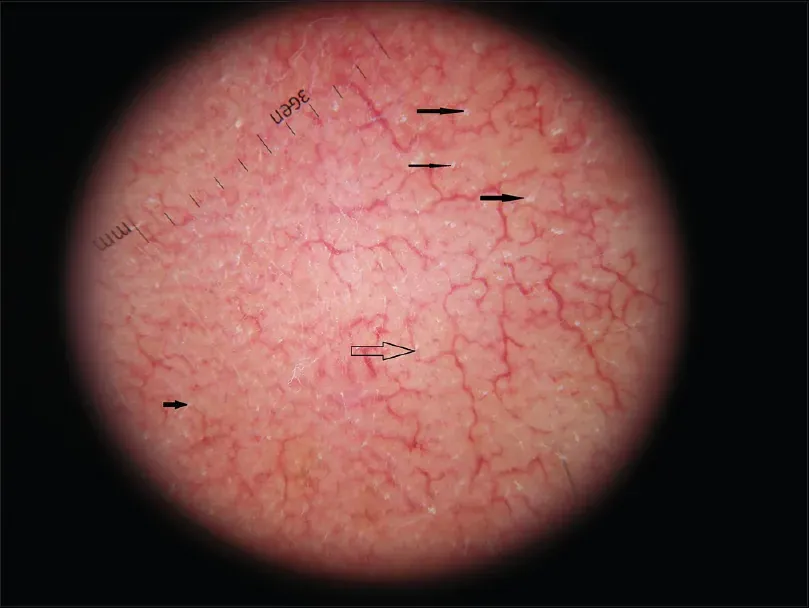
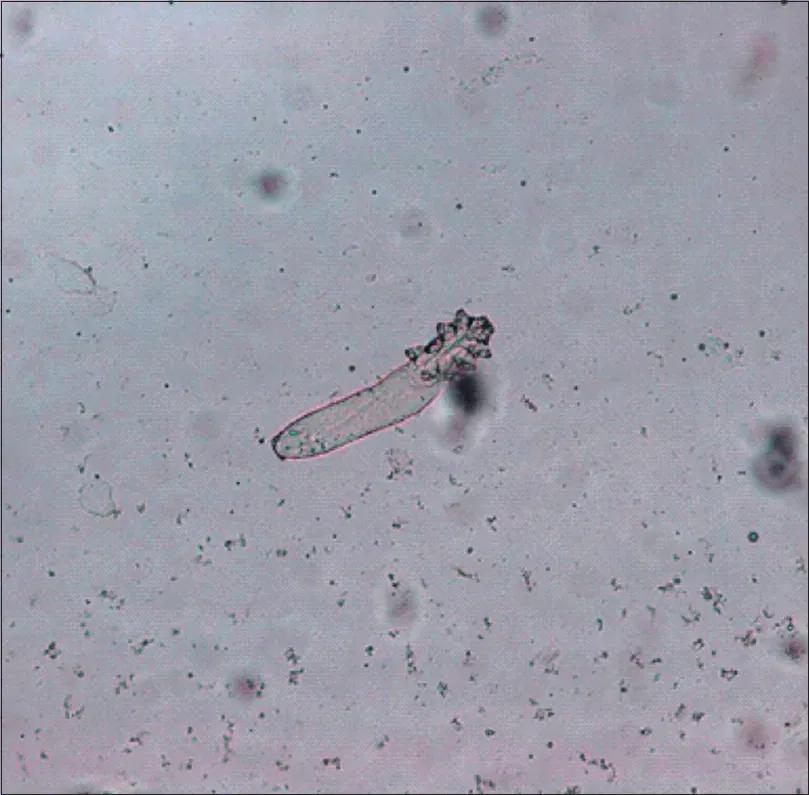
This is exactly why ivermectin (Soolantra) is usually my first choice for this pattern: its anti-Demodex action sits alongside its anti-inflammatory effect, so it treats a likely driver of the bumps rather than just the inflammation sitting on top. (5,9) A skin scrape or dermoscopy pointing to a heavy Demodex load only makes that choice easier — the practical way I start and review Soolantra is in the staged plan above.
When oral treatment helps
If bumps are widespread, painful, persistent or flaring frequently, oral anti-inflammatory treatment can speed control.
Doxycycline (anti-inflammatory use)
Doxycycline is commonly used for papulopustular rosacea because it reduces inflammation in the skin. In Australia, dosing commonly starts around 50 mg daily (sometimes within a broader range depending on severity and tolerance), then tapers once stable. (5,10)
Important practical points:
- photosensitivity can occur — sun strategy matters
- the goal is usually a time-limited course to calm the flare, then maintain with topical and skincare (1–5)
What to avoid (the flare loop)
The patterns that most often keep papulopustular rosacea going:
- topical steroids on the face — can worsen steroid-responsive facial rashes and trigger peri-orificial dermatitis (6)
- harsh acne routines — strong benzoyl peroxide, aggressive acids, scrubs, frequent exfoliation (1–5)
- fragrance, essential oils, menthol, alcohol-heavy toners and “tingly” products (1–5)
- starting multiple new products at once — barrier overload, and you cannot identify the culprit
- stopping everything the moment it improves — no maintenance, so it relapses (1–5)
When to add vascular laser
Papulopustular rosacea often has two drivers at once:
- bumps (inflammation)
- redness and vessels (vascular hardware)
If bumps settle but persistent redness or broken capillaries remain, that is usually when vascular laser becomes the most direct next step. See the ETR rosacea article for the vascular pathway.
Eye symptoms (ocular rosacea clue)
If you also have gritty or dry eyes, eyelid inflammation, or recurrent styes, rosacea may be affecting the eyes. That pathway often needs eyelid-specific care and sometimes oral anti-inflammatory therapy. (1–5)
See ocular rosacea for the eyelid plan.
Where this fits
Adjacent reads in the rosacea library:
- Rosacea condition page — diagnostic overview and the four-subtype map
- ETR rosacea — redness, flushing and broken capillaries
- Rosacea skincare routine — barrier-first routine
- Ocular rosacea — dry, gritty eyes, blepharitis and styes
- Peri-oral dermatitis — when bumps cluster around the mouth
If you are stuck in a cycle of rosacea breakouts, a structured plan can make a big difference — especially when medical therapy is paired with barrier-focused dermal support.
Frequently asked questions
-
How long until I see improvement?
Meaningful improvement typically takes 6 to 12 weeks of consistent treatment, then maintenance to prevent relapse. The first 2 weeks are usually about barrier stabilisation rather than visible change. Most prescription topicals build effect across 8 to 12 weeks, with the most durable response after a full course rather than after a few applications. -
Which prescription cream is best — Finacea, Rozex or Soolantra?
All three are commonly used and all three can work. The best choice depends on your pattern — how inflamed the rash is, how sensitive your skin is, whether Demodex is likely contributing, and what your skin has tolerated previously. Azelaic acid (Finacea) is often chosen for sensitive skin, metronidazole (Rozex) is a long-standing first-line option, and ivermectin (Soolantra) is particularly useful when Demodex is part of the story. -
Why do acne products often make rosacea worse?
Because rosacea skin is usually barrier-impaired and reactive. Over-stripping cleansers, strong benzoyl peroxide, harsh acids and aggressive exfoliation increase redness, stinging and flare cycles. Acne-style routines that work well on younger oily acne-prone skin commonly damage the barrier in rosacea-prone skin. -
When is oral doxycycline added?
Oral anti-inflammatory doxycycline is typically added when bumps are widespread, painful, persistent, or flaring frequently. In Australia, dosing commonly starts around 50 mg daily (sometimes within a broader range depending on severity and tolerance) and tapers once stable. The goal is a time-limited course to calm the flare, then maintain control with topicals plus skincare. Photosensitivity is a relevant practical concern. -
How is this different from peri-oral dermatitis?
Peri-oral dermatitis is a different inflammatory rash that clusters around the mouth, nose and sometimes eyes, with a characteristic narrow spared strip next to the lip border and a strong association with topical steroid exposure. Papulopustular rosacea has a wider central-face distribution, more background redness and is not typically steroid-driven. The two can overlap, which is why doctor-led diagnosis matters before treatment starts. See peri-oral dermatitis for that pathway. -
When does vascular laser fit in?
If bumps settle but persistent background redness or visible vessels remain, vascular laser is usually the most direct next step — it targets the established vessel network that medication cannot reach. We typically settle the inflammatory component first, then add vascular laser for the residual redness once the skin is stable. The ETR rosacea article covers the vascular pathway in depth. -
Can I keep using my regular skincare during treatment?
Usually with some simplification. Strong actives, aggressive exfoliation, fragrance-heavy products and benzoyl peroxide on the area are paused during the early treatment phase. A stable cleanser plus moisturiser plus mineral sunscreen routine is the foundation, with prescription topicals added carefully. The dermal therapist component of the combined appointment maps which products to keep, simplify or pause. -
Do I need a referral?
No referral is required. You can book directly. A referral from your GP or treating clinician is welcome — it helps with collegial communication and continuity of care — but is not a barrier to accessing the service. Both clinics (Ivanhoe and Diamond Creek) operate the same pathway.
References
- Rosacea — DermNet NZ
- Rosacea — A to Z of skin (Australasian College of Dermatologists)
- Rosacea — healthdirect Australia
- Rosacea — StatPearls (NCBI Bookshelf)
- An update on the treatment of rosacea (Australian Prescriber)
- Periorificial dermatitis — DermNet NZ
- Finacea gel (azelaic acid 15%) — consumer medicine information (NPS MedicineWise)
- Rozex cream (metronidazole 0.75%) — consumer medicine information (NPS MedicineWise)
- Soolantra (ivermectin 1%) — consumer medicine information (NPS MedicineWise)
- Rosacea — Australian Family Physician (RACGP)
- Demodex folliculorum associated Bacillus pumilus in lesional areas in rosacea (Indian J Dermatol Venereol Leprol 2017;83:610-611)
- Rosacea: Practical Guidance and Challenges for Clinical Management (Clin Cosmet Investig Dermatol 2024;17:175-190) — ivermectin more effective than metronidazole at 12 weeks
- Could photobiomodulation be used for treatment of rosacea? (Lasers Med Sci 2025;40) — LED/PBM as an anti-inflammatory adjunct; evidence base still limited
- Coupled blue and red light-emitting diodes therapy efficacy in patients with rosacea: two case reports (J Med Case Rep 2020;14:22)
Related
Related reading
Related treatments

By Dr Christopher Irwin, MBChB, FRACGP, MMed (Skin Cancer), FACAM, MSCCA
Published 2026-06-06 · Updated 2026-07-06 · Editorial policy