- Phymatous rosacea is thickening and overgrowth of the skin, most often the nose (rhinophyma), from long-standing rosacea.
- It is more common in men and develops slowly over years, on a background of redness and enlarged oil glands.
- Once the tissue is fibrous and thickened, creams and tablets cannot reverse it — established phyma needs the excess tissue physically removed.
- Early or inflammatory phymatous change may be slowed with medical therapy (including oral isotretinoin in selected cases), but this does not remove established bulk.
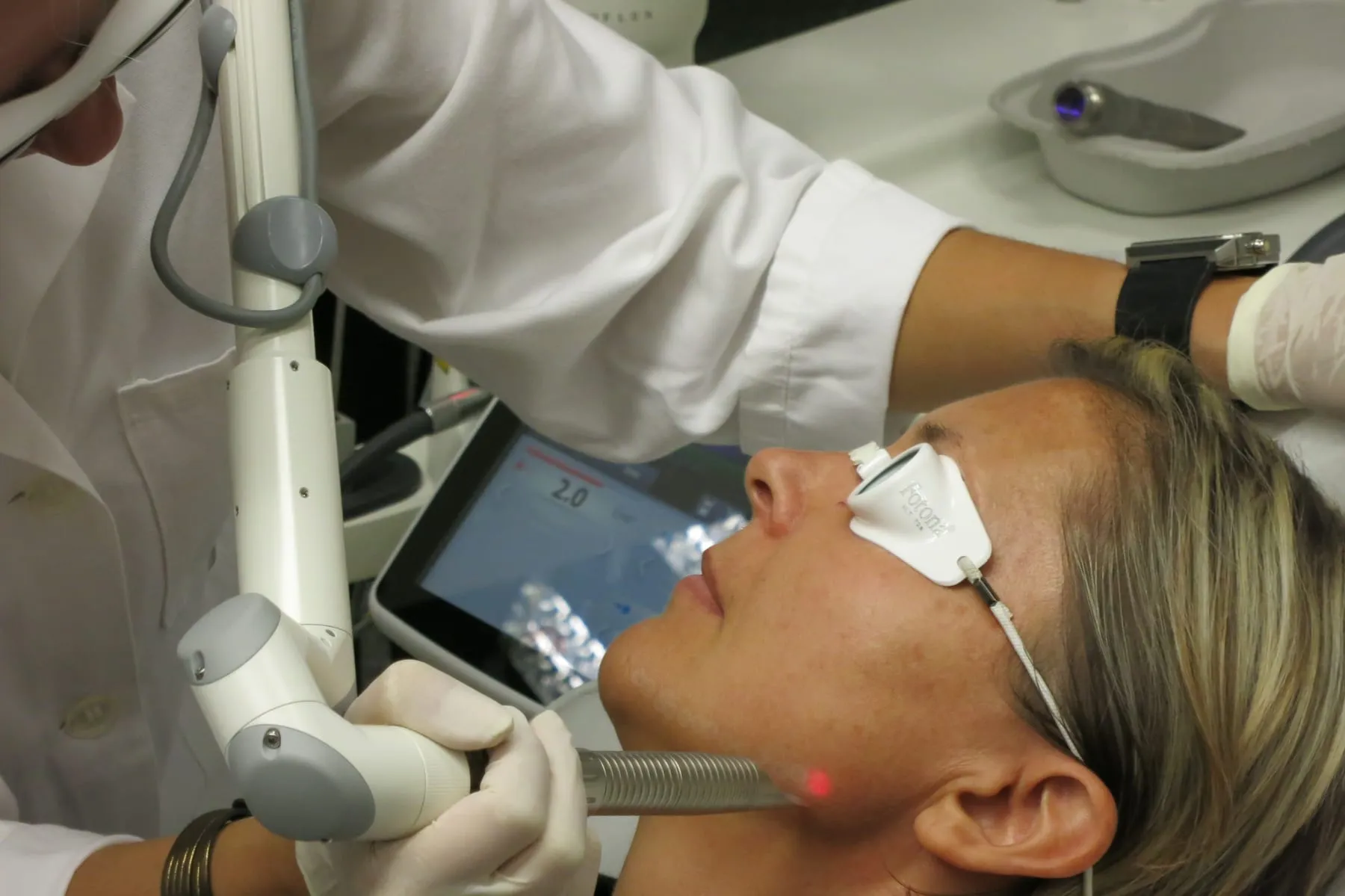
- The main treatment for established rhinophyma is ablative laser resurfacing, which removes excess tissue and reshapes the nose.
- We use a 2940 nm Er:YAG (erbium) laser; erbium causes less residual heat than CO2, which is associated with faster healing and lower scarring and hypopigmentation risk.
- Published erbium studies report good-to-excellent cosmetic outcomes and high patient satisfaction with short downtime.
- Treatment is doctor-led and planned by Dr Chris, done under local anaesthetic, and larger phyma may need more than one session.
- Rhinophyma can rarely harbour skin cancer such as basal cell carcinoma, so assessment and, where appropriate, histology matter.
- Very severe or extensive phyma may be better managed by surgical (plastics) reduction — we advise honestly when that is the better option.
Phymatous rosacea is the subtype where the skin thickens and overgrows. It most often affects the nose — where it is called rhinophyma — but can also involve the chin, forehead, ears or eyelids. It develops slowly, over years, on a background of long-standing rosacea, and is considerably more common in men. (1,3)
This is a different problem from redness or bumps, and it needs a different solution. The most important thing to understand is that once the tissue has thickened, creams and tablets cannot undo it — the excess tissue has to be physically removed and the nose reshaped. Done well, the results can be genuinely life-changing.
What is happening in the skin
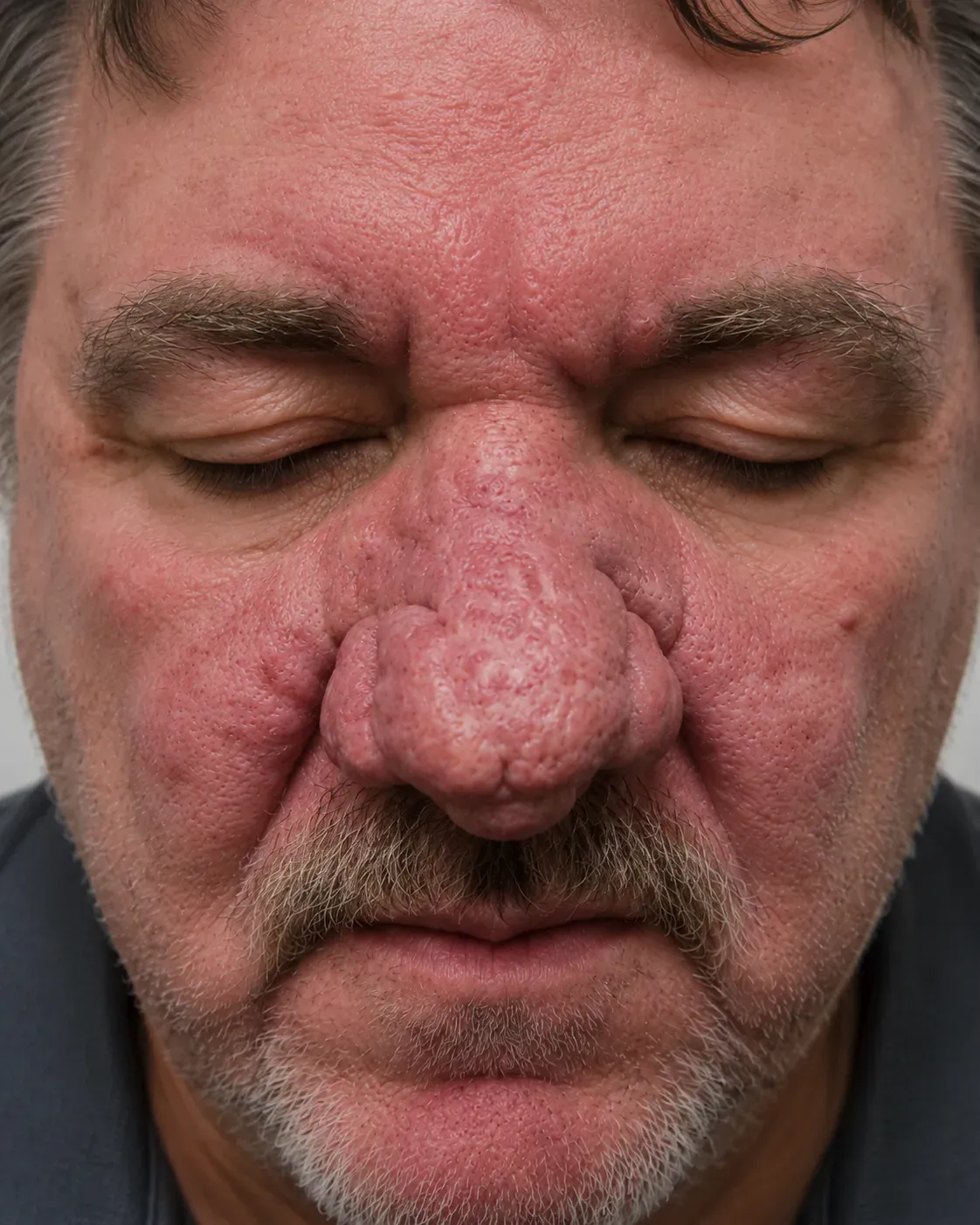
Rhinophyma is the end stage of phymatous change: enlarged oil (sebaceous) glands, extra connective tissue and fibrosis build up until the nose becomes enlarged, bumpy and irregular, sometimes with dilated pores and a bulbous shape. (1,2)
Two points matter clinically:
- the change is structural, not just inflammatory — which is why anti-inflammatory creams and antibiotics do not reverse it
- rhinophyma can occasionally conceal a skin cancer (such as a basal cell carcinoma) within the thickened tissue, so proper assessment — and sending removed tissue for pathology where appropriate — is part of treating it responsibly (2)
Can medical treatment help at all?
Yes, but with realistic expectations. Medical therapy has two roles:
- calming the underlying rosacea — redness, flushing and inflammatory bumps respond to the usual topical and oral rosacea treatments, and settling this is worthwhile in its own right
- slowing early phymatous change — in selected patients, oral isotretinoin can reduce sebaceous gland activity and may slow progression of early, still-soft phyma (1,3)
What medical therapy cannot do is remove tissue that has already become thickened and fibrous. For established rhinophyma, that requires a physical (ablative) treatment.
The main treatment — ablative erbium (Er:YAG) laser resurfacing
For established rhinophyma, the mainstay of treatment is ablative laser resurfacing — using a laser to precisely remove the excess tissue and re-sculpt the nose back toward a normal contour, while leaving enough of the deeper skin structures for the surface to heal over. (4,5,6)
We use a 2940 nm Er:YAG (erbium) laser for this. There are two ablative lasers commonly used for rhinophyma — CO2 and Er:YAG — and both are effective. (4) The reason we favour erbium is how its light behaves in skin:
- erbium light is very strongly absorbed by water, so it ablates tissue in thin, precise layers with less residual heat spreading into the surrounding skin (4)
- in the published reviews, that lower thermal footprint is associated with faster healing and a lower risk of scarring and permanent lightening (hypopigmentation) than CO2 (4)
- the trade-off is a little more surface bleeding during the procedure, because erbium does not seal small vessels as aggressively as CO2
Device choice is always individualised — but for reshaping the rhinophymatous nose while protecting the final cosmetic result, erbium is a strong, well-evidenced option.
What the published evidence shows
Ablative erbium resurfacing for rhinophyma has been studied with encouraging results:
- In a 2020 study of patterned ablative 2940 nm Er:YAG laser (16 patients, four sessions), around three-quarters achieved good-to-excellent outcomes at three months, patient satisfaction was high (no dissatisfied patients), average downtime was only a few days, and recurrence was low. (5)
- A 2019 series reported that Er:YAG resurfacing restored both normal function and cosmesis in patients with severe rhinophyma. (6)
- A 2024 comprehensive review comparing CO2 and Er:YAG concluded both are effective, with erbium offering less thermal damage and fewer complications. (4)
Before and after — from the published literature
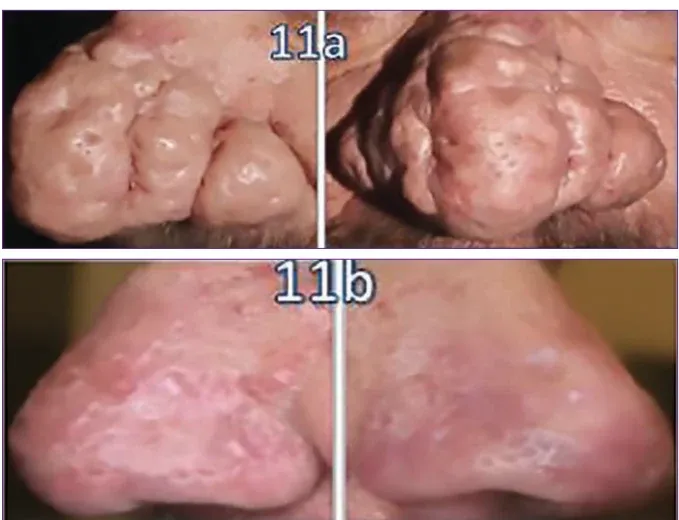
The photographs above are from the published research cited on this page — they are patients treated in that study, not patients of The Skin Doctor, and are shown so you can see the kind of change ablative erbium resurfacing can achieve. (6)
What treatment involves
Phymatous laser treatment is doctor-led and planned by Dr Chris. In practice:
- treatment is done under local anaesthetic
- the excess tissue is ablated and the nose re-contoured, preserving the deeper structures the skin heals back from
- larger rhinophyma is often staged across more than one session for a safer, more controlled result
- afterwards the surface crusts and re-epithelialises over roughly one to three weeks, with redness settling over the following weeks to months
- you receive specific aftercare — wound care, ointment and strict sun protection — and we review you through healing
Because phyma sits on a background of rosacea, we usually also treat the underlying redness, flushing and bumps medically and with vascular laser as needed, so the whole picture is addressed rather than just the bulk.
When surgery is the better option
Very severe or extensive rhinophyma — or cases where function (such as nasal breathing) is significantly affected — is sometimes better managed with surgical (plastic surgery) reduction, on its own or combined with resurfacing. We will tell you honestly if a surgical referral would give you a better outcome. (2,4)
Assessment and booking
The right plan starts with an assessment: confirming the diagnosis, checking for anything suspicious within the tissue, staging the phyma, and setting realistic expectations about downtime and results. No referral is required.
Where this fits
Adjacent reads in the rosacea library:
- Rosacea condition page — diagnostic overview and the four-subtype map
- Erythematotelangiectatic rosacea — redness, flushing and broken capillaries
- Papulopustular rosacea plan — bumps and pustules
- Ocular rosacea — dry, gritty eyes, blepharitis and styes
If thickening of the nose or another area is affecting your comfort or confidence, a doctor-led assessment is the place to start.
Frequently asked questions
-
Can creams or tablets reverse rhinophyma?
No. Medical treatment — topicals, oral doxycycline, and in selected cases oral isotretinoin — can help the inflammatory, bumpy component of rosacea and may slow early phymatous change, but it cannot reverse tissue that has already thickened and become fibrous. Established rhinophyma needs the excess tissue physically removed, which is what ablative laser resurfacing does. -
Why erbium (Er:YAG) laser rather than CO2?
Both ablative lasers work for rhinophyma. We use a 2940 nm Er:YAG (erbium) laser because its light is very strongly absorbed by water in the skin, so it removes tissue with a thin, precise layer of ablation and less residual heat than CO2. In the published reviews that generally translates to faster healing and a lower risk of scarring and permanent lightening of the skin (hypopigmentation), at the cost of a little more surface bleeding during the procedure. Device choice is individualised. -
How many treatments will I need?
It depends on how much excess tissue there is. Smaller, earlier phyma may be reshaped in a single session; larger rhinophyma is often staged over more than one treatment to reshape the nose safely and preserve the structures the skin heals back from. Published Er:YAG protocols have used both single-stage resurfacing and courses of treatments. Your plan is set at assessment. -
What is recovery like?
Ablative resurfacing leaves a raw, weeping surface that crusts and then re-epithelialises (heals over) over roughly one to three weeks depending on depth, with redness that settles over the following weeks to months. Published erbium studies report short average downtimes. You will have specific aftercare — ointment, sun protection and wound care — and we review you through healing. -
Is rhinophyma dangerous?
Rhinophyma itself is benign, but two things matter. First, it can cause functional problems — in severe cases the enlarged tissue can affect breathing through the nose. Second, skin cancers such as basal cell carcinoma can occasionally hide within rhinophymatous tissue, so assessment (and, where appropriate, sending removed tissue for histology) is part of doing this properly. -
Do you treat the redness and bumps at the same time?
Often, yes — phymatous change usually sits on a background of rosacea. We treat the underlying rosacea (redness, flushing and inflammatory bumps) medically and with vascular laser as needed, and use ablative erbium resurfacing for the thickened tissue itself. The plan is sequenced to your dominant pattern. -
Will treatment leave a scar?
All resurfacing carries some risk of scarring, textural change or colour change, and this is discussed honestly before treatment. Erbium's precision and lower thermal footprint are chosen specifically to reduce that risk. Very severe or extensive rhinophyma is sometimes better managed with surgical (plastic surgery) reduction, and we refer when that is the better option. -
Do I need a referral?
No referral is required. You can book directly. A referral from your GP or treating clinician is welcome — it helps with continuity of care — but is not a barrier to accessing an assessment. Both clinics (Ivanhoe and Diamond Creek) operate the same pathway, and phymatous laser treatment is assessed and planned by Dr Chris.
References
- Rhinophyma — DermNet NZ
- Rhinophyma — StatPearls / NCBI Bookshelf
- Rosacea — A to Z of skin (Australasian College of Dermatologists)
- From CO2 to Er:YAG: A Comprehensive Review of Laser Treatments for Rhinophyma (J Drugs Dermatol 2024;23:932-936)
- Novel Management of Rhinophyma by Patterned Ablative 2940 nm Erbium:YAG Laser (Clin Cosmet Investig Dermatol 2020;13:949-955) — includes before/after photographs
- Er:YAG Laser Resurfacing Restores Normal Function and Cosmesis in Patients with Severe Rhinophyma (J Clin Aesthet Dermatol 2019;12:28-33)
Related
By Dr Christopher Irwin, MBChB, FRACGP, MMed (Skin Cancer), FACAM, MSCCA
Last reviewed 2026-07-06 · Editorial policy