Rosacea at The Skin Doctor — doctor-led diagnosis and personalised care for persistent redness, flushing, visible vessels and inflammatory bumps across all four subtypes. Treatment is matched to the dominant pattern — vascular laser for redness, medical therapy for bumps, LED support and barrier-first skincare. Medicare item 14100 may apply for eligible vascular laser cases.
- Rosacea is a chronic relapsing condition — managed, not cured. The goal is durable stability with a simple maintenance plan.
- Four subtypes — erythematotelangiectatic, papulopustular, phymatous, ocular — most patients have a mix with one pattern dominant.
- Doctor-led diagnosis distinguishes rosacea from acne, peri-orificial dermatitis, seborrhoeic dermatitis and contact dermatitis.
- Vascular laser (long-pulsed 1064 nm Nd:YAG) is the most effective long-term treatment for established redness and visible vessels.
- Medical topical and oral therapies (ivermectin, metronidazole, azelaic acid, low-dose doxycycline) manage inflammatory bumps.
- LED therapy provides gentle support between active treatments and after laser, particularly in sensitive skin.
- Treatment is matched to the dominant pattern — vascular laser, medical therapy and LED support combined and paced individually.
- Medicare item 14100 may apply for eligible vascular laser cases.
- Care is tailored for pigmentation-prone and melanin-rich skin via the Skin of Colour Clinic pathway.
- Ocular rosacea is common and needs its own plan — sometimes including oral anti-inflammatory therapy.
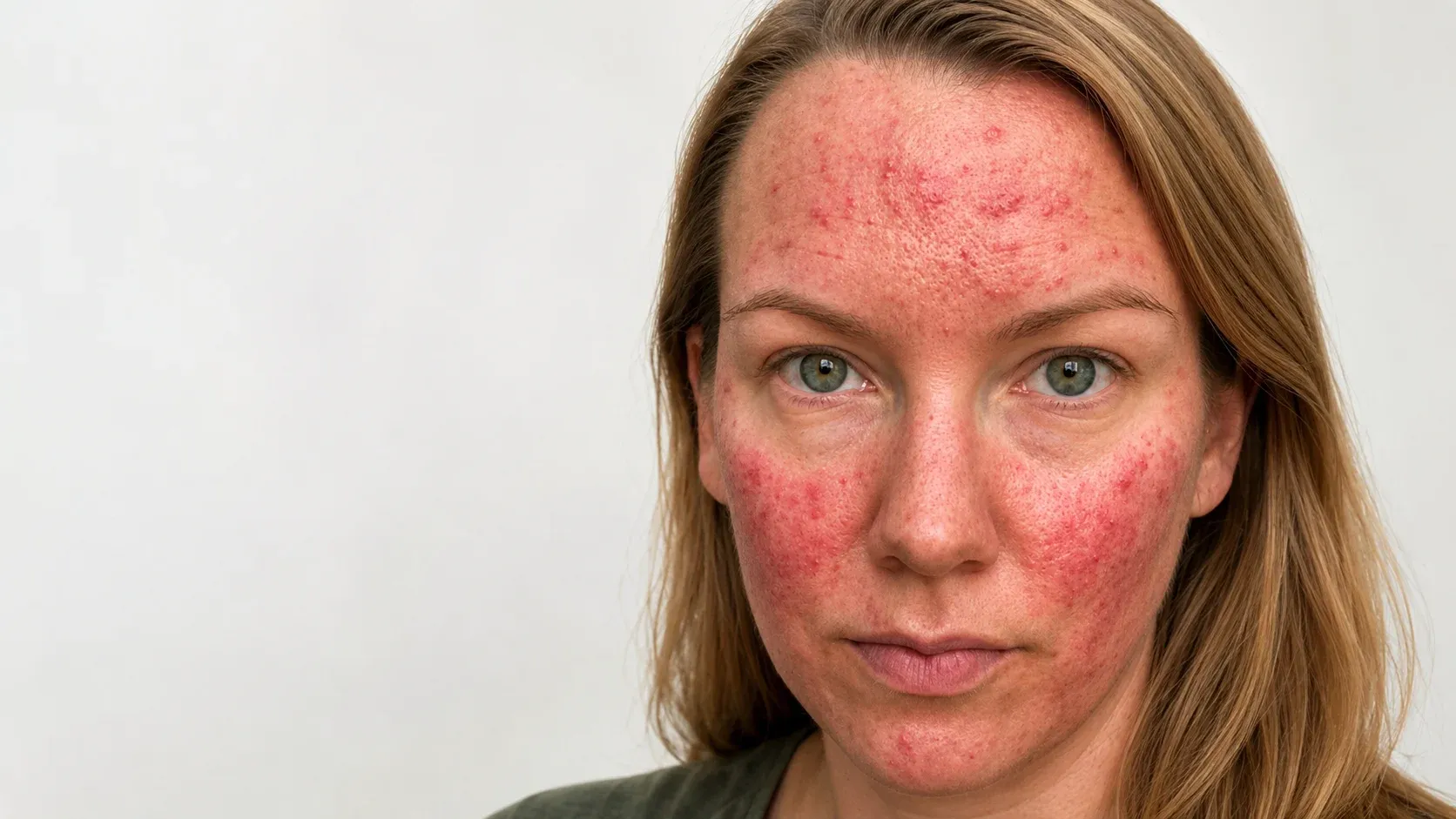
Rosacea · Melbourne
Rosacea, diagnosed and treated to match your pattern.
Persistent redness, flushing, visible vessels and bumps — assessed properly and treated to match the dominant pattern: vascular laser for redness, medical therapy for bumps, LED support and trigger care.
By Dr Christopher Irwin, MBChB, FRACGP, MMed (Skin Cancer), FACAM, MSCCA
Last reviewed 2026-06-06 · Editorial policy
- Rosacea is a chronic relapsing condition — managed, not cured. The goal is durable stability with a simple maintenance plan.
- Four subtypes — erythematotelangiectatic, papulopustular, phymatous, ocular — most patients have a mix with one pattern dominant.
- Doctor-led diagnosis distinguishes rosacea from acne, peri-orificial dermatitis, seborrhoeic dermatitis and contact dermatitis.
- Vascular laser (long-pulsed 1064 nm Nd:YAG) is the most effective long-term treatment for established redness and visible vessels.
- Medical topical and oral therapies (ivermectin, metronidazole, azelaic acid, low-dose doxycycline) manage inflammatory bumps.
- LED therapy provides gentle support between active treatments and after laser, particularly in sensitive skin.
- Treatment is matched to the dominant pattern — vascular laser, medical therapy and LED support combined and paced individually.
- Medicare item 14100 may apply for eligible vascular laser cases.
- Care is tailored for pigmentation-prone and melanin-rich skin via the Skin of Colour Clinic pathway.
- Ocular rosacea is common and needs its own plan — sometimes including oral anti-inflammatory therapy.
Rosacea is one of the most under-treated facial conditions we see. Many patients have spent years cycling through over-the-counter products, gentle skincare ranges, or aggressive acne treatments that have made their skin worse, not better. The aim of this page is to give a clear, medical view of what rosacea is, which subtype you are likely dealing with, and what actually works.
Four subtypes
Erythematotelangiectatic, papulopustular, phymatous and ocular — most people have a mix, with one pattern dominant.
Matched, not templated
Vascular laser for redness and vessels, medical therapy for inflammatory bumps, eyelid care for ocular symptoms — the plan follows your dominant pattern.
Item 14100
Vascular laser may attract a Medicare rebate in eligible cases — a clinical decision assessed individually.
One name, four different patterns
Erythematotelangiectatic
Redness & visible vessels.
Persistent background redness across the cheeks, nose, forehead and chin, episodic flushing, and visible broken capillaries (telangiectasia).
Pathway: vascular laser
See pathway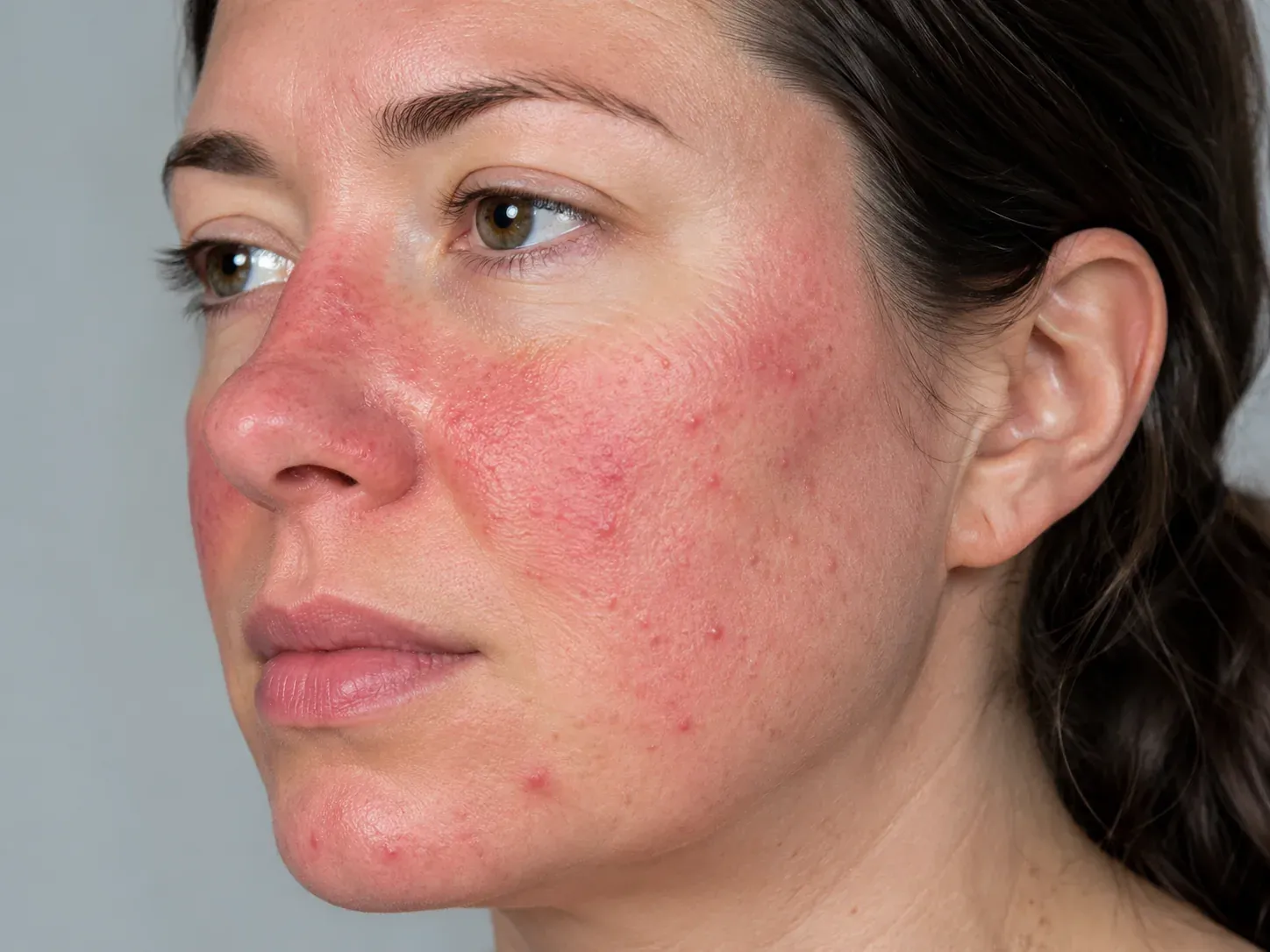
Papulopustular
Inflammatory bumps.
Acne-like inflammatory papules and pustules, usually without blackheads, on a background of redness.
Pathway: medical topical/oral therapy + barrier care
See pathway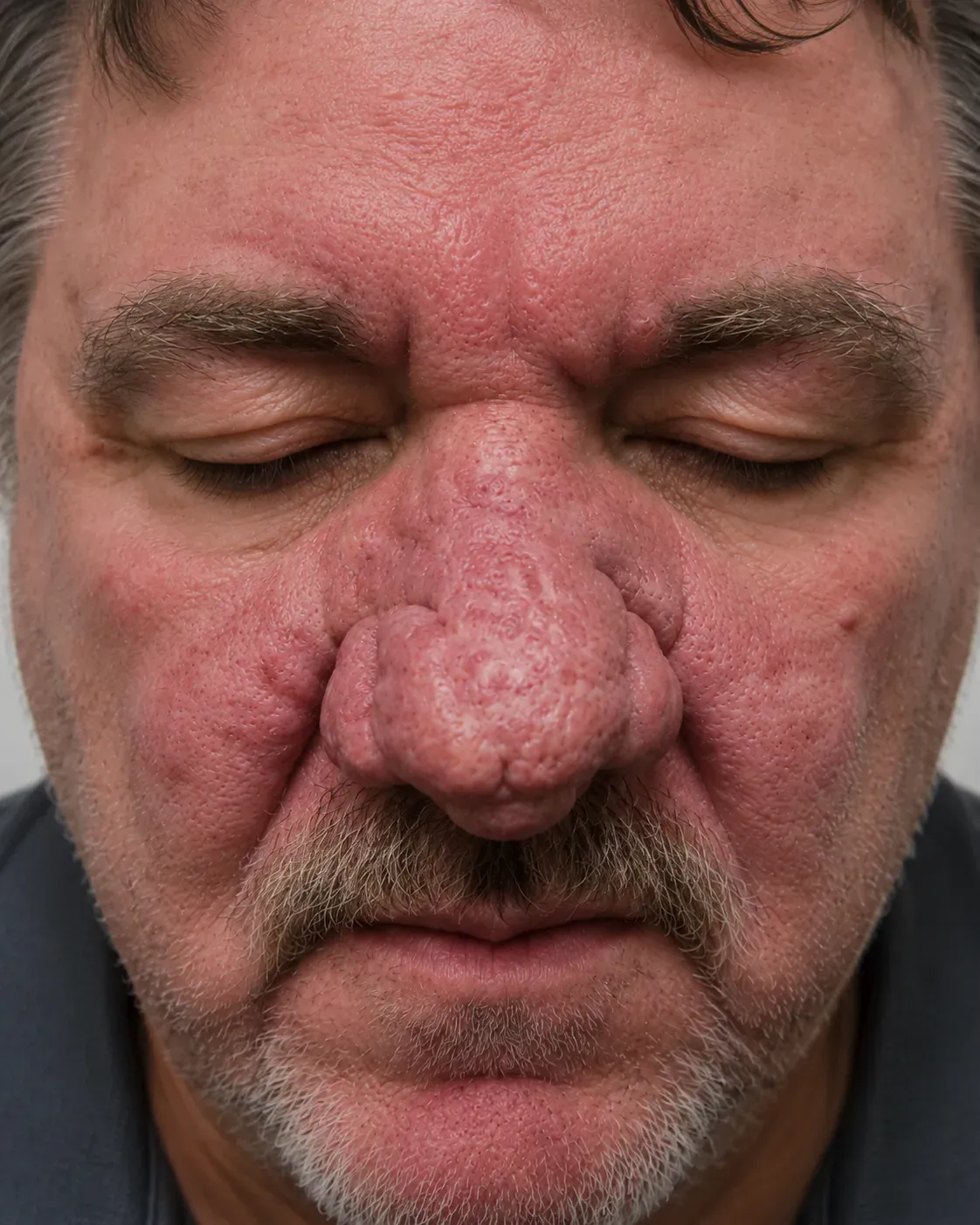
Phymatous
Thickening & texture.
Skin thickening and texture change in long-standing cases, most often the nose.
Pathway: ablative erbium laser
See pathway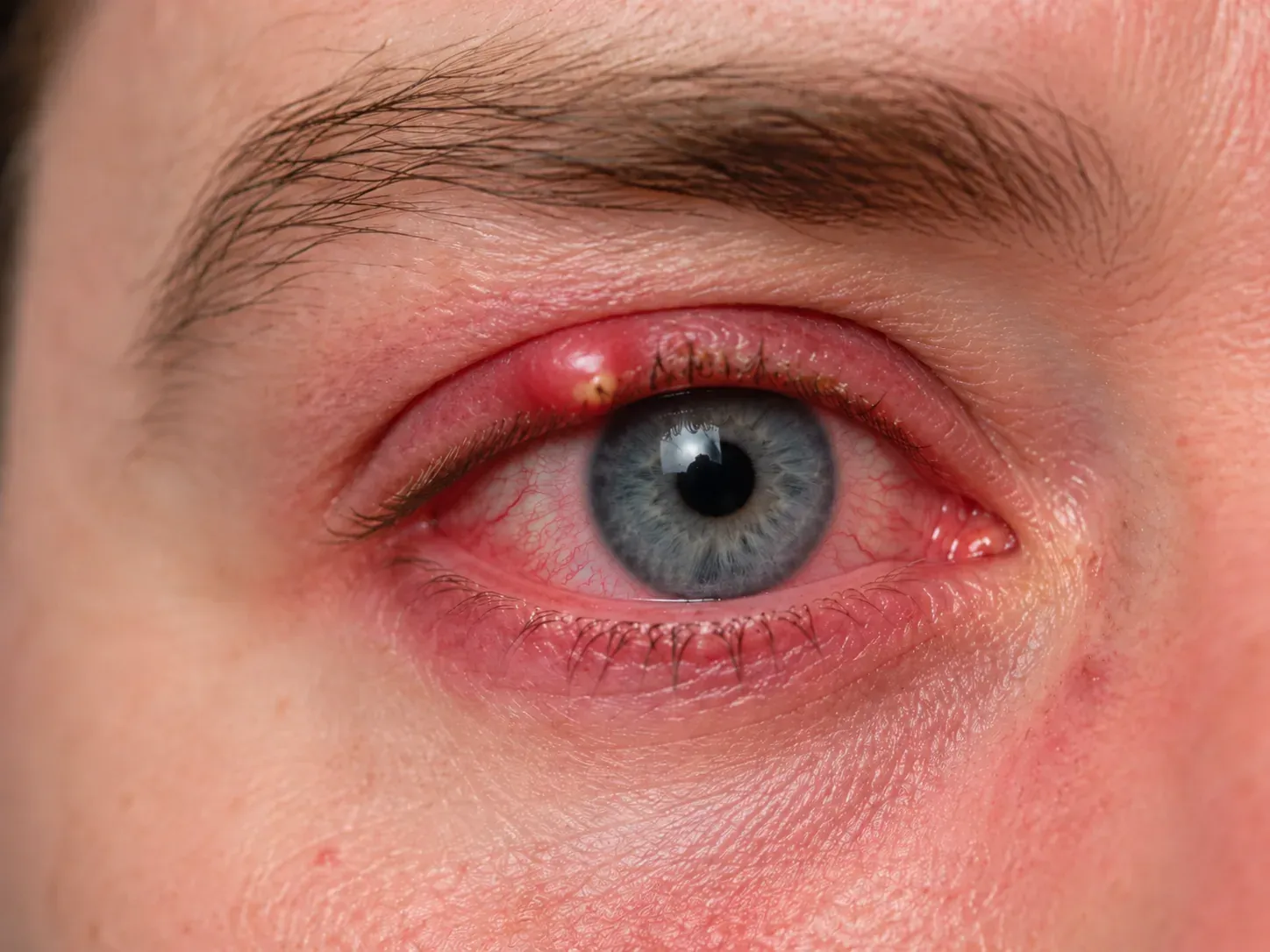
Ocular
Eyes involved.
Gritty, dry or burning eyes, eyelid inflammation and recurrent styes — sometimes the cornea is involved.
Pathway: needs its own plan
See pathway
A calmer baseline — the aim of every plan
What we actually use — matched to your pattern
There is no single rosacea treatment, and no fixed recipe. The right plan follows the dominant pattern: vascular laser for established redness and visible vessels, medical therapy for inflammatory bumps, eyelid care for ocular symptoms — with barrier-supporting skincare and trigger management underneath all of it. Where more than one pattern is present, treatments are combined and paced individually.
 Item 14100 may apply
 Lead treatment · Vascular
Vascular laser for redness and visible vessels
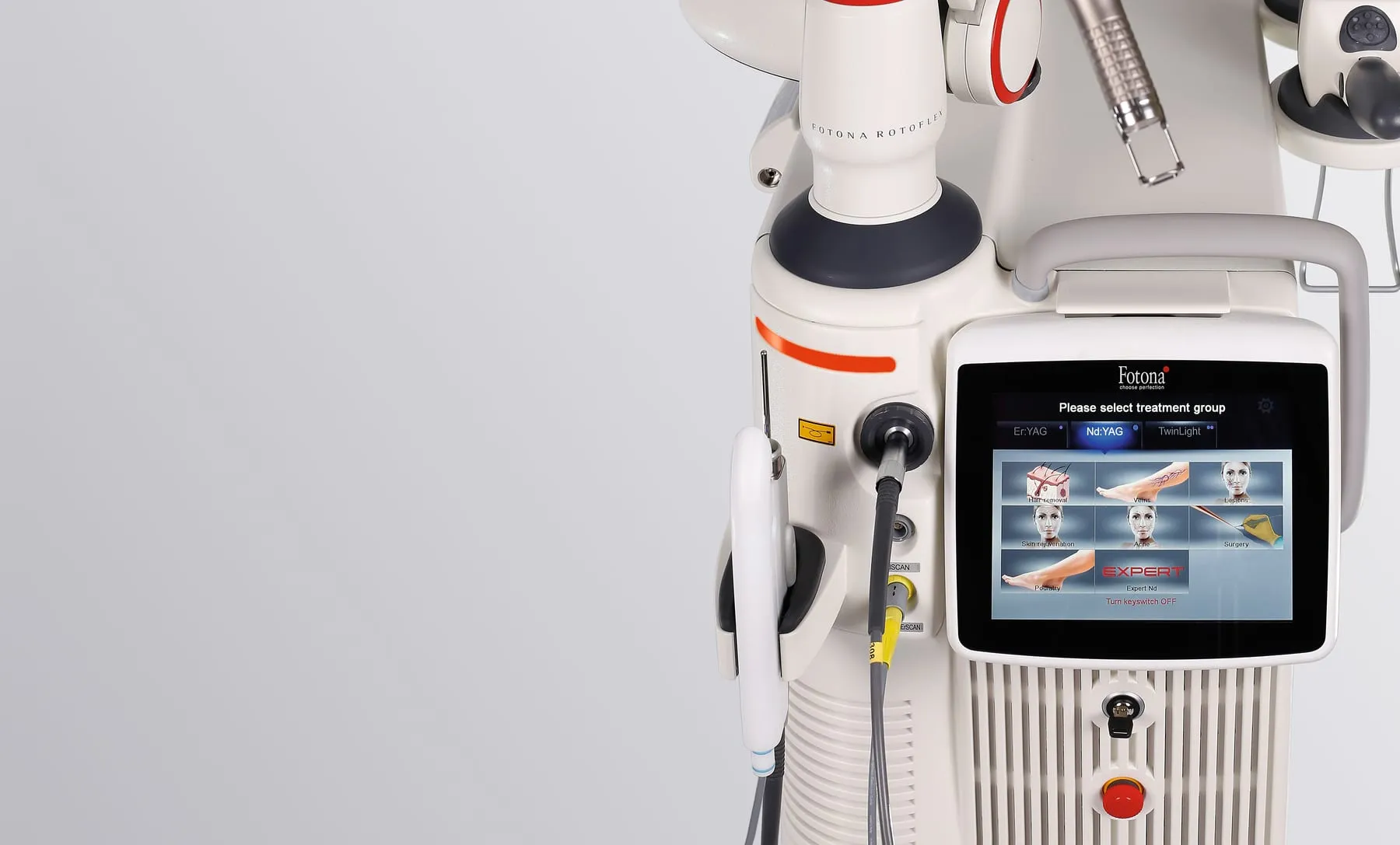
For established background redness and visible facial blood vessels, vascular laser is the most effective long-term option. Long-pulsed 1064 nm Nd:YAG (Fotona Versa) selectively heats and clears dilated vessels that contribute to redness and flushing — addressing the structural cause rather than just surface inflammation. In selected cases, Medicare item 14100 may apply (strict criteria, assessed individually).
Explore vascular laser-
Topical anti-inflammatories
Ivermectin, metronidazole and azelaic acid — first-line for papulopustular rosacea (inflammatory bumps). Selected based on subtype, sensitivity and prior response, often alongside a barrier-supporting skincare plan.
-
Topical vasoconstrictors
Brimonidine or oxymetazoline for transient redness control. Useful for situational redness reduction (events, photographs) but does not treat the underlying condition.
-
Oral anti-inflammatory therapy
Low-dose doxycycline for inflammatory rosacea — used for its anti-inflammatory rather than antibacterial effect. Short courses are common; some patients with papulopustular or ocular rosacea need longer maintenance.
-
Medical LED therapy
Supportive treatment to calm inflammation, reduce background redness between active treatments and support recovery after vascular laser. Particularly useful in sensitive or reactive skin where active treatment needs to be paced.
-
Combined laser and medical therapy
For patients with both redness and inflammatory lesions, vascular laser, medical therapy and LED support are combined — selected and paced individually based on the dominant pattern, severity and how the skin is tolerating treatment.
-
Ocular rosacea management
Eyelid hygiene (warm compresses, lid scrubs), lubricants and — in selected cases — oral anti-inflammatory therapy for gritty, dry or burning eyes and eyelid inflammation. Coordinated with optometry or ophthalmology where corneal involvement is suspected.
-
Barrier-first skincare and trigger management
A trigger diary, daily broad-spectrum SPF, gentle barrier-supporting skincare and lifestyle adjustments form the foundation of long-term rosacea care. Does not replace medical or laser treatment for established changes — but reduces flare frequency and extends the durability of in-clinic results.
Medicare rebates and vascular laser — item 14100
For many patients with established redness or visible vessels, vascular laser is eligible for a Medicare rebate under item number 14100.
Important points to understand:
- Eligibility depends on your individual clinical presentation and whether the Medicare criteria are met.
- Not all vascular laser treatments are Medicare-rebatable — it is a clinical decision based on the pattern and severity of vessels and redness.
- Patients who have reached their Extended Medicare Safety Net (EMSN) threshold may find Medicare contributes a higher proportion of the cost of eligible laser services for the remainder of the calendar year — making state-of-the-art vascular care substantially more affordable.
- We cannot make guarantees about eligibility prior to clinical assessment. This is discussed in detail at your consultation, including whether item 14100 is likely to apply in your situation.
This is one of the few areas of cosmetic-adjacent care where Medicare meaningfully assists with cost — and worth raising at your consultation if redness is the dominant concern.
Care for pigmentation-prone and melanin-rich skin
Rosacea-prone skin can be both vessel-rich and pigmentation-prone, particularly in patients with olive to deep skin tones (Fitzpatrick III–VI). The 1064 nm Nd:YAG wavelength we use for vascular work is the safest laser choice for this group because it bypasses much of the epidermal melanin and targets deeper vessels. Treatment is still individualised conservatively — and patients in this group are often reviewed through our Skin of Colour Clinic pathway, with extra emphasis on barrier support and post-inflammatory hyperpigmentation prevention.
When it might not be rosacea
If you are not improving as expected, the diagnosis is worth revisiting. Conditions that mimic — or coexist with — rosacea include:
The facial flaking differential guide → walks through how these are distinguished in clinic.
Long-term management — rosacea is chronic
Rosacea is a chronic, relapsing condition. The most successful plans combine:
- an initial control phase — typically 3–4 vascular laser sessions over 3–6 months alongside medical and LED support where indicated
- a maintenance phase — vascular laser top-ups every 6–18 months (longer when triggers are well-controlled), continued barrier-supporting skincare, daily broad-spectrum SPF, and trigger management
The goal is durable control — a calmer baseline, fewer flushing episodes, fewer visible vessels, and a clear maintenance plan — not a one-off fix.
Natural and lifestyle approaches
Trigger management, gentle skincare and lifestyle adjustments are the foundation of long-term rosacea care. They are usually not sufficient on their own for established redness or visible vessels — but they reduce flare frequency, improve comfort, and significantly extend how long in-clinic results last between maintenance sessions.
We outline evidence-informed natural and lifestyle strategies in detail in our Rosacea Skincare Routine → and Rosacea Triggers & Lifestyle →.
Next step
Ready to take the next step?
If rosacea redness, flushing, visible vessels or inflammatory bumps are affecting your comfort or confidence, a personalised treatment plan can make a meaningful difference.
Frequently asked.
-
Is rosacea curable?
Rosacea is managed, not cured — it is a chronic, relapsing condition. With appropriate treatment, many patients achieve long periods of stability with significantly reduced redness, fewer flares, and far less day-to-day visible vessel and inflammatory bump activity. The goal is durable control — a calmer baseline, fewer triggered flushing episodes, and a clear maintenance plan — rather than a one-off fix. -
What's the difference between rosacea and acne?
Both can produce inflammatory bumps on the face, but the underlying biology and the right treatment are different. Acne is driven by oil, follicular blockage and Cutibacterium acnes — usually starts in teens, with blackheads, whiteheads and cysts. Rosacea is driven by vascular and immune dysregulation — usually starts in adulthood, with persistent background redness, flushing, visible vessels and bumps without blackheads. Many acne treatments (aggressive cleansers, benzoyl peroxide, strong retinoids) can worsen rosacea. Accurate diagnosis matters. -
Will vascular laser fix my rosacea redness permanently?
Vascular laser can substantially reduce visible vessels and background redness — often dramatically — but rosacea itself remains chronic, so new vessels can develop over time. Most patients need a course of 3–4 treatments spaced 4–8 weeks apart to establish control, then maintenance every 6–18 months depending on triggers, sun exposure and how the underlying rosacea behaves. Laser is the most durable treatment for visible vessels but is not the whole plan. -
Will Medicare cover my vascular laser?
In certain clinical circumstances, vascular laser treatment is eligible for a Medicare rebate under item 14100. Eligibility depends on your individual clinical presentation and whether Medicare criteria are met. Not all vascular laser treatments are rebatable, and we cannot guarantee eligibility before assessment. Patients who have reached their Extended Medicare Safety Net threshold may find Medicare contributes a higher proportion of the cost of eligible services for the remainder of the calendar year. This is discussed in detail at your consultation. -
Is vascular laser safe for my skin type — including darker skin?
Long-pulsed 1064 nm Nd:YAG (which is what we use for vascular work) is the safest laser wavelength for darker skin because it bypasses much of the melanin in the epidermis and targets the deeper haemoglobin in vessels. Treatment is still individualised and conservative for melanin-rich skin (Fitzpatrick III–VI) because rosacea-prone skin can be both vessel-rich AND pigmentation-prone. Patients in this group are often reviewed through our Skin of Colour Clinic pathway. -
Could my rash actually be something else?
Yes — and this is one of the most important reasons to have a doctor-led assessment. Seborrhoeic dermatitis causes flaking in the eyebrows, eyelids and nasal creases that can mimic rosacea redness. Peri-orificial dermatitis causes a bumpy rash around the mouth, nose and eyes — often worsened by topical steroids. Contact dermatitis can cause product-linked stinging and eyelid involvement. Treatments effective for one of these conditions can worsen another, so the diagnosis is the foundation of the plan. -
Are natural treatments and lifestyle changes enough on their own?
Lifestyle and skincare changes are important and effective at the trigger / flare level — reducing how often and how severely the skin flushes and reacts. But established background redness and visible vessels are structural changes that do not reverse with skincare alone. The most durable plans pair lifestyle and trigger management (the foundation) with medical or laser treatment for the established changes. Our Rosacea Skincare Routine and Rosacea Triggers & Lifestyle guides cover the lifestyle side in depth. -
Why did my rosacea worsen after I used steroid cream?
Repeated topical steroid use on the face can worsen rosacea and trigger a steroid-induced or peri-oral pattern. The steroid suppresses inflammation briefly, then the rash rebounds on withdrawal — a cycle that often perpetuates the underlying problem. Routine facial topical steroids are generally avoided in rosacea management. -
Can I wear makeup during rosacea treatment?
Yes — many patients use mineral makeup with green-tinted base layers to neutralise residual redness while a treatment course is in progress. Makeup is paused for 24–48 hours after vascular laser (and longer if there has been any blistering or crusting), and we advise gentle barrier-supporting skincare in the immediate post-treatment window. Cosmetic products that have caused stinging or flares in the past are reviewed and replaced as part of the plan.
References
Related
Related conditions
Medically reviewed by Dr Christopher Irwin, MBChB, FRACGP, MMed (Skin Cancer), FACAM, MSCCA · Last reviewed 2026-06-06 · Editorial policy